Category Rembrandt

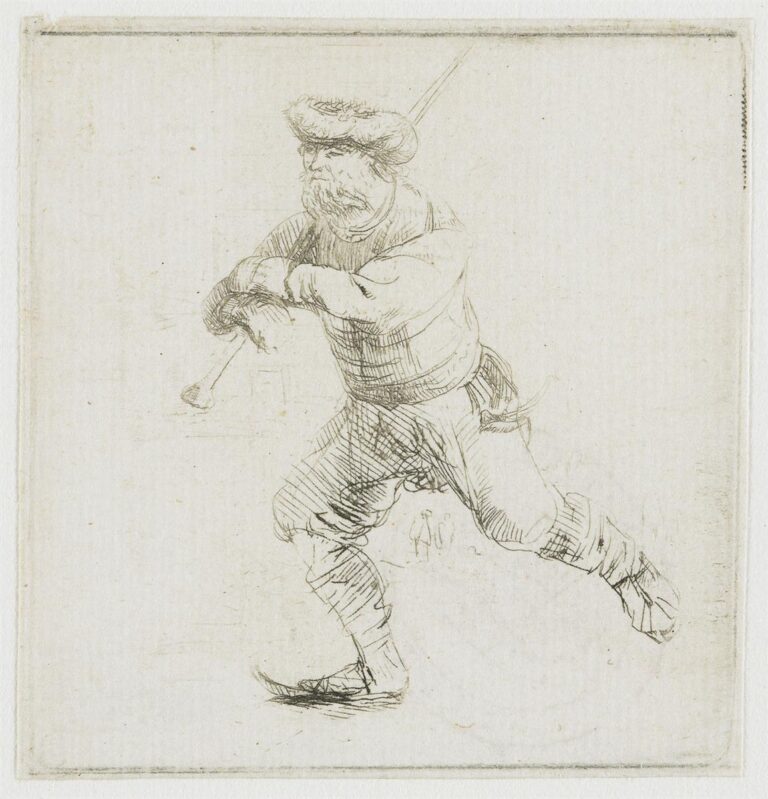
A Complete Analysis of “The Skater” by Rembrandt

Small etching by Rembrandt of a bundled man skating with arms folded and one leg thrust forward; minimal background and lively lines convey speed and balance on a blank expanse of ice.

Explore Rembrandt’s 1639 etching “The Skater,” a lively single-figure study that turns a Dutch winter pastime into an essay on motion, balance, and character. Discover composition, line work, and the human warmth behind this spare, timeless sheet.

A Complete Analysis of “The Entombment” by Rembrandt

Dark arched scene by Rembrandt showing Christ’s body being lowered into a rocky tomb; warm light falls on the white shroud and the helpers’ hands while the cave surrounds them in shadow, with a small glowing horizon visible beyond.

Rembrandt’s 1639 “The Entombment” is a nocturne of hands, linen, and light—friends lowering Christ’s body inside a cave illuminated by ember-like glow. Explore the composition, chiaroscuro, gesture, and quiet theology that turn a burial into a meditation on grief and hope.

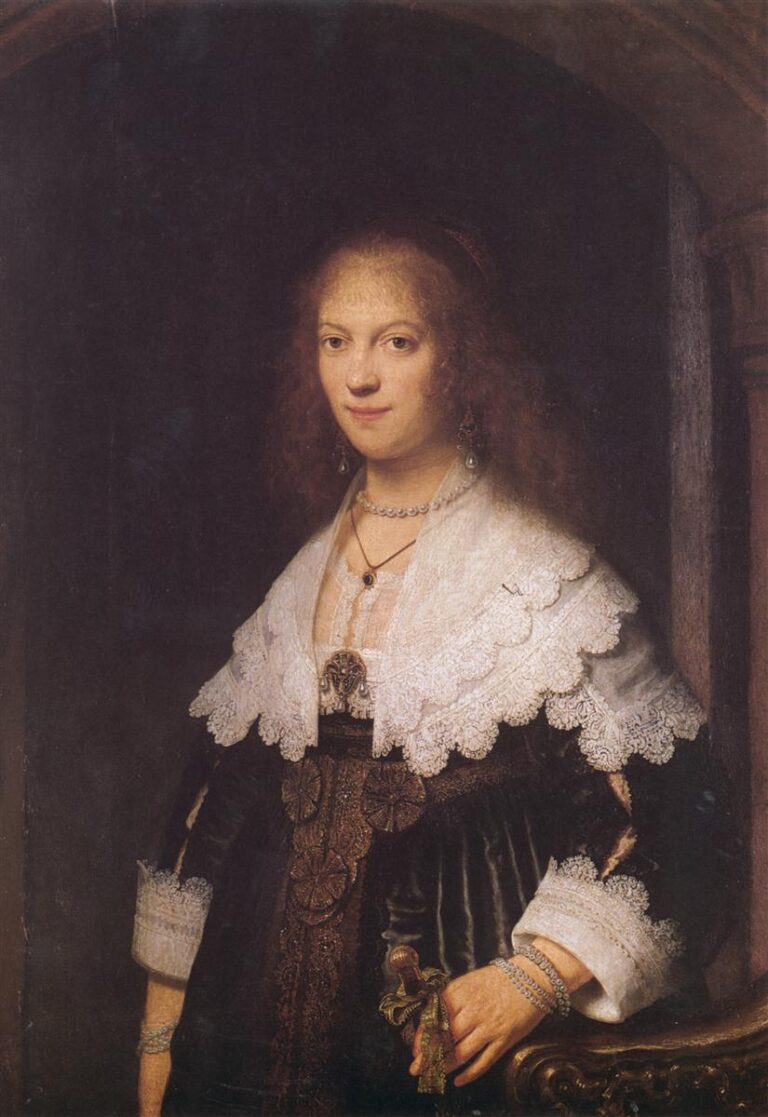
A Complete Analysis of “Maria Trip” by Rembrandt

Half-length 1639 portrait by Rembrandt of Maria Trip standing in an arched niche, wearing a dark velvet gown with elaborate white lace collar and cuffs, pearls and earrings, one hand resting on a balustrade; warm light illuminates her calm face against a deep shadowed background.

Explore Rembrandt’s 1639 portrait “Maria Trip,” a richly textured study of a Dutch patrician framed by an architectural niche. Learn how light, lace, pearls, and velvet serve a poised, humane likeness that exemplifies Rembrandt’s mature portrait style.

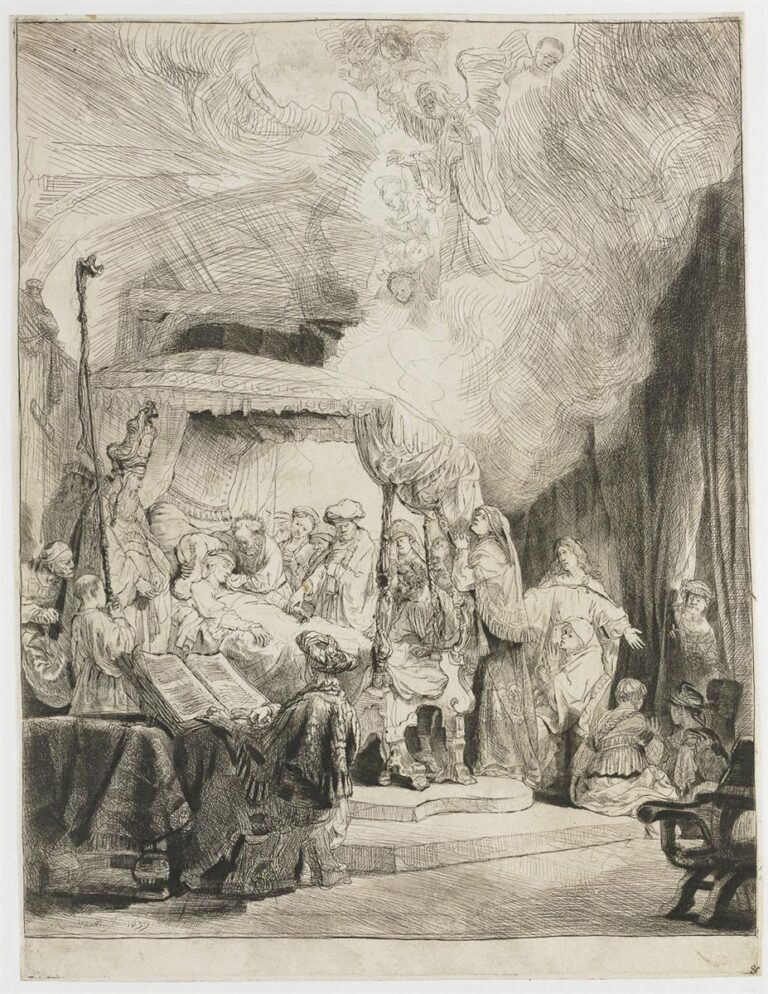
A Complete Analysis of “Death of the Virgin” by Rembrandt

Large 1639 etching by Rembrandt showing the Virgin Mary on a canopied bed surrounded by apostles and onlookers, with angels descending in swirling clouds above; strong contrasts of light and shadow, open book at left, heavy curtain at right, and gestures of prayer and awe throughout the room.

Explore Rembrandt’s 1639 “Death of the Virgin,” a monumental etching that stages Mary’s final moments as a communal, light-filled drama. Discover the composition, symbolism, line work, and chiaroscuro that make this print one of the artist’s most moving meditations on passage and grace.

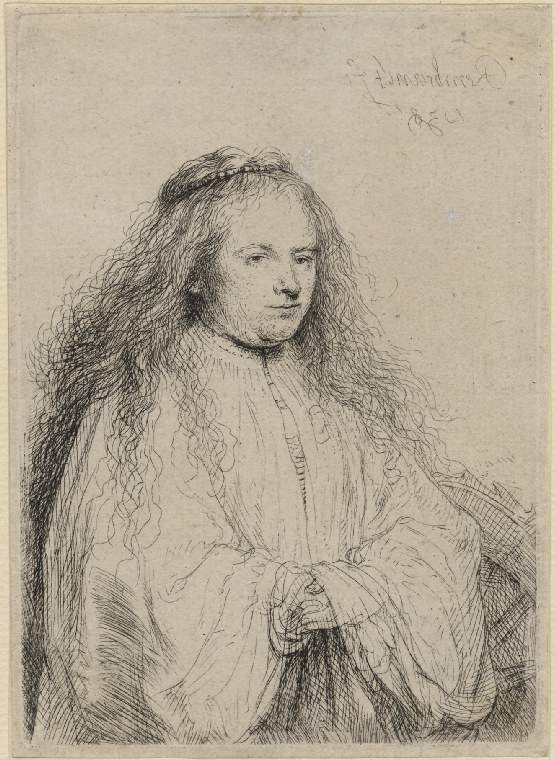
A Complete Analysis of “Saskia as St. Catherine” by Rembrandt

Etching of a young woman with long flowing hair and a simple coronet, shown half-length in a voluminous robe with hands lightly clasped; the calm, frontal face suggests St. Catherine while the background remains blank, emphasizing line and light.

Rembrandt’s etching shows his wife Saskia inhabiting the role of St. Catherine with calm intelligence. Flowing hair, voluminous robes, and a luminous, minimally worked face create a contemplative saint free of heavy attributes, revealing how the artist fused devotion with an intimate, modern portrait.

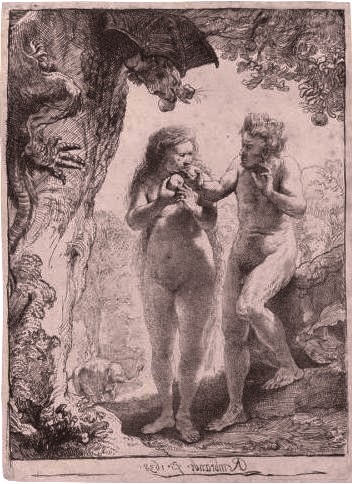
A Complete Analysis of “Adam and Eve” by Rembrandt

Etching of Adam and Eve standing in a forest clearing beneath a heavy tree; Eve holds the fruit while Adam raises his hands in anxious hesitation as a human-like serpent peers down from the branches; distant animals and rough bark frame the tense scene.

Rembrandt’s 1638 etching stages Genesis as a human conversation beneath a cavernous tree. With supple chiaroscuro, psychologically precise gestures, and a theatrically persuasive serpent, the artist captures the charged instant before the bite, turning myth into an intimate drama of attention, delay, and desire.