Category Rembrandt

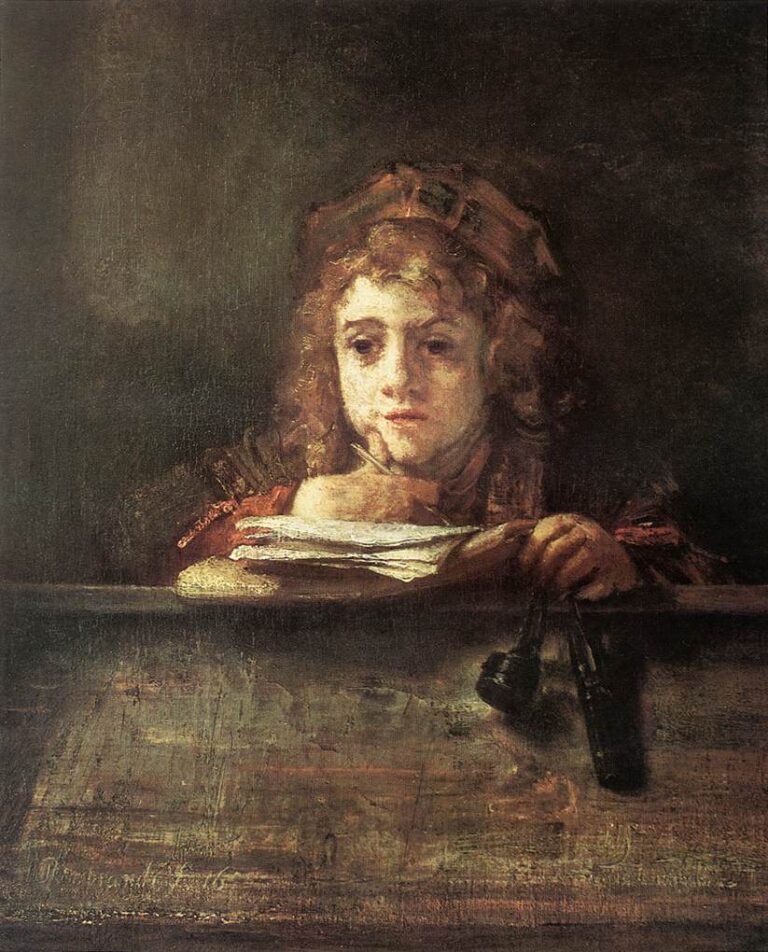
A Complete Analysis of “Titus” by Rembrandt

Oil portrait of a teenage boy leaning over a desk with papers and a quill, an inkpot hanging by cords from his right hand; his softly lit face looks downward against a dark background.

An in-depth reading of Rembrandt’s 1655 portrait “Titus,” exploring composition, light, palette, brushwork, symbolism of the writing tools, family context, and why the painting’s poised, reflective mood remains so compelling.

A Complete Analysis of “The Polish Rider” by Rembrandt

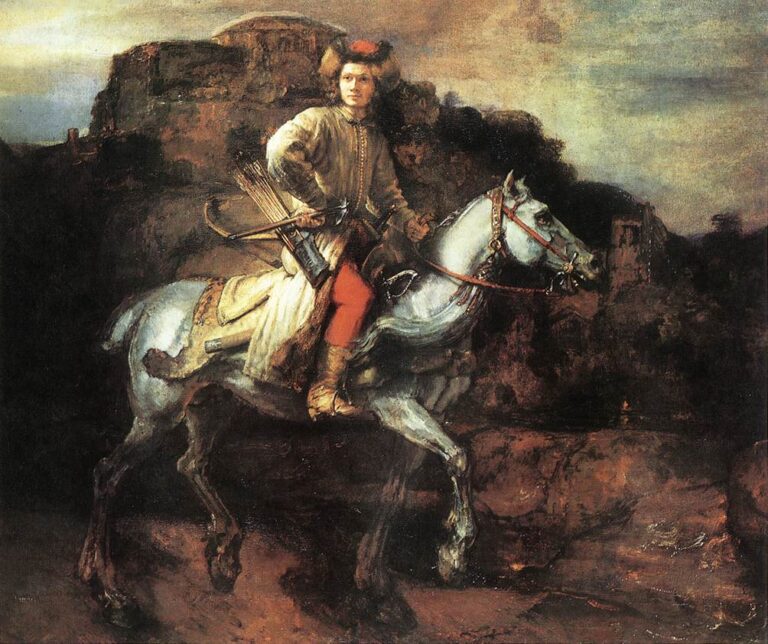
Life-size painting of a young rider in Eastern European costume on a gray horse moving through a rocky, dark landscape; weapons hang at his side, ruins and a distant fire appear behind, and moody light falls across the alert face and the horse’s arched neck.

Rembrandt’s 1655 “The Polish Rider” is a rare, life-size equestrian portrait that blends likeness, history, and allegory. A young horseman in Eastern dress rides through a rugged landscape, rendered in late Rembrandt light and earth tones that turn vigilance and journey into a profound, human-scale drama.

A Complete Analysis of “The Agony in the Garden” by Rembrandt

Small pen-and-wash drawing of Christ kneeling beside an angel who clasps his hands; faint sleeping figures and a distant city appear in outline, while large areas of blank paper evoke the silent night of Gethsemane.

Rembrandt’s 1655 drawing “The Agony in the Garden” compresses Christ’s night in Gethsemane into a tender exchange with an angel. Sparse pen lines, gentle washes, and vast negative space create a scene of intimate consolation, human-scale divinity, and quiet resolve poised against the distant city of fate.