Category Rembrandt

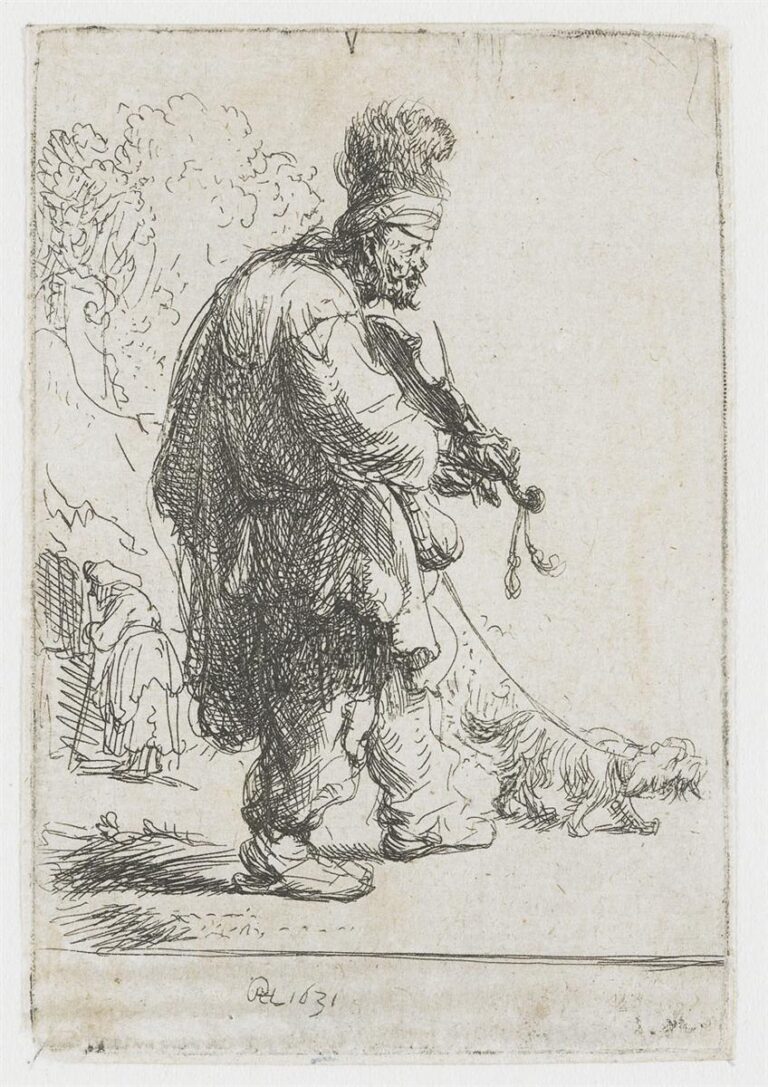
A Complete Analysis of “The Blind Fiddler” by Rembrandt

Etching of a blind street fiddler in bulky clothes playing his instrument while a long-haired dog stretches at his feet; light, lively lines describe feathered hat, coat, and curls against an open background with a small figure and trees to the left.

An in-depth analysis of Rembrandt’s 1631 etching of a street musician and his dog, exploring composition, the musical logic of line, humane portrayal of poverty, tactile textures, printing variants, and why this spare scene still resonates as a study in attention and resilience.

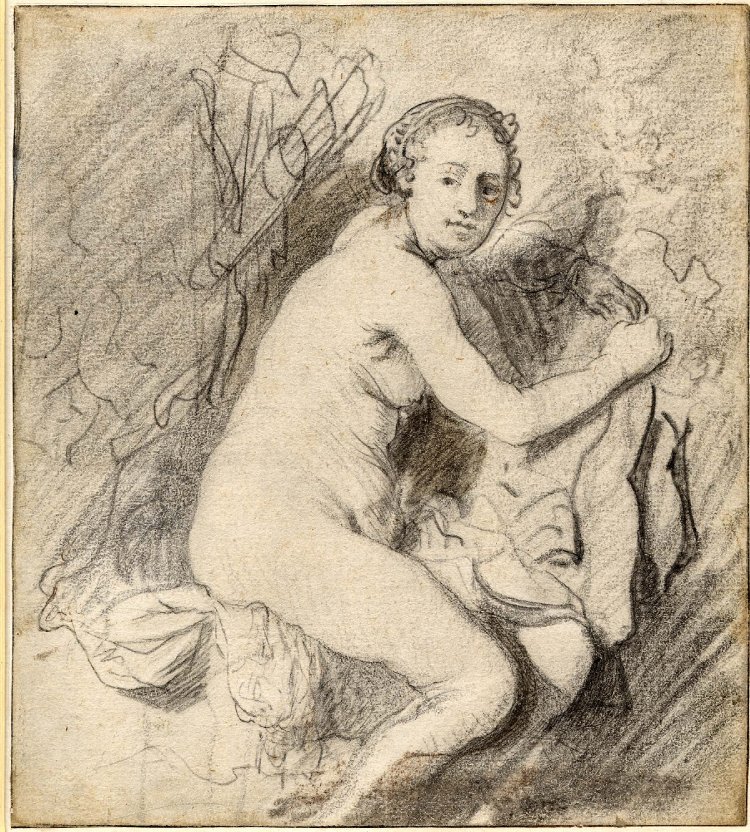
A Complete Analysis of “Diana at the Bath” by Rembrandt

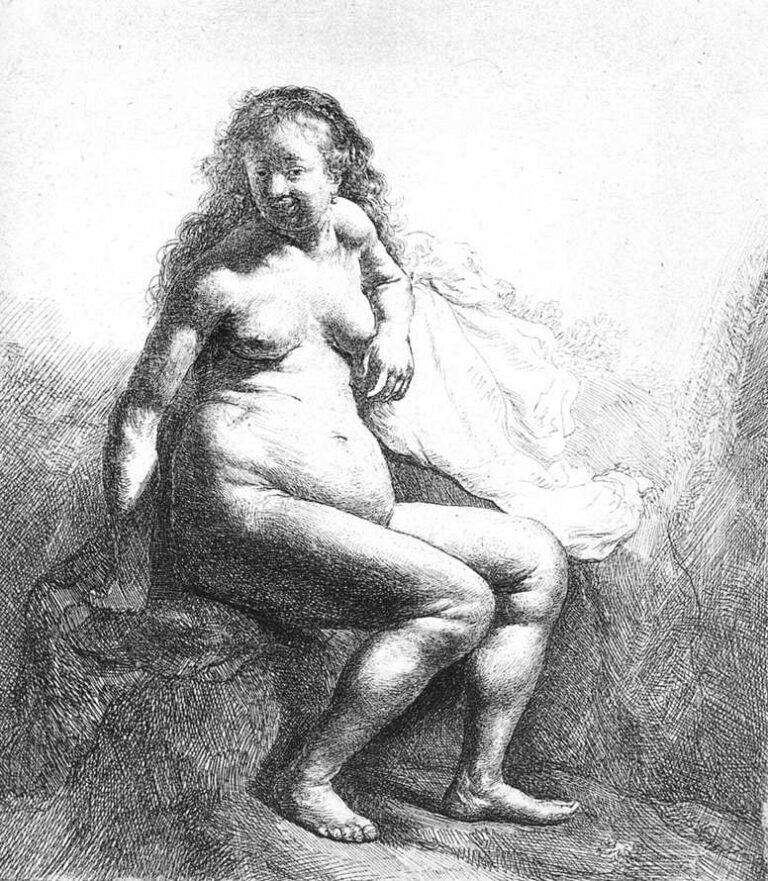
A 1631 drawing by Rembrandt showing a nude woman seated at the water’s edge, turning over her shoulder toward the viewer, with soft light on her back and knee, rough foliage and drapery behind, and expressive lines modeling face, hands, and cloth.

Rembrandt’s 1631 “Diana at the Bath” transforms a classical myth into an intimate encounter. Through spiraling composition, living line, and candle-like light on skin, the artist presents a goddess who looks back at us, turning a private act into a humane dialogue about attention, modesty, and the beauty of unidealized form.