Category Rembrandt

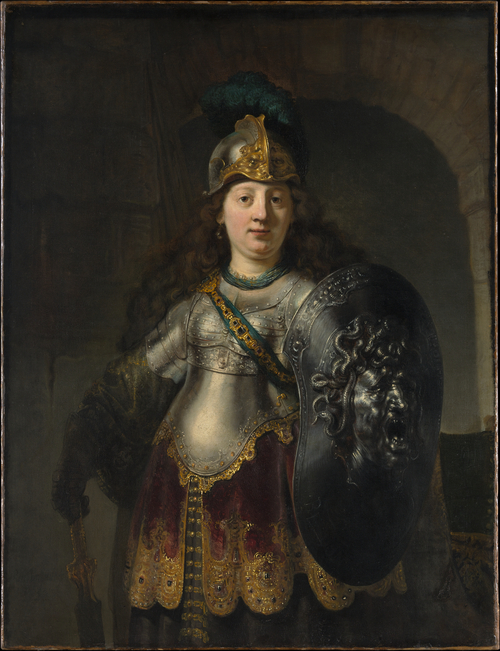
A Complete Analysis of “Bellona” by Rembrandt

Three-quarter-length painting of a woman as the Roman war goddess Bellona, wearing helmet and polished breastplate with a velvet skirt, holding an oval shield embossed with Medusa before a shadowed stone arch.

Rembrandt’s 1633 “Bellona” unites myth and portraiture through luminous armor, a terrifying Medusa shield, and a calmly commanding gaze, turning the goddess of war into a human-scale meditation on authority, readiness, and restraint.

A Complete Analysis of “The Rape of Europe” by Rembrandt

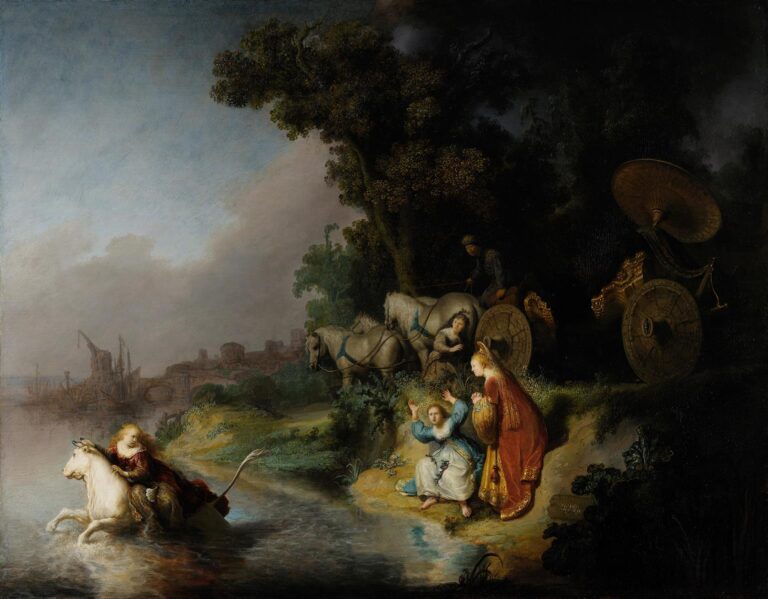
Europa, in a red mantle, clings to a white bull stepping into a river as her companions cry out on the bank; horses rear by a gilded carriage under dark trees, and a pale sky opens over distant harbor walls.

Painted in 1632, Rembrandt’s “The Rape of Europe” turns a classical abduction into a gripping, human-scale drama. Europa rides the white bull toward a luminous river while attendants and coachmen react along a shadowed bank; rich costume, credible light, and a panoramic harbor bind myth to the real world, revealing destiny’s shock in a single, suspended instant.

A Complete Analysis of “Portrait of a Young Woman” by Rembrandt

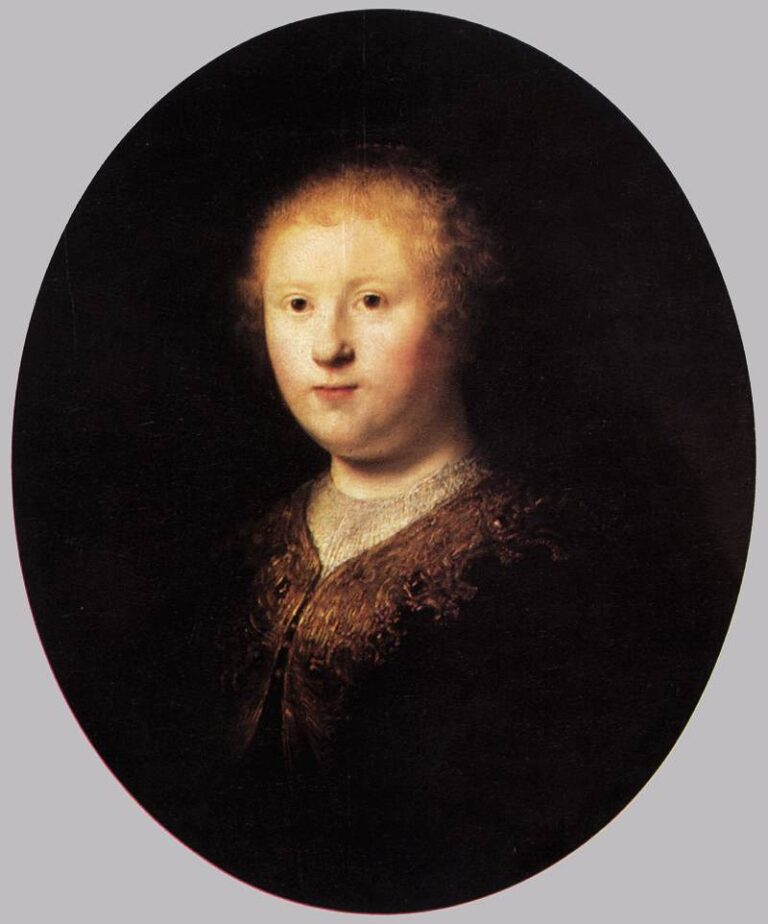
Oval portrait of a young woman emerging from a dark background; her softly illuminated face turns three-quarter left above a simple collar and subtly embellished bodice, the surrounding shadow framing her features in a quiet glow.

Painted in 1632, Rembrandt’s “Portrait of a Young Woman” places a softly lit face within an oval darkness to create an intimate, poised presence. With restrained costume, delicate modeling, and a tonal design that lets light emerge like dawn, the work transforms civic decorum into a timeless meditation on youth and nearness.

A Complete Analysis of “Portrait of a Seated Woman” by Rembrandt

A woman seated three-quarter right wears a bright millstone ruff and lace-trimmed cap above a dark embroidered gown; warm light models her face as her hands rest composedly in her lap, one holding tassels, a ring visible, against a neutral brown background.

Painted in 1632, Rembrandt’s “Portrait of a Seated Woman” transforms Amsterdam’s decorous fashion—brilliant ruff, lace cap, sober gown—into a luminous study of presence. Through nested curves, steady studio light, and exquisitely rendered textiles, the portrait balances civic restraint with psychological warmth, turning hands, fabrics, and face into a quietly persuasive statement of character.

A Complete Analysis of “Portrait of a Seated Man” by Rembrandt

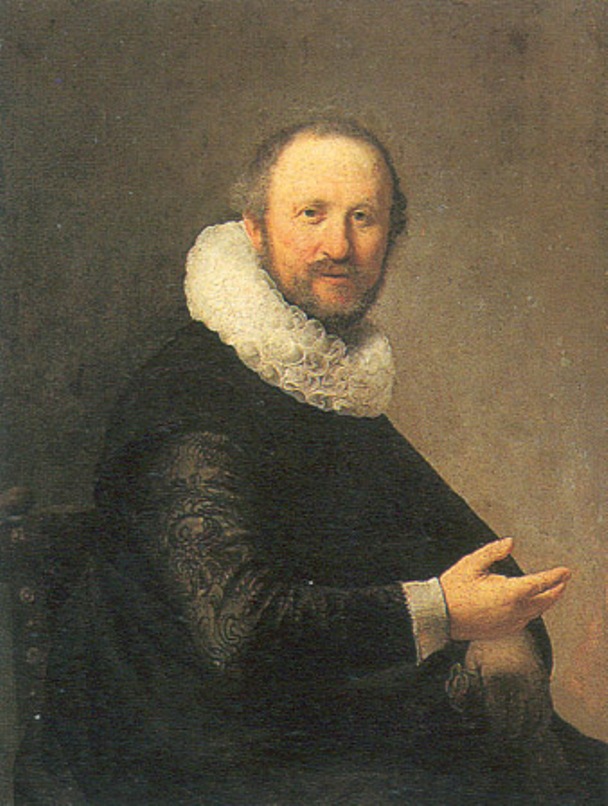
A middle-aged man sits three-quarter to the right wearing a dark garment with a patterned sleeve and a bright millstone ruff; his right hand opens in a gentle gesture while his face, warmly lit against a neutral background, gazes calmly toward the viewer.

Painted in 1632, Rembrandt’s “Portrait of a Seated Man” distills Amsterdam’s ideal of dignified restraint into a luminous, intimate likeness. A brilliant ruff, patterned sleeve, and open, conversational hand frame a face modeled by soft studio light, revealing a sitter who is measured, approachable, and psychologically present.

A Complete Analysis of “Marten Looten” by Rembrandt

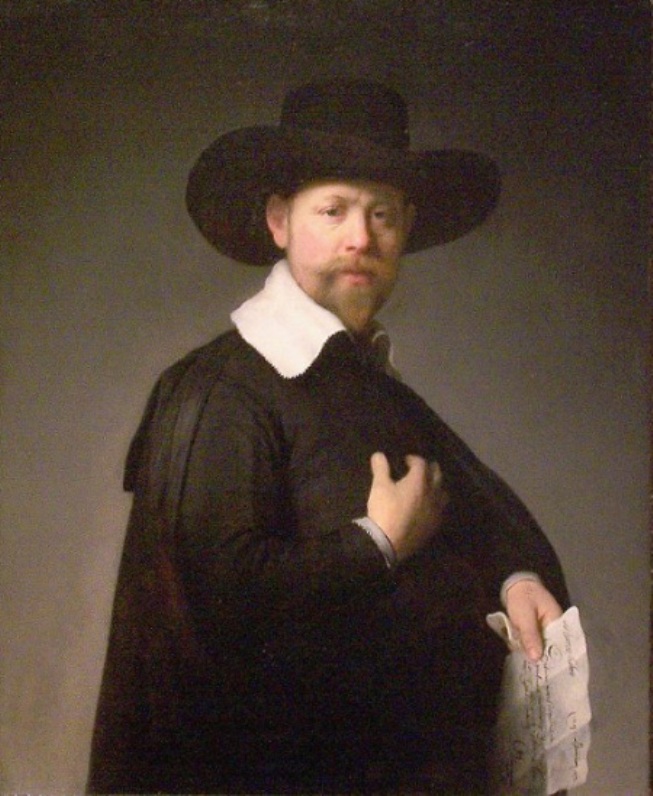
Half-length portrait of a man in a wide black hat and black cloak with a white collar, one hand resting on his chest and the other holding a folded paper, turning three-quarter toward the viewer against a plain gray background.

Painted in 1632, Rembrandt’s portrait of Marten Looten presents a dignified Amsterdam burgher under calm studio light. The broad hat, crisp white collar, hand-on-heart gesture, and folded paper unite sincerity, literacy, and civic identity, while restrained color and lucid chiaroscuro give the likeness a poised psychological presence.

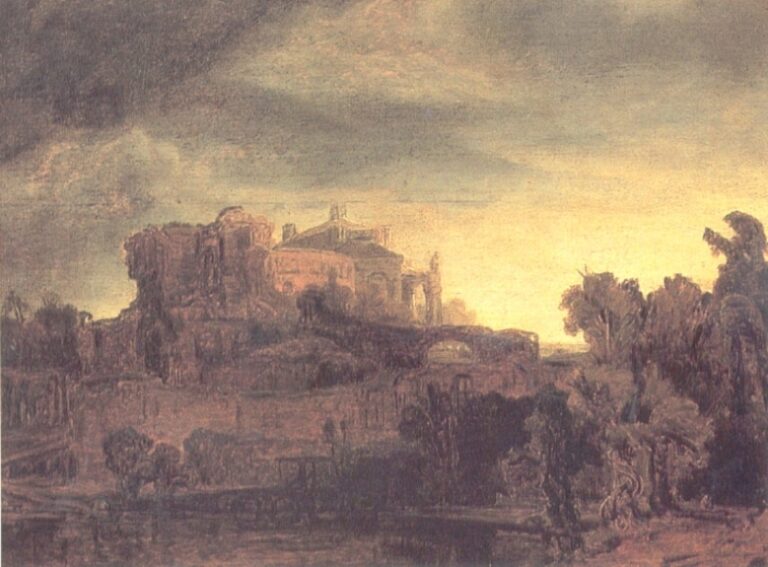
A Complete Analysis of “Landscape with a Castle” by Rembrandt

A moody landscape with a sunlit break in the sky behind a hilltop castle, dark terraces and trees massed in the foreground, and soft, brown-olive tones blending stone, foliage, and cloud into a luminous, weathered panorama.

Painted in 1632, Rembrandt’s “Landscape with a Castle” transforms an imagined fortress and a clearing sky into a drama of light and memory. Through layered tonal bands, a warm, low-key palette, and atmospheric chiaroscuro, the painting treats architecture as a protagonist and weather as time itself, revealing how a landscape can carry the psychological depth of a figure scene.

A Complete Analysis of “Albert Cuyper” by Rembrandt

Oval portrait of a gentleman in a wide black hat and crisp white ruff, his face warmly lit against a brown-green background, with trimmed mustache and small goatee, turning three-quarter toward the viewer.

Painted in 1632 during Rembrandt’s first Amsterdam surge, “Albert Cuyper” presents a poised sitter in broad hat and millstone ruff, modeled by calm studio light within an intimate oval. Through balanced chiaroscuro, restrained color, and subtle surface variety, the portrait honors civic decorum while revealing a living, warm temperament—an early demonstration of the young master’s ability to fuse likeness with presence.

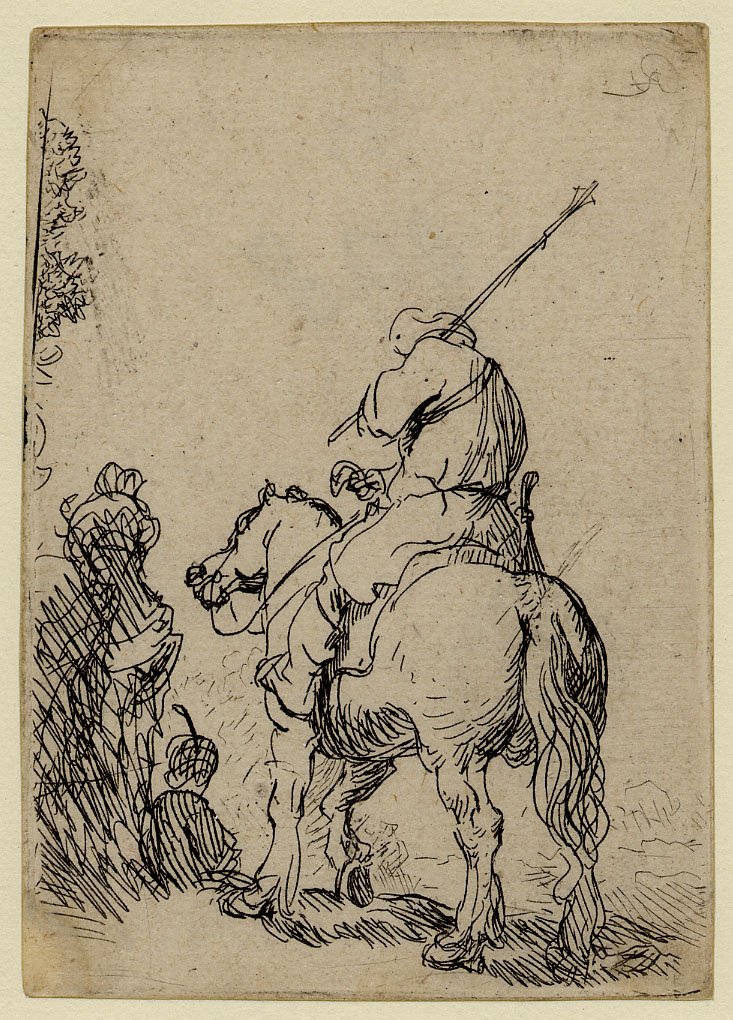
A Complete Analysis of “Turbaned Soldier on Horseback” by Rembrandt

A rear view of a compact horse with a rider wearing a turban and cloak, a long lance angled over his shoulder as he turns toward a small figure crouched by dense bushes; the right half of the etching remains open and pale, suggesting sky and distance.

Etched in 1632, Rembrandt’s “Turbaned Soldier on Horseback” captures a rear view of a mounted guard pausing to heed a figure by a thicket. With brisk, persuasive lines, the artist shapes equine power, poised vigilance, and open narrative space, proving how economy of mark, diagonal rhythm, and airy paper whites can turn a small sheet into a compelling study of motion and alertness.

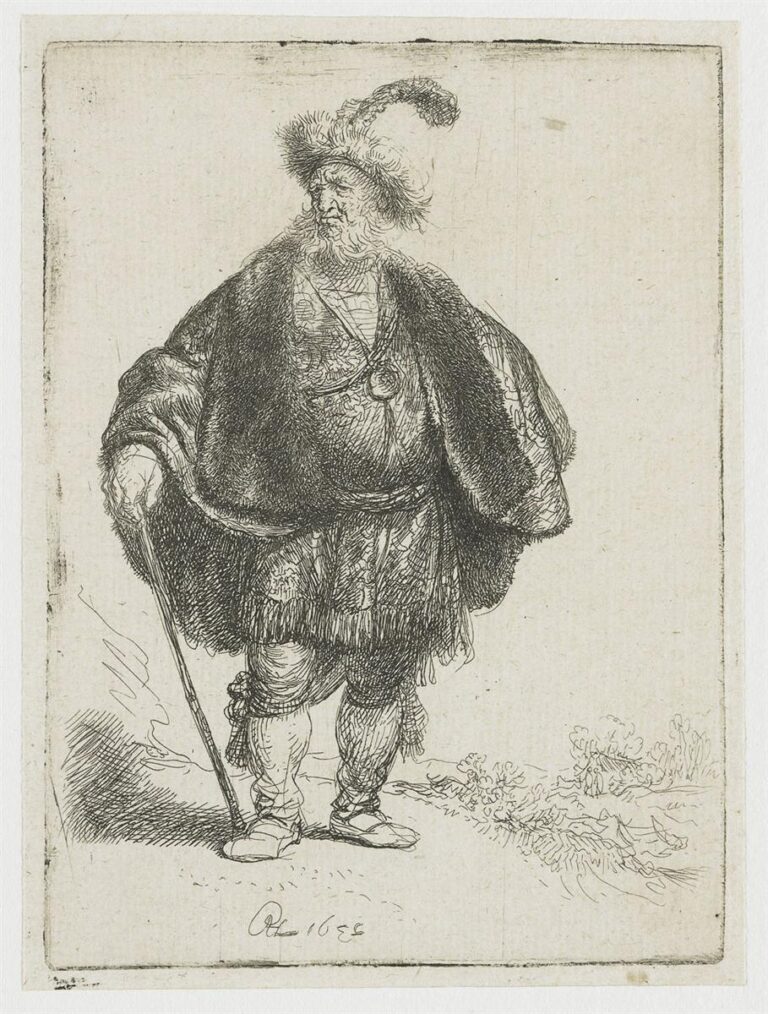
A Complete Analysis of “The Persian” by Rembrandt

A stout, bearded man in a fur-trimmed cape and plumed cap stands with a walking stick, his head turned slightly aside; patterned tunic, gathered trousers, and a medallion catch the light, all rendered in Rembrandt’s fine etched lines against an otherwise open ground.

Created in 1632, Rembrandt’s etching “The Persian” portrays a single figure in exotic dress whose authority rests on stance, garment, and the artist’s masterful handling of line. The composition, textures, and restrained lighting transform studio costume into a meditation on identity and presence, revealing how the Dutch imagination engaged with distant cultures while preserving the individuality of the person depicted.

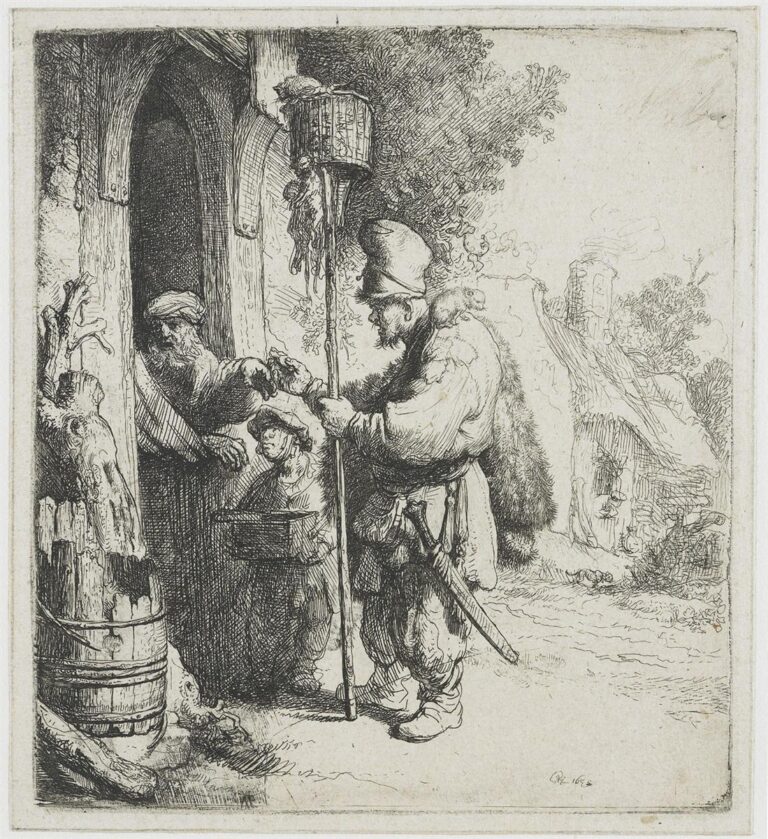
A Complete Analysis of “The Rat Poison Peddler (The Rat Catcher)” by Rembrandt

At a cottage door, a bearded peddler with a tall staff topped by a wicker trap exchanges coins with a householder, while a boy assistant holds a box of wares; a barrel and tree stump sit in the foreground and a small thatched house recedes along a path, all drawn with Rembrandt’s fine cross-hatched etching lines.

Etched in 1632 during Rembrandt’s early Amsterdam years, “The Rat Poison Peddler (The Rat Catcher)” transforms a doorstep transaction into a vivid study of character and community. Through a doorway composition, deft hatching, and the emblematic staff and trap, the print explores trust, suspicion, and the fragile exchanges that protect a household from danger while keeping outsiders at the threshold.