Category Rembrandt

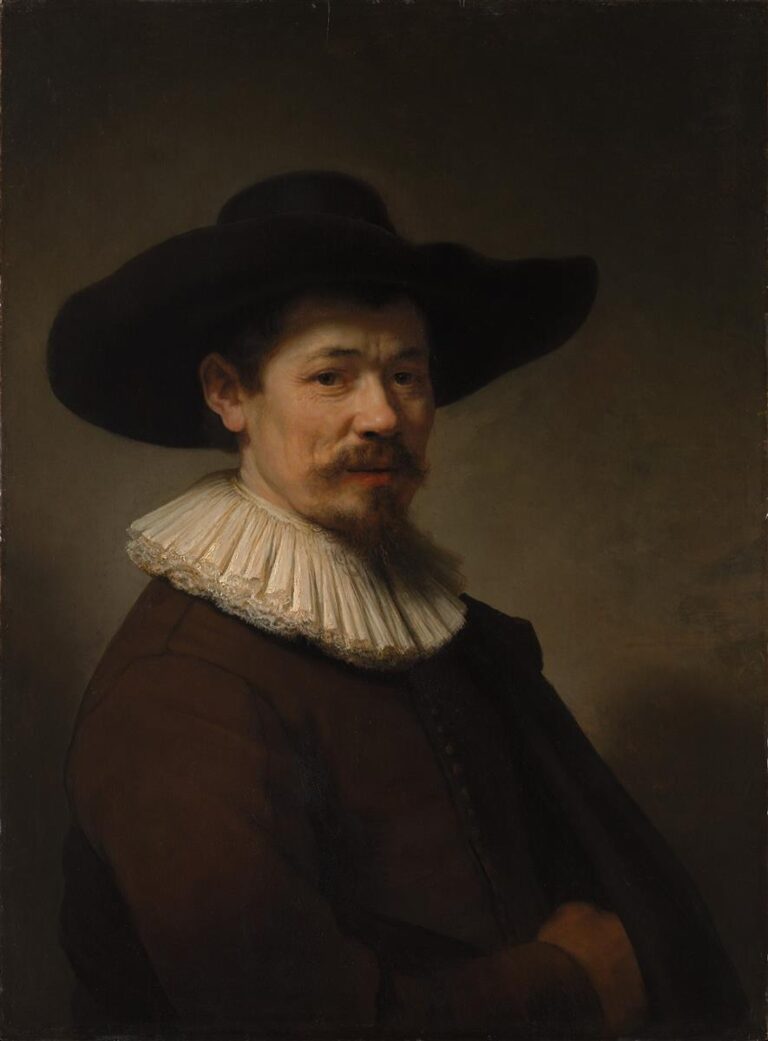
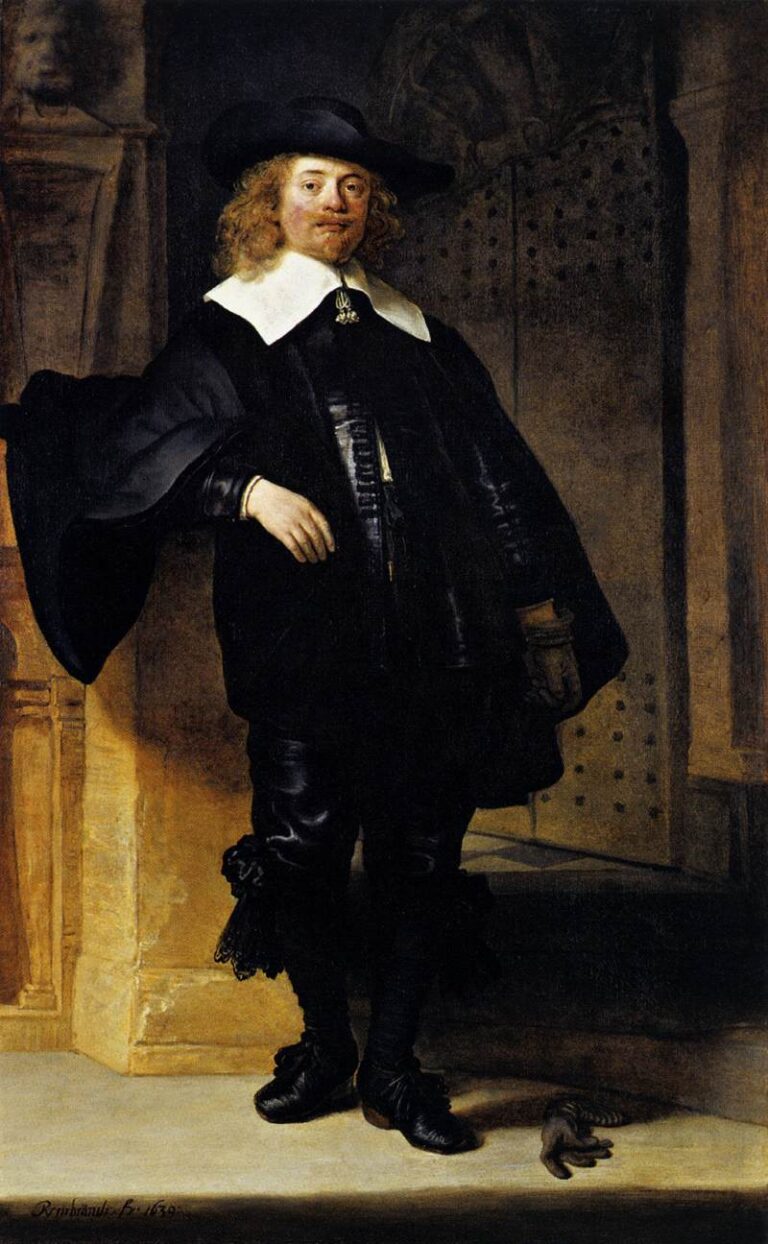
A Complete Analysis of “Portrait of Herman Doomer” by Rembrandt

Three-quarter portrait by Rembrandt of Herman Doomer wearing a broad black hat and crisp white ruff, turned toward the viewer against a warm gray background, his expression thoughtful and composed.

Rembrandt’s 1640 “Portrait of Herman Doomer” presents Amsterdam’s famed cabinetmaker with sober grandeur—broad hat, sculptural ruff, and a gaze alive with intelligence. Explore how light, palette, composition, and material detail reveal a craftsman’s character and the painter’s own mastery.

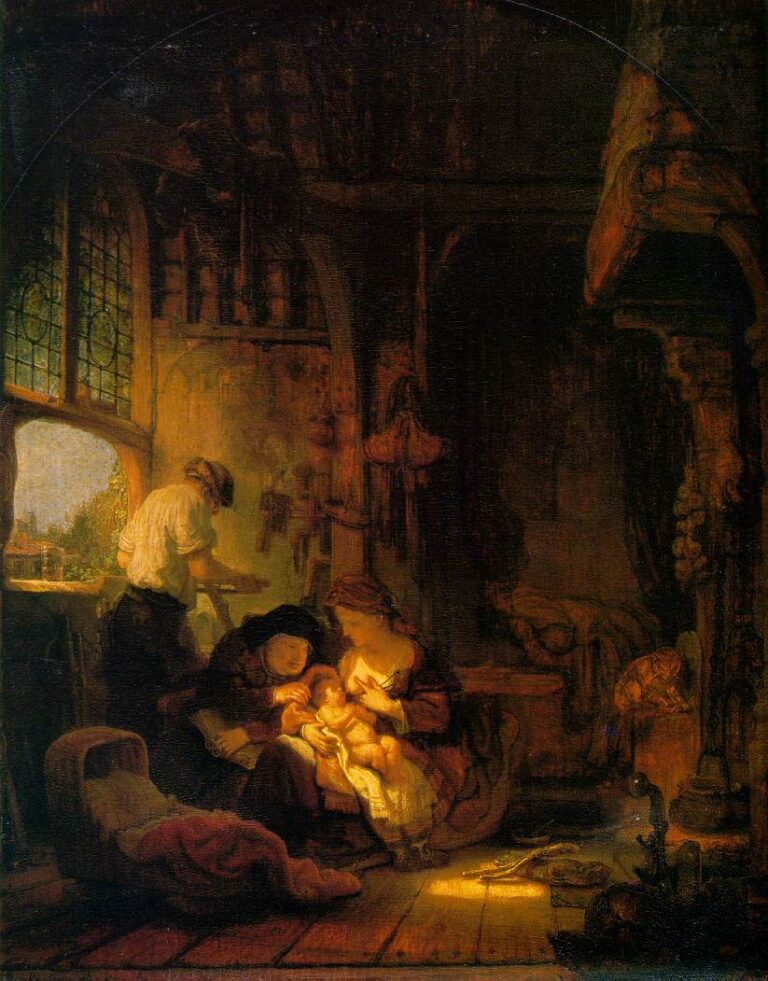
A Complete Analysis of “Holy Family” by Rembrandt

Warmly lit interior by Rembrandt showing Mary and an older woman admiring the Christ Child while Joseph works at a window; a cradle, brazier, tools, and shadowed furnishings fill the humble room as light falls across the floor and figures.

Rembrandt’s 1640 “Holy Family” turns a sacred subject into an intimate Dutch interior, where warm light, believable architecture, and everyday objects frame Mary, the Christ Child, Joseph, and Saint Anne. Explore how chiaroscuro, composition, and texture reveal divinity within domestic life.

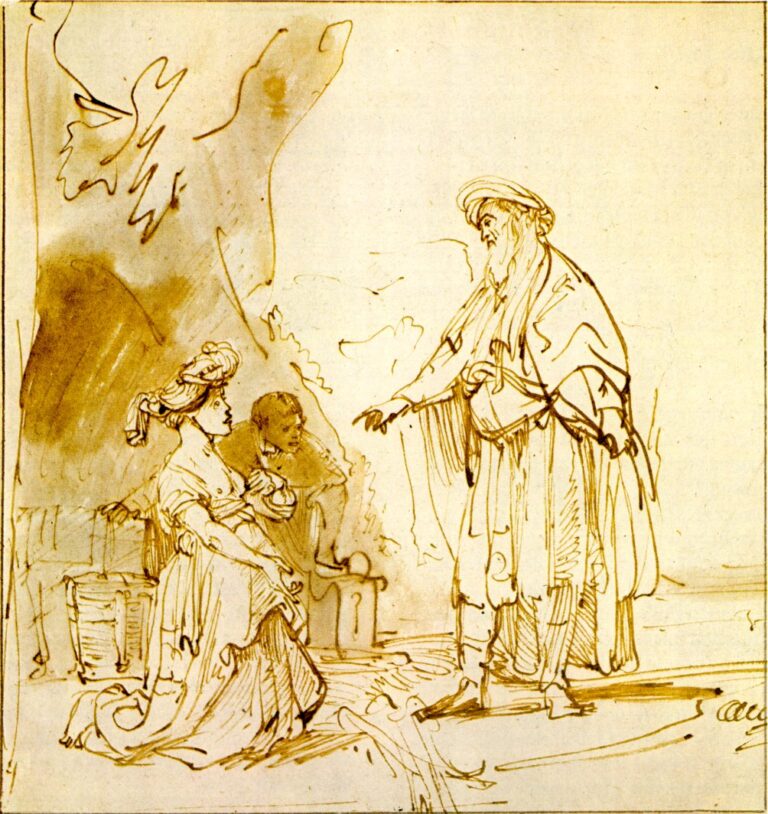
A Complete Analysis of “Boas und Ruth” by Rembrandt

Pen-and-wash drawing by Rembrandt showing Ruth kneeling at left, Boaz standing at right with an outstretched hand, and a witness behind; sparse lines and warm washes suggest a threshing-floor setting and a respectful conversation between the figures.

Rembrandt’s 1640 drawing “Boas und Ruth” turns a few strokes of ink and wash into a vivid biblical encounter. Discover how gesture, composition, and minimal tone portray Ruth’s appeal, Boaz’s measured response, and the witness who makes kindness public.

A Complete Analysis of “Widebrim” by Rembrandt

Minimal pen-and-ink drawing by Rembrandt of a cloaked man walking with hands tucked inside his garment, wearing a large fringed wide-brim hat and boots; few lines define the figure against a blank paper ground.

Rembrandt’s 1639 drawing “Widebrim” captures a cloaked passerby in a sweeping hat with just a handful of ink lines. Explore how contour, motion, and selective detail turn this spare street study into a vivid portrait of character and movement.

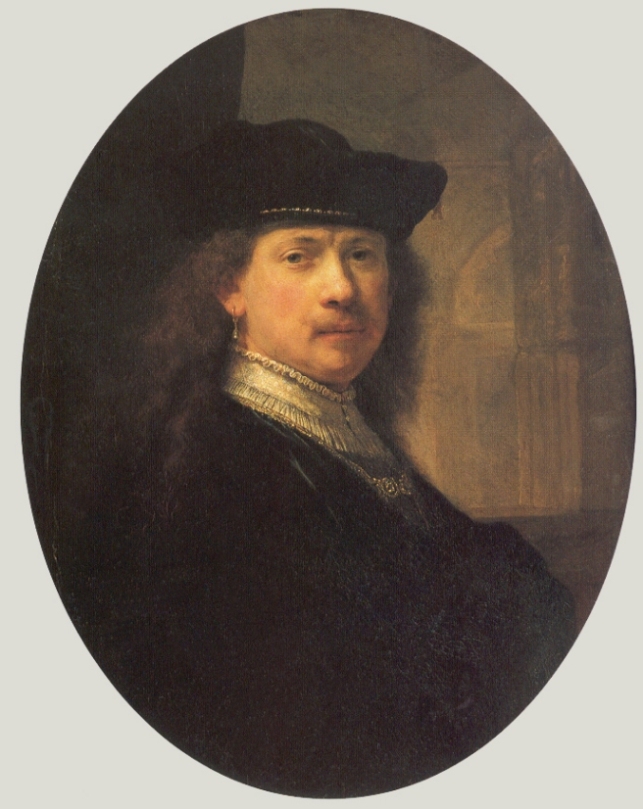
A Complete Analysis of “Self-portrait” by Rembrandt

Oval self-portrait by Rembrandt, 1639: the artist wears a dark cap and velvet garment with a pale lace collar, turns slightly toward the viewer, and is softly lit from the left against a muted architectural background.

Rembrandt’s 1639 “Self-portrait” presents the artist within an oval frame, his face quietly illuminated beneath a dark cap and lace collar. Explore how composition, light, texture, and restrained costume create a profoundly present image that balances Renaissance poise with Dutch candor.