Category Rembrandt

A Complete Analysis of “The Flight into Egypt” by Rembrandt

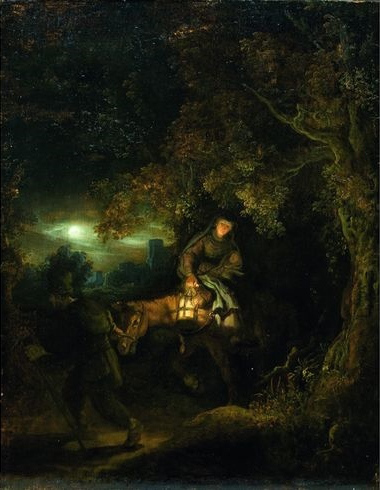
Night landscape by Rembrandt showing Joseph leading a donkey carrying Mary and the infant; a warm lantern hangs from the donkey while a cool moon lights a distant village, the figures moving along a forested path.

Discover how Rembrandt’s 1640 nocturne “The Flight into Egypt” turns a biblical journey into a luminous meditation on guidance and care. Explore the dual light sources, atmospheric composition, restrained palette, and expressive brushwork that make this small scene feel monumental.

A Complete Analysis of “Self-portrait” by Rembrandt

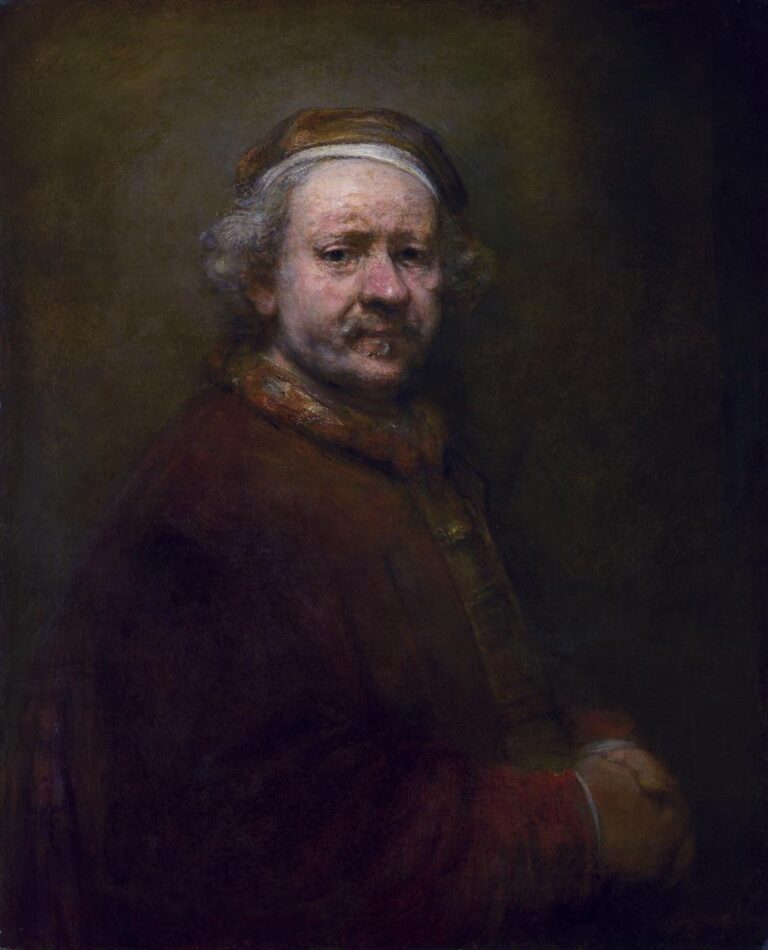
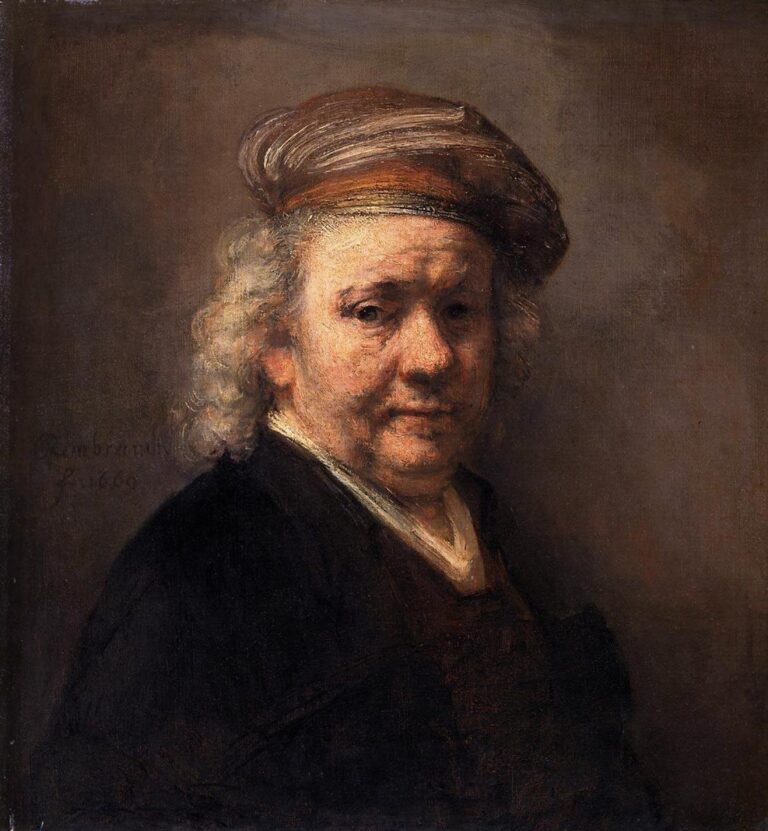
Rembrandt’s 1669 self-portrait showing the artist in a brown cap against a neutral background, his softly illuminated face turning toward the viewer while his dark coat recedes into warm shadow.

Explore Rembrandt’s 1669 “Self-portrait,” a late masterpiece where a luminous face in a simple brown cap emerges from warm shadow. Learn how composition, light, palette, and tactile brushwork create a candid, enduring image of the artist at life’s end.

A Complete Analysis of “Self-portrait” by Rembrandt

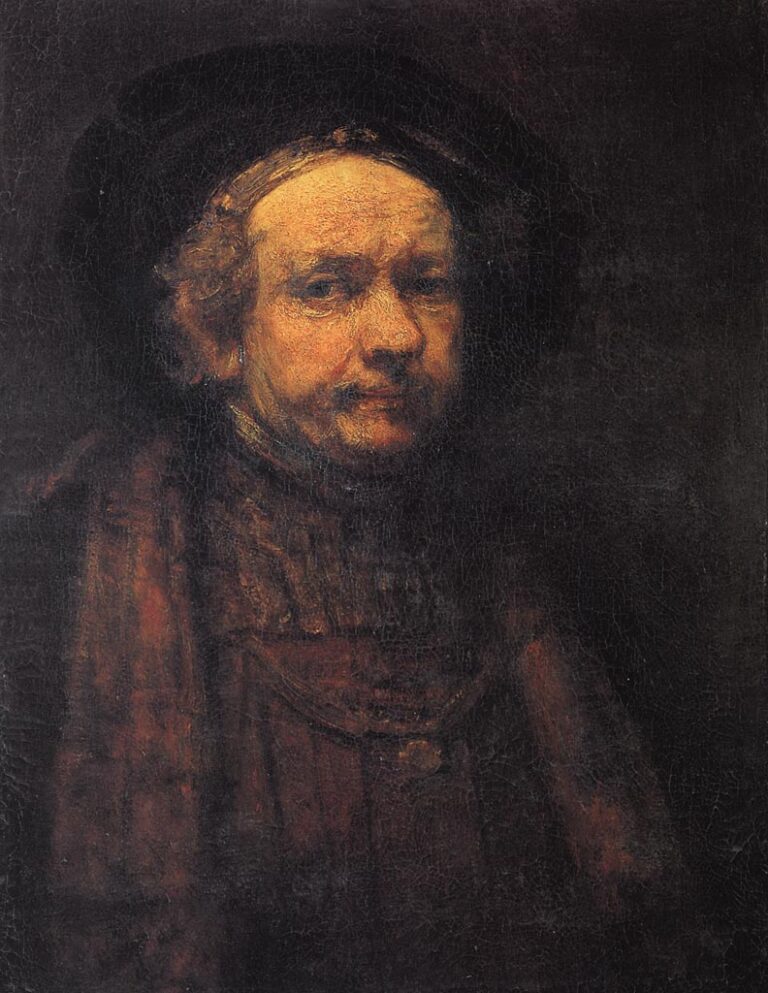
Rembrandt’s 1669 self-portrait showing the artist in a dark cap, his gently lit face emerging from a deep brown background while the body and clothing dissolve into shadow, painted with thick, tactile strokes.

Explore Rembrandt’s 1669 “Self-portrait,” a culminating late work where a luminous face emerges from warm shadow. Learn how composition, lighting, restrained palette, and tactile brushwork create a candid, enduring image of the artist at life’s end.

A Complete Analysis of “Family Group” by Rembrandt

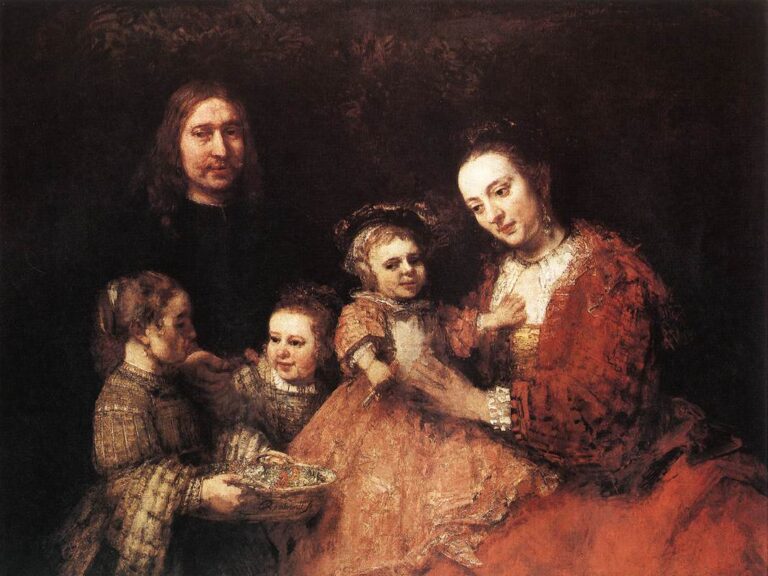
Rembrandt’s “Family Group” (1668) showing a mother in a red gown holding a child, two older children offering a dish, and a father half-lit in the background, all softly illuminated against a dark, undefined setting.

Explore Rembrandt’s 1668 “Family Group,” a late, luminous portrait where five figures gather in warm shadow. Learn how composition, light, color, and tactile brushwork turn a simple domestic scene into a profound meditation on kinship and presence.

A Complete Analysis of “Portrait of a Man” by Rembrandt

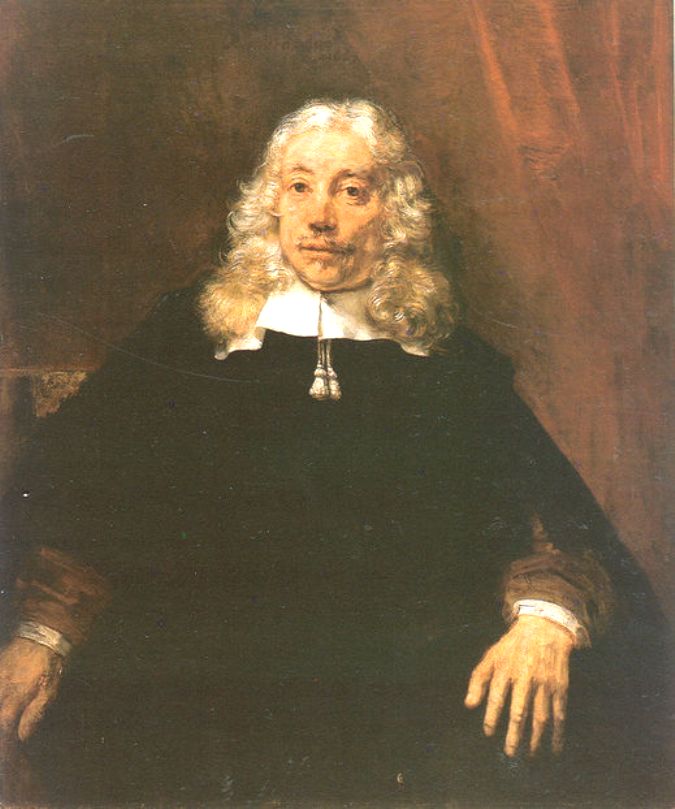
Rembrandt’s 1667 portrait of a seated man with long gray hair, a bright white collar, and dark clothing, shown against a warm curtain, his right hand relaxed in the foreground and his thoughtful face softly illuminated.

Discover Rembrandt’s 1667 “Portrait of a Man,” a late masterpiece of restraint where luminous skin, a brilliant white collar, and eloquent hands emerge from rich shadow. Explore composition, light, brushwork, and psychological depth that transform sober attire into living presence.

A Complete Analysis of “Lucretia” by Rembrandt

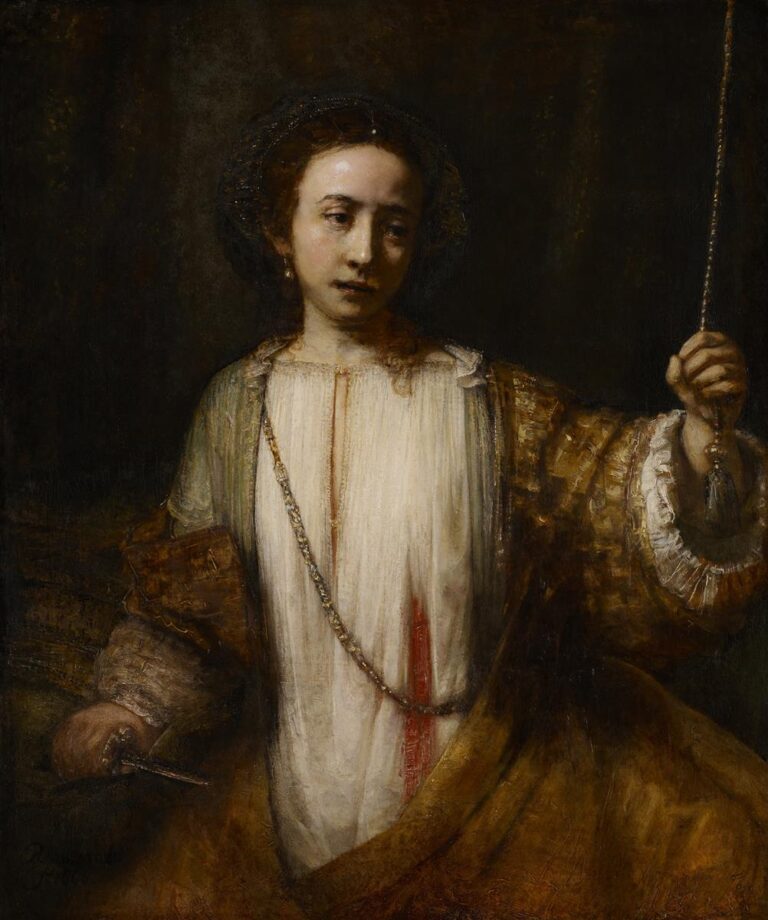
Rembrandt’s “Lucretia” (1666) showing a solemn young woman in a white chemise, a bloodstain down the front, holding a bell-cord in one hand and a dagger in the other, softly lit against a dark background with rich gold sleeves and a reflective chain.

Discover Rembrandt’s 1666 “Lucretia,” a late masterpiece of moral drama and restrained beauty. This analysis explores composition, light, palette, brushwork, gesture, and historical context to reveal how Rembrandt turns the Roman heroine’s final moment into a profoundly human tragedy.

A Complete Analysis of “The Jewish Bride” by Rembrandt

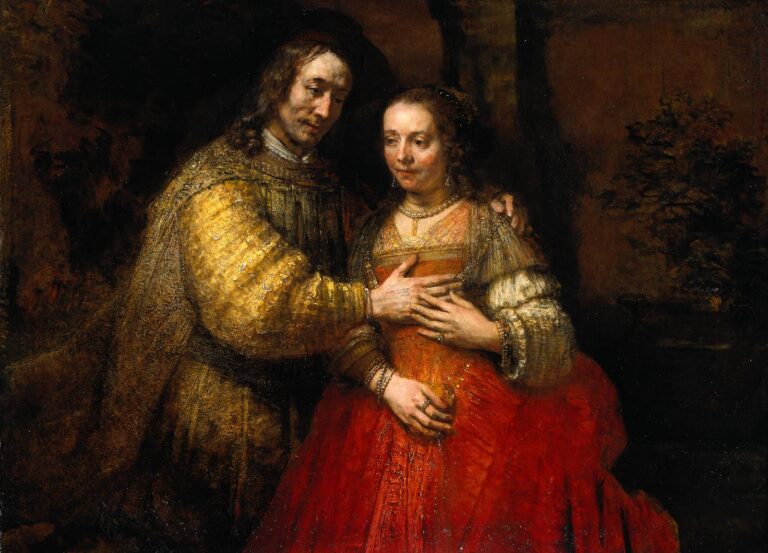
Rembrandt’s “The Jewish Bride,” showing a man in a gold sleeve placing his hand gently on a woman’s chest as he holds her hand at the waist; the woman wears a radiant red dress, both figures softly lit against a dark, indistinct background.

Explore Rembrandt’s late masterpiece “The Jewish Bride” (1666), an intimate double portrait renowned for its glowing reds and golds, sculptural brushwork, and tender, central gesture of joined hands. Discover how composition, light, and texture turn quiet affection into monumental art.

A Complete Analysis of “Juno” by Rembrandt

Rembrandt’s “Juno” (1665) showing a crowned woman in a dark interior, richly dressed with pearls and ermine, her face softly illuminated as she stands frontally with calm authority and a peacock barely visible in shadow.

Explore Rembrandt’s 1665 “Juno,” a late masterpiece of regal presence. This in-depth analysis examines composition, light, color, brushwork, costume, and symbolism to show how Rembrandt humanizes the Roman goddess while preserving monumental dignity.

A Complete Analysis of “Self-portrait” by Rembrandt

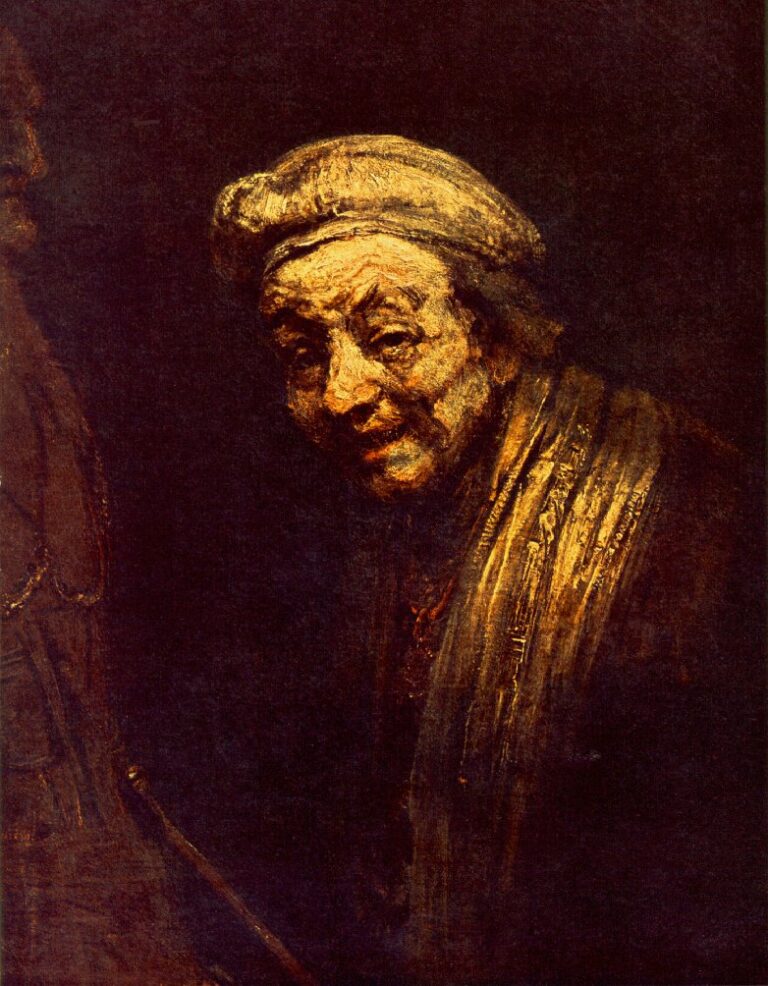
Rembrandt’s 1665 self-portrait showing the artist’s head in a white cap emerging from deep shadow, with warm highlights on his face and a streaked golden mantle descending into darkness, his expression a wry, thoughtful half-smile.

Dive into Rembrandt’s 1665 “Self-portrait,” a late, intimate canvas where a luminous head emerges from darkness. Explore composition, light, palette, brushwork, and psychology to see how the aging master turns a simple studio moment into a profound statement of presence.

A Complete Analysis of “Self-Portrait” by Rembrandt

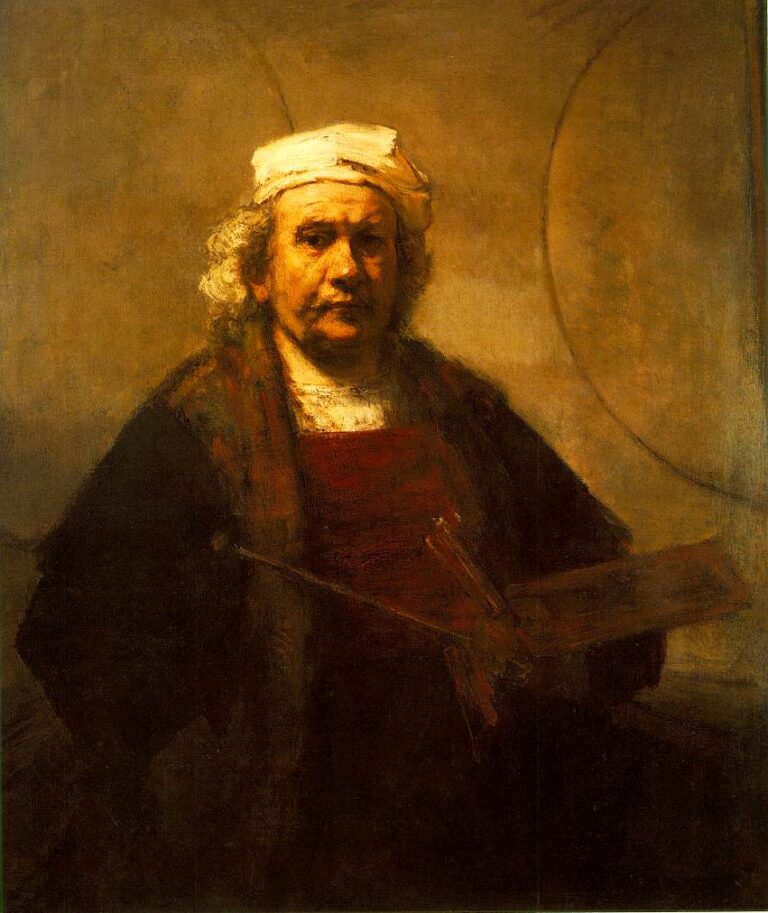
Rembrandt’s late self-portrait showing the artist frontally before a pale wall marked by two faint circles, wearing a white cap and dark studio mantle with a red bib, holding palette and brushes as warm light falls across his face.

Explore Rembrandt’s 1665 “Self-Portrait,” often called the work with the two circles—a late, uncompromising statement of mastery. Learn how composition, light, palette, and brushwork turn a studio scene with palette and cap into a profound meditation on craft and presence.