Category Rembrandt

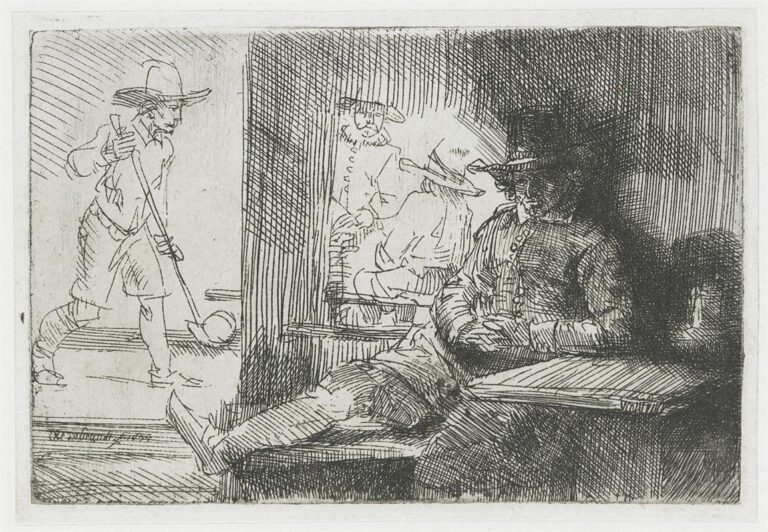
A Complete Analysis of “The Golf Player” by Rembrandt

Small etching of a tavern kolf scene: at left a man in a wide-brim hat strides with a long club; through a doorway two figures talk; at right a seated man lounges at a table in deep shadow, his leg stretched toward the viewer.

Rembrandt’s 1654 etching “The Golf Player” captures Dutch kolf culture with witty composition and rich chiaroscuro—one figure striding in with his club, companions talking inside, and a lounger in shadow—showing how line and light turn everyday leisure into art.

A Complete Analysis of “Nativity” by Rembrandt

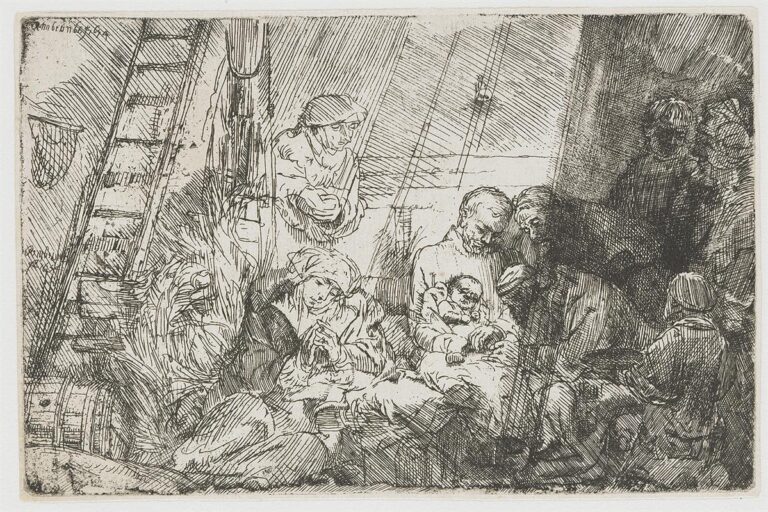
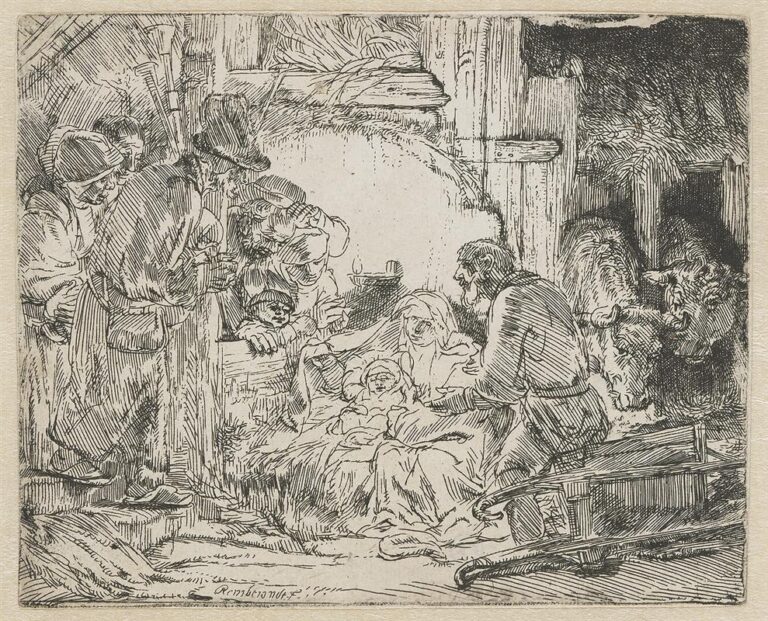
Rembrandt etching of the Nativity inside a rustic barn: Mary reclines with the swaddled infant as Joseph kneels beside her; shepherds crowd the doorway at left, two cattle peer from the shadow at right, and a sled rests in the foreground.

Rembrandt’s 1654 “Nativity” transforms Bethlehem into a crowded Dutch barn where neighbors, cattle, and tools gather around the Holy Family. With intimate lighting, vigorous line, and tactile detail, the print turns the birth of Christ into a tender scene of hospitality and recognition.

A Complete Analysis of “Jan Six” by Rembrandt

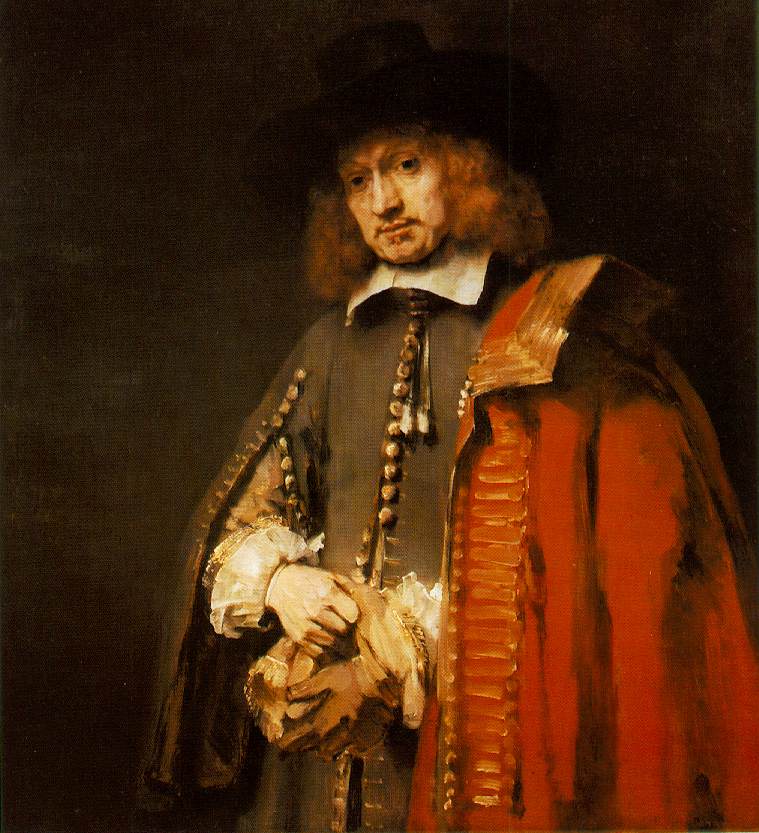
Oil portrait of Jan Six by Rembrandt showing a man in a broad black hat and gray coat with a vivid red mantle, pausing to pull on a glove; his face softly lit against a dark background, with expressive brushwork in the clothing and trim.

Rembrandt’s 1654 portrait “Jan Six” captures the cultured Amsterdam regent in a poised moment of action, using daring brushwork, a blazing red mantle, and intimate lighting to fuse status, intellect, and time into one unforgettable image.