Category Henri Matisse

A Complete Analysis of “Cyclamen Pourpre” by Henri Matisse

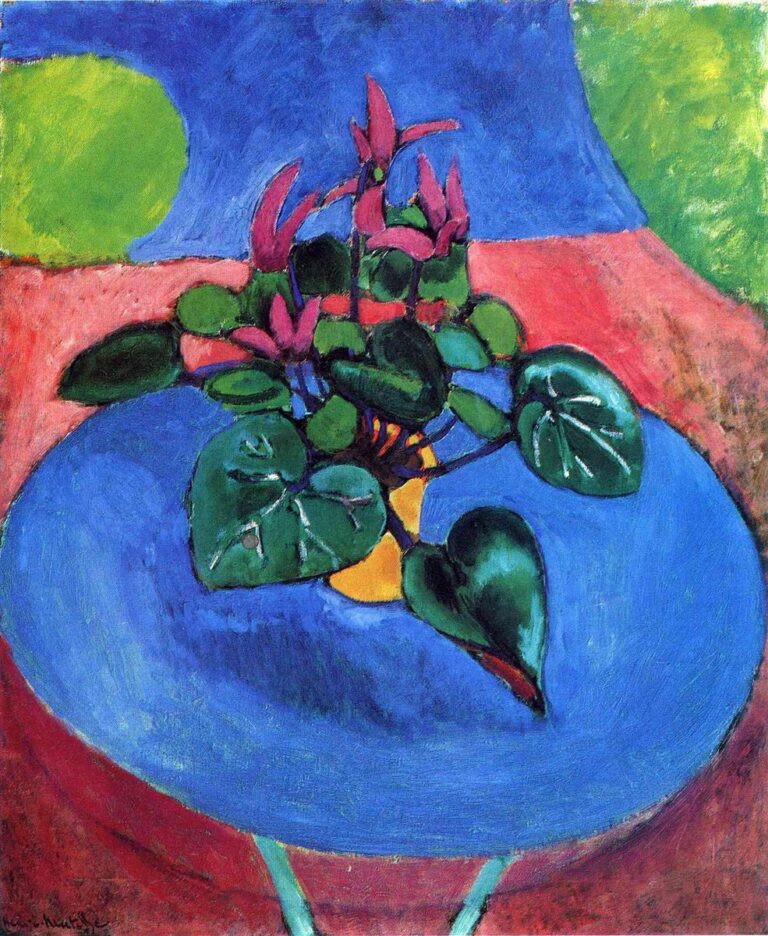
Close view of a potted cyclamen centered on a large circular blue tabletop; dark green, heart-shaped leaves with pale highlights surround magenta petals rising upright; background divided into flat fields of deep blue and warm red with two green circular shapes at the top corners. Thick black contours and saturated colors characterize Henri Matisse’s 1912 “Cyclamen Pourpre.”

Matisse turns a humble potted cyclamen into a bold orchestration of circles, diagonals, and saturated color. This longform analysis explains how the blue tabletop functions as halo and stage, why black contour acts as structural glue, and how the painting foreshadows both his Moroccan period and later cut-outs while delivering the serene intensity that defines his greatest still lifes.

A Complete Analysis of “Corner of the Artist’s Studio” by Henri Matisse

Asymmetrical studio corner with a large green amphora sprouting stems set before a deep blue, crescent-patterned curtain; a yellow-striped deck chair angles in from the lower left on a tilted green floor; at left a pale blue wall panel with small white flowers meets the corner. Bold black outlines and flat color planes characterize Henri Matisse’s 1912 “Corner of the Artist’s Studio.”

Matisse turns a single studio corner into a vibrant stage where a green amphora, a patterned blue curtain, and a yellow deck chair choreograph space through flat color fields, elastic black contours, and rhythmic pattern. This analysis traces how the painting builds depth without perspective, unites decoration with structure, and anticipates the clarity of his Moroccan period.

A Complete Analysis of “Conversation” by Henri Matisse

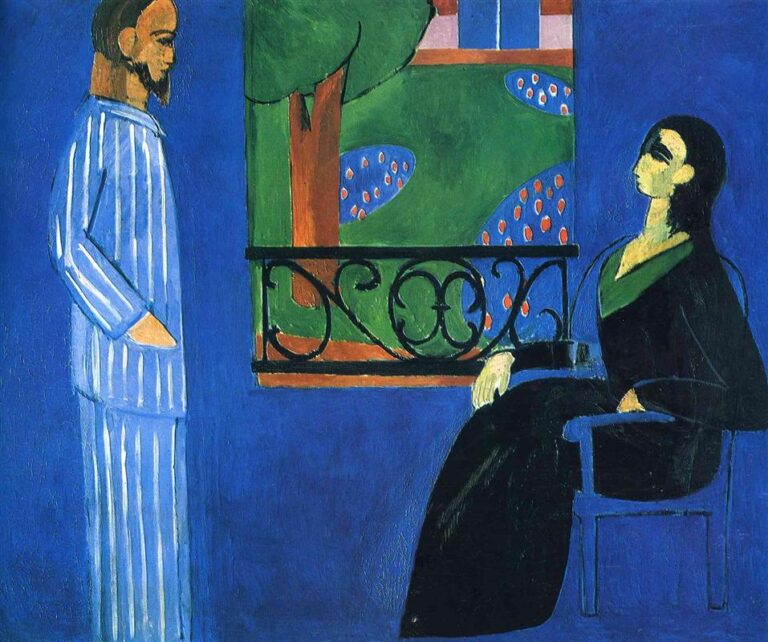
Interior painted in saturated blue with a man in blue-and-white striped pajamas standing at left and a woman in a long black dress seated at right; between them a window shows a simplified garden with green shapes and pink dots behind a black wrought-iron railing. The scene is flat and decorative, emphasizing bold color fields and contours in Henri Matisse’s 1912 “Conversation.”

Two figures—one upright in striped pajamas, one seated in a black dress—face each other across a sea of ultramarine while a window of patterned green opens between them. This essay unpacks how Matisse turns color fields, strict verticals, and a single iron arabesque into a psychological drama where silence, distance, and intimacy are made visible.

A Complete Analysis of “Bouquet of Flowers on a Veranda” by Henri Matisse

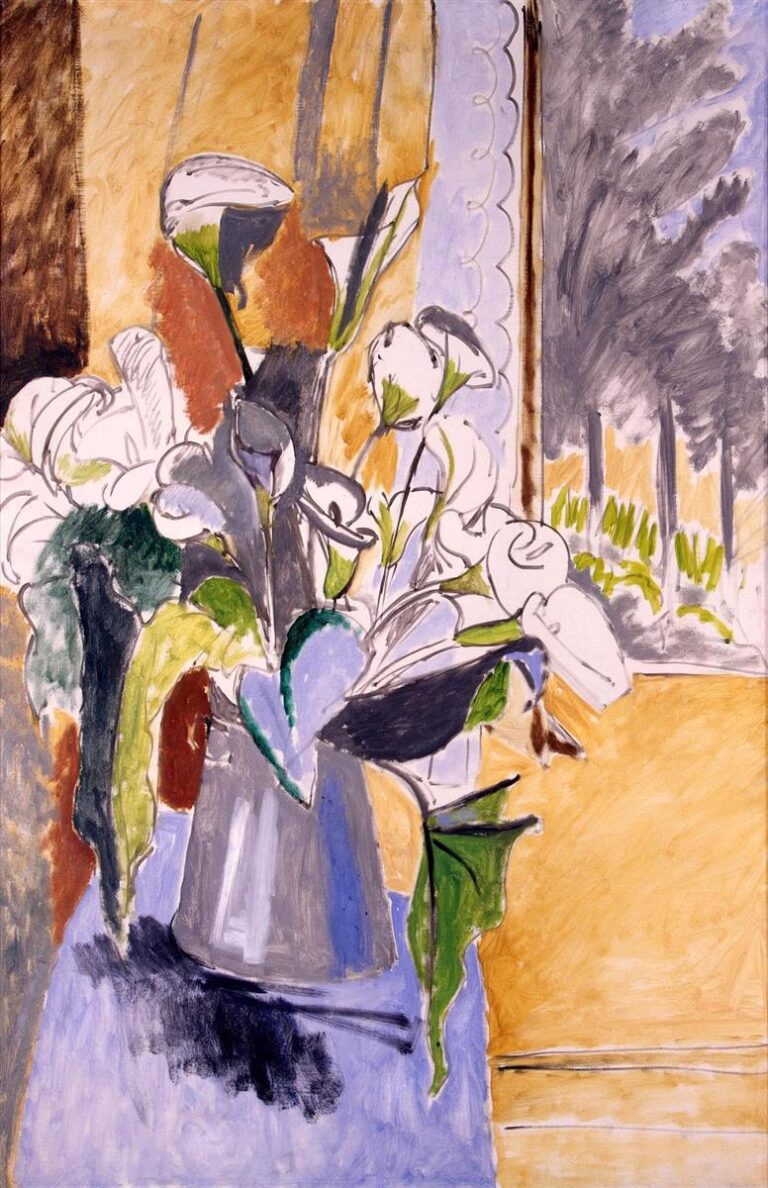
Vertical still life showing white calla lilies in a grey jug on a blue table beside a sunlit ochre veranda panel and a scalloped lavender curtain; beyond the opening is a sketchy grey view of trees. Bold black contours outline many blossoms, some left as white shapes, with greens and browns accenting leaves and stems in Henri Matisse’s 1912 “Bouquet of Flowers on a Veranda.”

Matisse transforms a vase of calla lilies beside an open threshold into a living architecture of color and line, where a warm ochre veranda, cool lavender interior, and breezy grey outdoors merge into one luminous field. This analysis follows the bouquet’s calligraphic rhythms, adjacency-built light, and threshold composition to show how the canvas breathes with clarity and poise.

A Complete Analysis of “Zorah in Yellow” by Henri Matisse

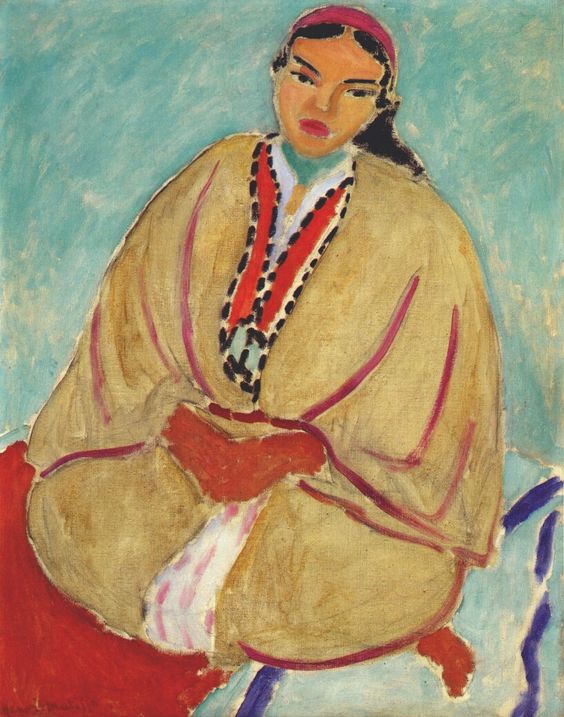
Seated Moroccan woman in a large yellow burnous outlined with rose, hands folded at her lap, a red-and-black central braid or necklace, and a pink headband; set against a flat turquoise background with small red and blue touches at the lower edge; simplified face and forms defined by confident painted contours in Henri Matisse’s 1912 “Zorah in Yellow.”

Seated close to the picture plane, Zorah’s yellow burnous becomes the architecture of the portrait. This essay traces how Matisse builds presence with a dominant field of warm color, a turquoise atmosphere, rose contours, and a central ladder of black-and-red accents, creating a calm, modern image that avoids exoticism while honoring cultural specificity.

A Complete Analysis of “The Moroccan Amido” by Henri Matisse

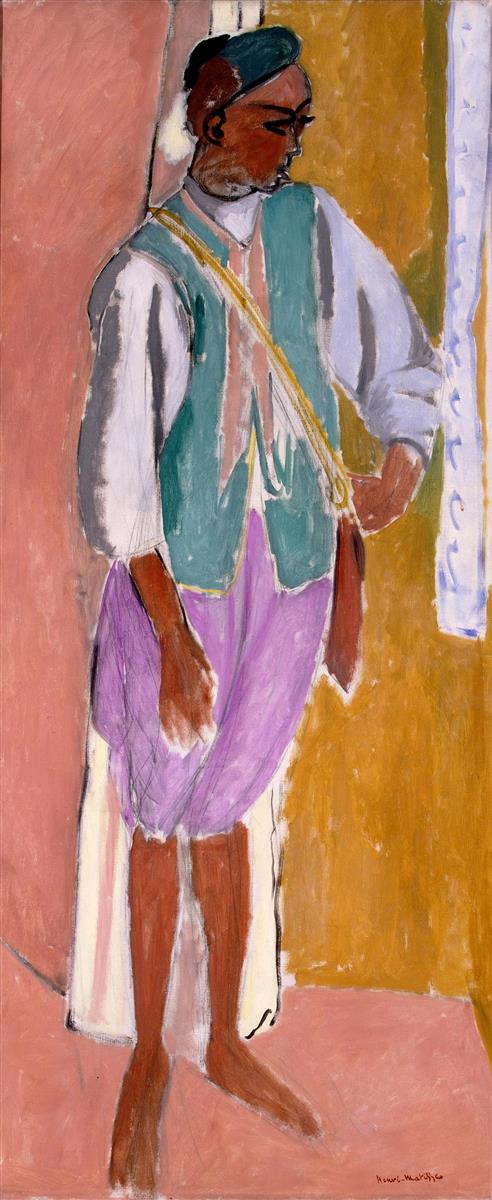
Tall vertical portrait of a barefoot Moroccan man standing against simple ochre and pink planes with a cool blue-white strip at right; he wears a green cap, mint vest over a pale shirt, lilac trousers, and a diagonal gold sash; one hand rests on his hip, the other hangs at his side; features and edges defined by confident dark painted contours in Henri Matisse’s 1912 “The Moroccan Amido.”

In a slender, doorlike canvas of pink and ochre planes, Matisse sets a barefoot Moroccan sitter in cool greens and lilac, using a golden sash, painted contours, and adjacency-built light to craft dignity without exoticism. This analysis traces the portrait’s vertical architecture, color harmonies, and place within the 1912 Moroccan cycle, showing why its clarity still feels startlingly modern.

A Complete Analysis of “Acanthus (Moroccan Landscape)” by Henri Matisse

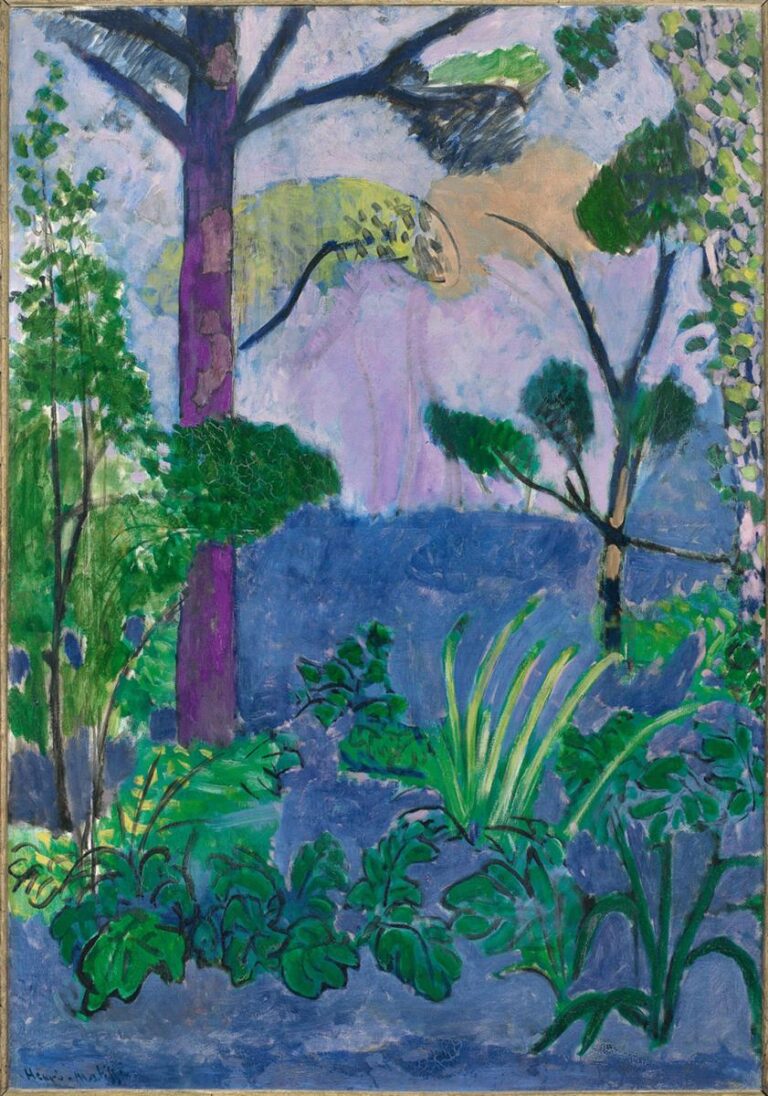
Vibrant Moroccan garden scene with large scalloped acanthus leaves in saturated greens across a cobalt-blue foreground; slender grasses rise center right; two trees with dark branching limbs—one with a purple trunk—cut into a pale lilac and beige sky; forms outlined by dark strokes and painted in flat color fields characteristic of Henri Matisse’s 1912 “Acanthus (Moroccan Landscape).”

Matisse transforms a Tangier garden into architecture made of color: acanthus leaves pulse across a cobalt foreground, a violet-blue climate builds space without perspective, and a daring purple trunk anchors the scene. This analysis follows how contour, adjacency-built light, and decorative rhythm turn Moroccan nature into a modern, musical landscape.

A Complete Analysis of “Fatma” by Henri Matisse

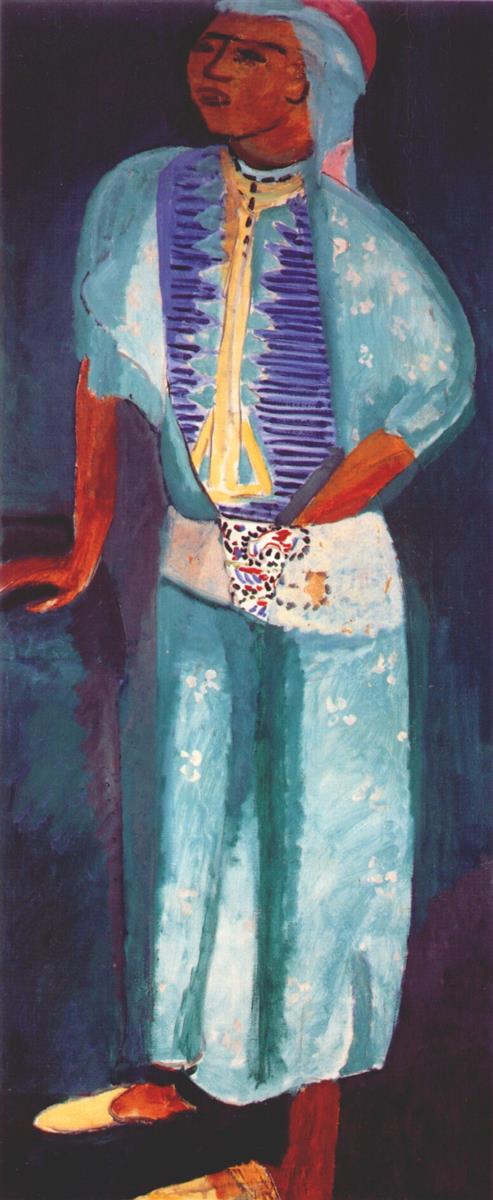
Tall vertical portrait of a woman standing against a dark blue field, wearing a light turquoise robe with small white blossoms, a violet vest with a yellow placket, and a pink head covering; one hand rests on a ledge, the other at a patterned sash; warm ochre skin and simplified features outlined by dark painted contours in Henri Matisse’s 1912 “Fatma.”

In a narrow vertical canvas suffused with deep blue, Matisse presents a standing Moroccan sitter whose turquoise robe, violet-yellow vest, and pink head covering become an architecture of color. The essay traces how painted contours, complementary harmonies, and disciplined patterning create poise without exoticism, situating “Fatma” within the artist’s Moroccan cycle and showing why its clarity still feels new.

A Complete Analysis of “Fatma” by Henri Matisse

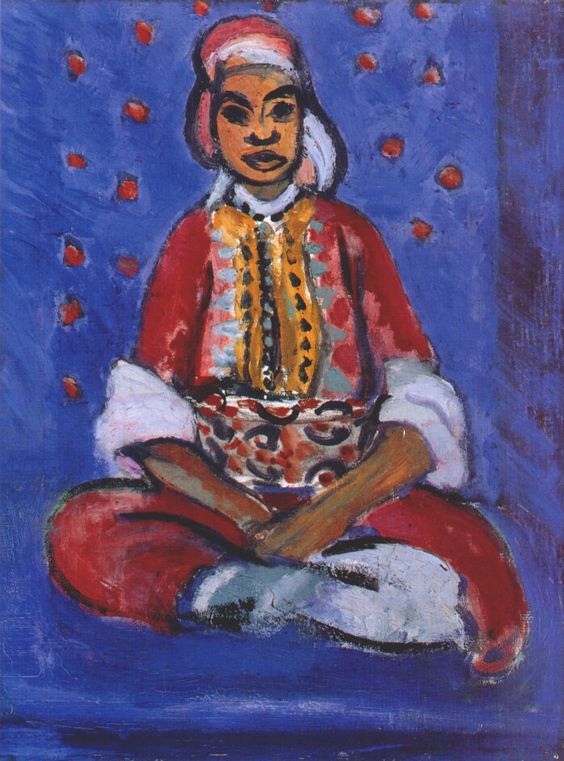
Frontal portrait of a woman seated cross-legged against a solid ultramarine ground dotted with small red circles; she wears a red tunic with white cuffs, a patterned sash, and a pale pink cap; dark painted contours define face and hands, with simplified forms and flattened space characteristic of Henri Matisse’s 1912 “Fatma.”

Centered against an ultramarine field strewn with small red dots, Matisse’s “Fatma” transforms a Moroccan sitter into an icon of poise through complementary blue-red harmonies, painted contour lines, and pattern used as structure rather than spectacle. This analysis unpacks the composition’s triangular stability, adjacency-built light, ethical simplification, and the portrait’s place within the 1912 Moroccan cycle.

A Complete Analysis of “Pot of Geraniums” by Henri Matisse

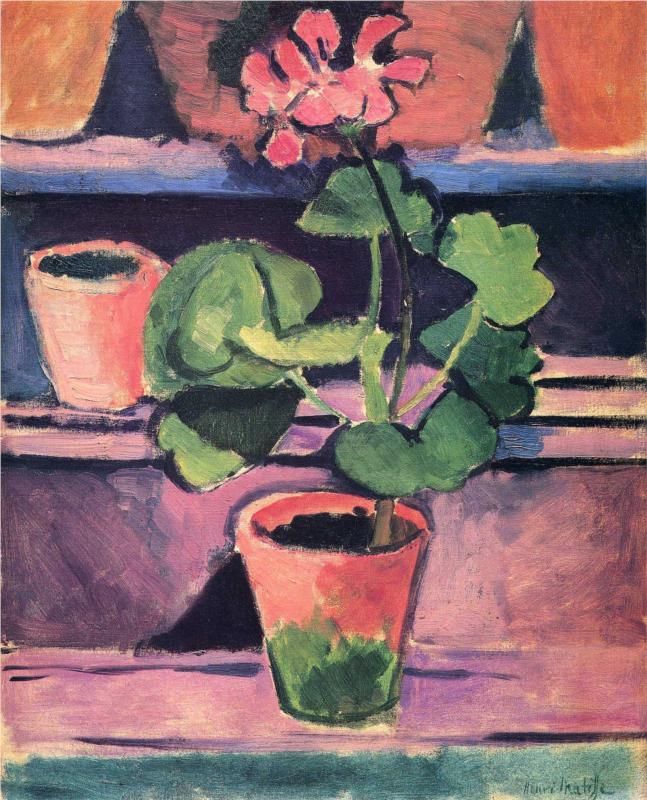
Still life of a single potted geranium centered on a lavender shelf; coral terracotta pot with green stains at base; round green leaves and a pink flower rise against bands of violet and deep blue; a second pale pot sits behind; broad brushstrokes, dark contours, and flattened space characteristic of Henri Matisse’s 1912 “Pot of Geraniums.”

Matisse turns an ordinary geranium into a modernist lesson in color and structure: coral pot and bloom, round green leaves, and a violet architecture of shelves build depth without perspective. This analysis shows how he draws with the brush, constructs light by adjacency, balances rhythm and simplicity, and transforms a studio companion into a radiant, enduring image.

A Complete Analysis of “The Bay of Tangier” by Henri Matisse

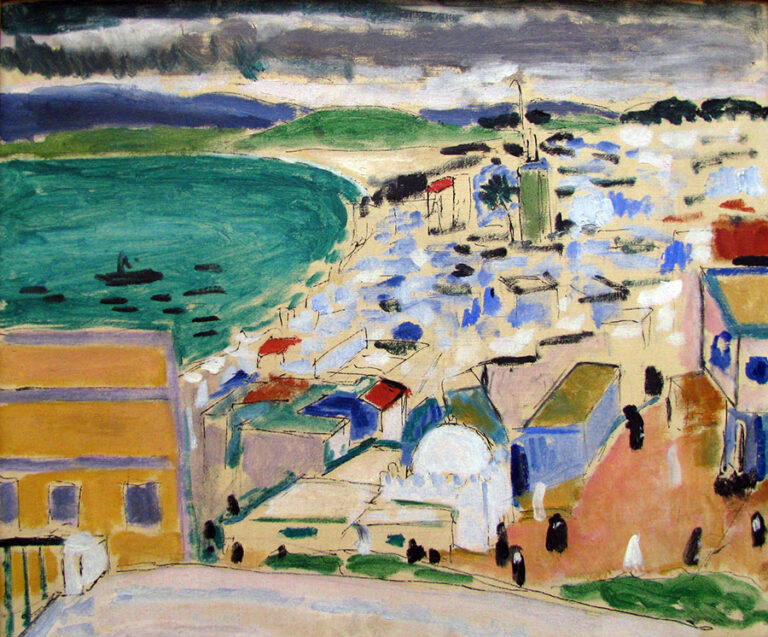
Elevated view of Tangier’s harbor with a semicircular green bay at left, a pale sand-colored city of simplified blocks and roofs at right, dark boat marks on the water, scattered figures below, a white dome and slender minaret rising amid buildings, and a layered gray sky suggesting changing weather in Henri Matisse’s 1912 “The Bay of Tangier.”

From a high balcony, Matisse maps Tangier with tuned planes of color: a deep green bay, a sand-bright city, dark boat strokes, white domes, and a slim minaret beneath a brooding sky. This analysis unpacks how color acts as architecture, how depth is built by overlap and scale, and how the painting transforms travel into a clear, modern chord.

A Complete Analysis of “Le Marabout” by Henri Matisse

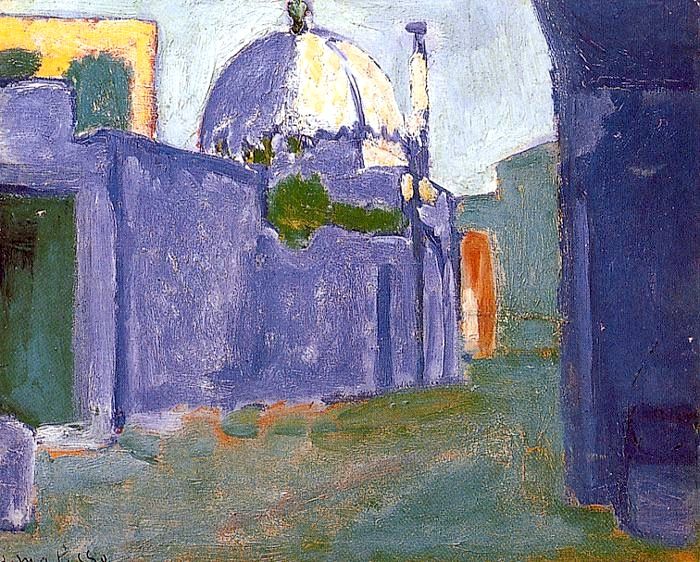
Sunlit Moroccan street painted in broad violet-blue planes leading to a white domed shrine; a small orange doorway glows in the distance; patches of green vegetation and a pale sky heighten the calm, with minimal detail and visible brushwork in Henri Matisse’s 1912 “Le Marabout.”

Matisse turns a Moroccan shrine into a serene architecture of color: violet-blue walls, a pearl-white dome, a single orange doorway, and breaths of green bind street and sky into one quiet chord. This essay explains how the artist builds depth without perspective, constructs light by adjacency, and uses restraint to communicate the marabout’s spiritual presence.

A Complete Analysis of “Joaquina” by Henri Matisse

Half-length portrait of a woman in three-quarter view with eyes closed; warm orange-red background; face modeled in ochres and siennas with strong dark outlines; red shawl falling in two vertical bands over a pale blouse; small gold earring visible; simplified forms and visible brushwork characteristic of Henri Matisse’s 1911 “Joaquina.”

Matisse builds a commanding portrait with a hot red ground, calligraphic black contours, and ochre planes that shape the face. This analysis explains how the shawl acts as architecture, how light is constructed by adjacency rather than shadow, how simplification intensifies character, and why “Joaquina” remains a modern, dignified image of presence.

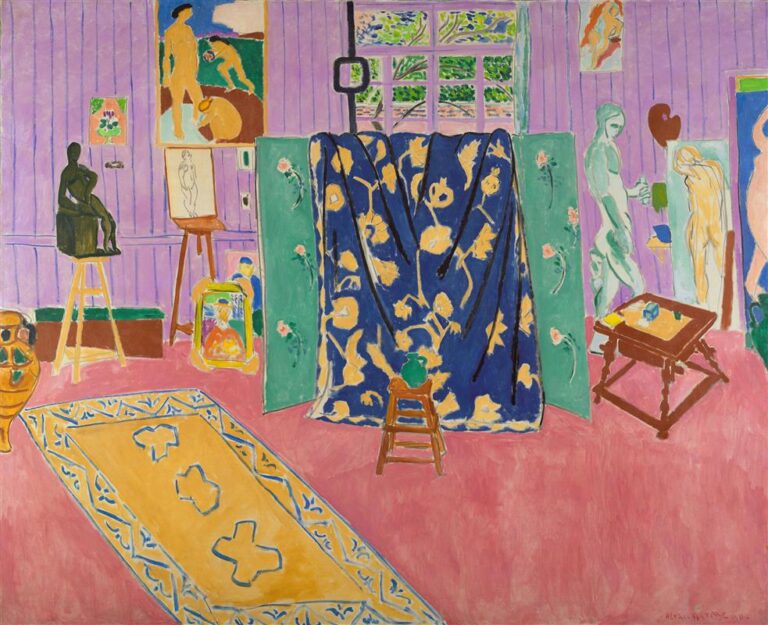
A Complete Analysis of “The Pink Studio” by Henri Matisse

Large interior with a pink floor and lavender wallboards; at center a dark blue floral curtain hangs between two green screens; a yellow-bordered carpet runs diagonally at left; easels, a black bronze on a stool, a small table, a low stool with a green jug, and framed paintings and drawings populate the room; a small window with green foliage appears above, all rendered in flat, saturated color in Henri Matisse’s 1911 “The Pink Studio.”

Matisse turns his working room into a climate of warm pinks and cool violets, staging an ultramarine curtain, green screens, a yellow carpet, and a chorus of paintings and sculptures. This deep dive shows how color acts as architecture, how pattern becomes structure, how depth is built without perspective, and how the studio functions as a hospitable self-portrait.

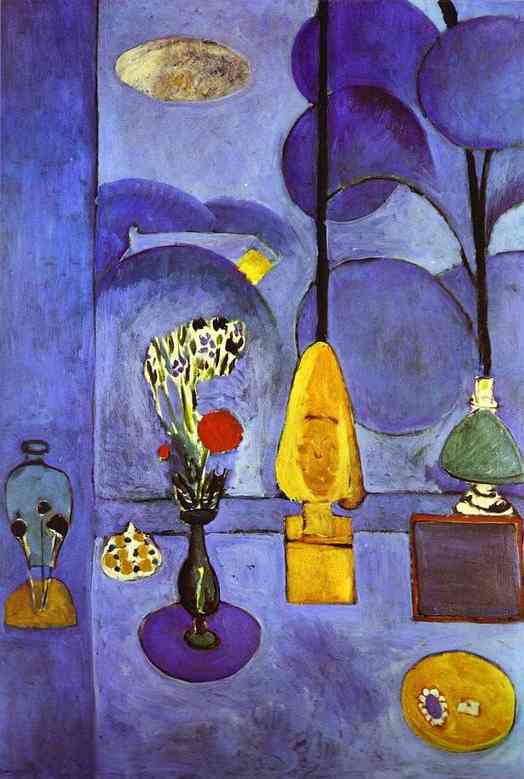
A Complete Analysis of “The Blue Window” by Henri Matisse

Tall vertical painting of a blue-toned interior view through a window; on the sill sit a dark vase with patterned leaves and two red pompons, a bright yellow carved figure on a pedestal, a pale green lamp, a shell, and a small round tray; outside, simplified trees appear as overlapping blue disks beneath an ocher moon; contours are brush-drawn and the entire scene is suffused with deep blue in Henri Matisse’s 1911 “The Blue Window.”

A nocturne of saturated blues turns a studio window into a complete world where a yellow sculptural figure, a green lamp, a dark glass vase with red blooms, and moonlit trees share one rhythmic language. This analysis shows how Matisse builds depth without perspective, constructs light by adjacency, and lets a single climate color unify still life and landscape.

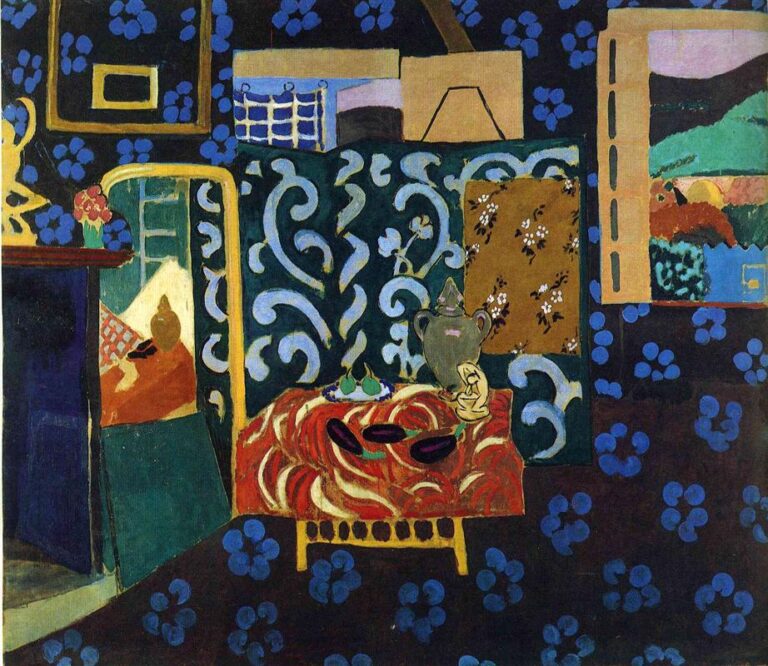
A Complete Analysis of “Still Life with Aubergines” by Henri Matisse

Dark blue interior patterned with bright blue florets; center foreground shows a low table draped in a red swirling cloth holding three dark aubergines, a lemon, and a pale green ewer; behind the table a tall teal screen painted with pale arabesques; to the right a golden-brown fabric patch and a small landscape; scattered frames and a small bouquet complete Henri Matisse’s 1911 “Still Life with Aubergines.”

Henri Matisse turns a tabletop of aubergines, a green ewer, and a lemon into the heart of a patterned interior. This analysis explains how a dark, flower-dotted ground, a teal arabesque screen, and a red swirling cloth create depth without perspective, how color relations build light, and how objects become characters inside a lucid decorative architecture.

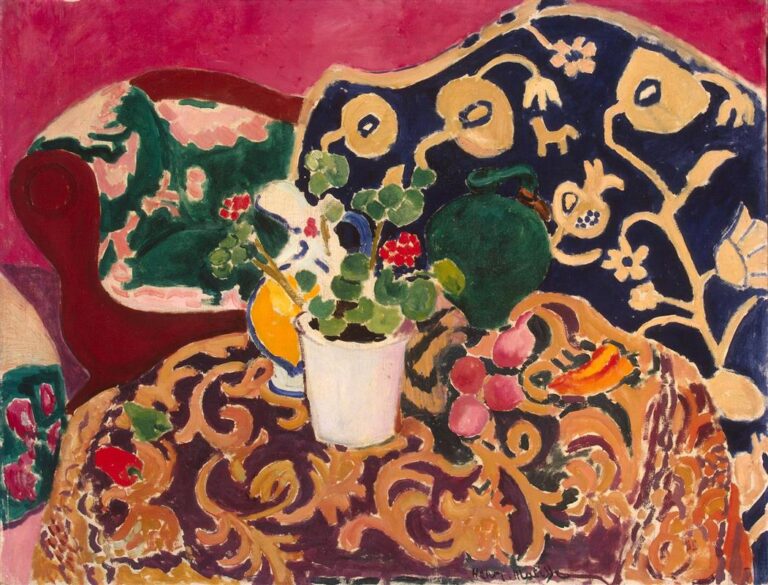
A Complete Analysis of “Spanish Still Life” by Henri Matisse

Coral-pink interior with a green floral sofa and a dark indigo shawl patterned with cream vines; in front, a round table covered in an ocher-and-mulberry arabesque cloth holds a white pot of red geraniums, a yellow-and-blue jug, a deep green jar, and pink figs with an orange pepper; bold brushstrokes and lively patterns unify the shallow space in Henri Matisse’s 1911 “Spanish Still Life.”

Henri Matisse turns textiles, pottery, fruit, and flowers into a coherent architecture of color in “Spanish Still Life” (1911). This in-depth analysis explains how a coral climate unifies the room, how indigo and green patterns structure space, how a central bouquet and vessels conduct the palette, and how brush-drawn contours and adjacency-built light transform abundance into lucid harmony.