Category Henri Matisse

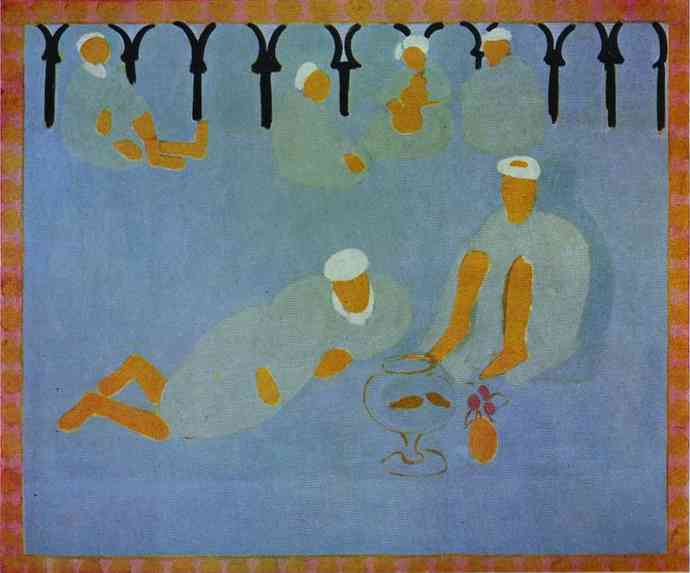
A Complete Analysis of “Arabian Coffee House” by Henri Matisse

A 1913 Matisse scene of a coffeehouse: simplified figures in pale robes with orange faces, hands, and feet recline and sit on a blue-lavender field beneath a row of black horseshoe arches, framed by a pink-orange patterned border; at the lower right a small curved vessel and a tiny pot with a pink flower rest beside a kneeling figure.

Painted in 1913 during Matisse’s Moroccan period, “Arabian Coffee House” reduces a café gathering to serene ovals of pale garments on a lavender-blue ground, under a frieze of Moorish arches and a pink-orange border. The analysis explores its decorative structure, color architecture, and calm social rhythm.

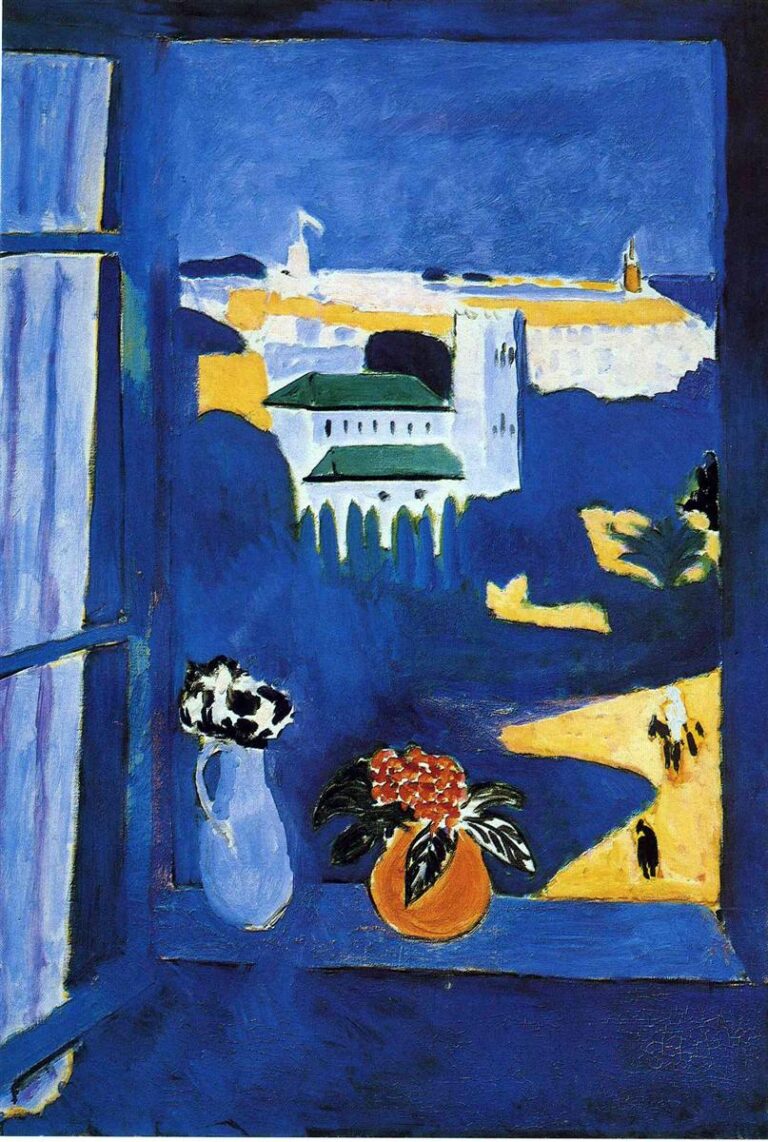
A Complete Analysis of “Open Window at Tangier” by Henri Matisse

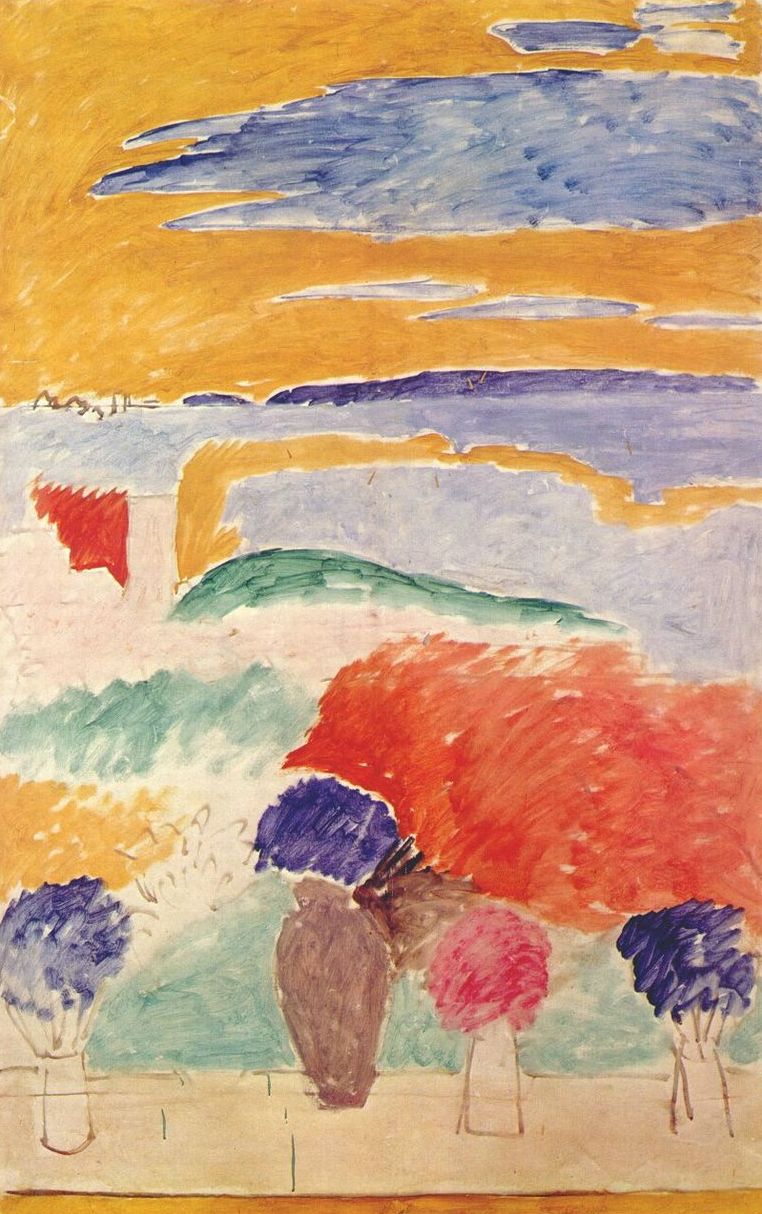
A 1913 Matisse painting showing a terrace ledge with five simple vases and bouquet-like shrubs in violet, pink, and blue, opening to a stylized landscape of red-orange foliage, green and blue sea bands, distant headlands, and a wide ocher sky streaked with lavender clouds.

Painted in 1913 during Matisse’s Moroccan period, “Open Window at Tangier” turns a harbor view into stacked bands of ocher sky, lavender clouds, and sea blues, framed by potted bouquets on a terrace ledge. The analysis explores its window motif, color architecture, brushwork, and the union of decoration and landscape.

A Complete Analysis of “Zorah on the Terrace” by Henri Matisse

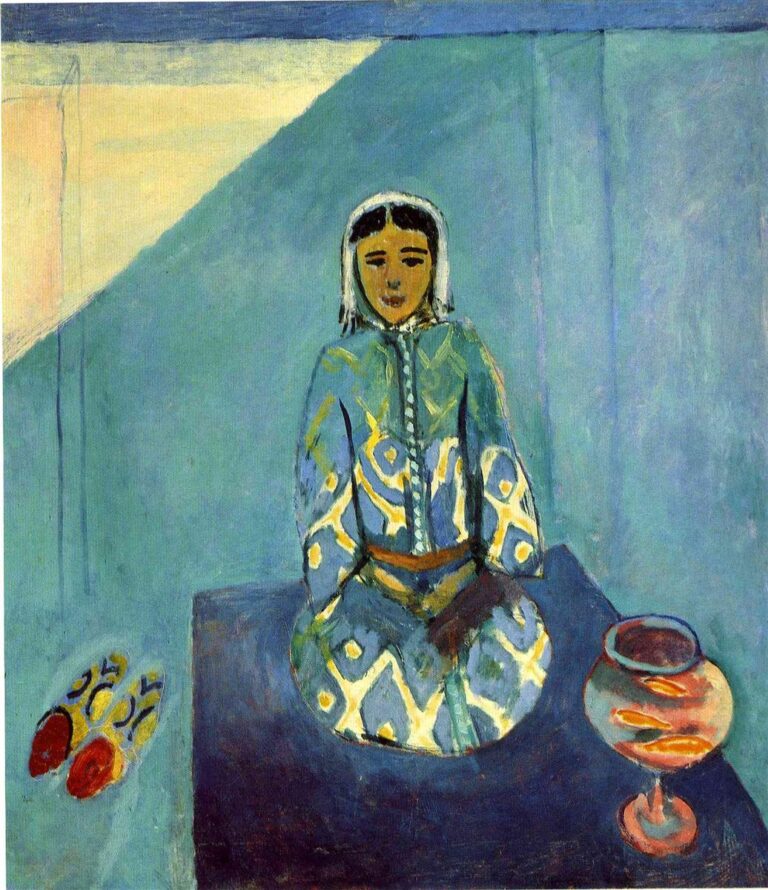
A 1912 painting by Henri Matisse showing a seated woman named Zorah on a blue terrace, wearing a patterned blue-green garment and headscarf, with red-tipped slippers on the left and a round goldfish bowl on the right, all set against flat blue walls with a triangular wedge of pale light.

Painted in 1912 during Matisse’s Moroccan period, “Zorah on the Terrace” centers a seated figure within calm blue planes, balanced by red slippers and a goldfish bowl. This in-depth analysis explores its composition, color architecture, brushwork, and the quiet psychological atmosphere that defines the work.

A Complete Analysis of “Vase of Irises” by Henri Matisse

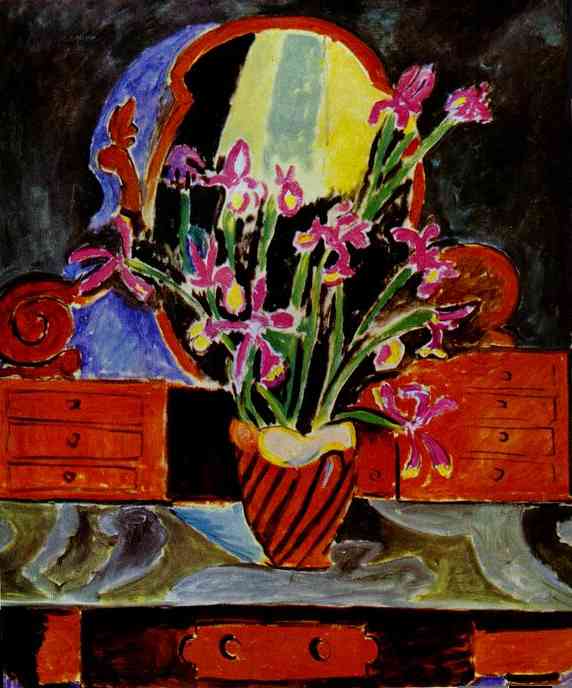
A 1912 still life by Henri Matisse showing a striped red vase of magenta and lilac irises on a marbled tabletop before an oval mirror that glows with yellow and blue light, flanked by red drawers and scrolls, all set against a dark ground that intensifies the vivid colors.

Painted in 1912, Matisse’s “Vase of Irises” turns a vanity table, an oval mirror, and a striped vase of magenta blossoms into a luminous stage of color. This in-depth analysis explores the composition, mirror device, brushwork, and the balance of symmetry and exuberance that defines the work.

A Complete Analysis of “The Palm” by Henri Matisse

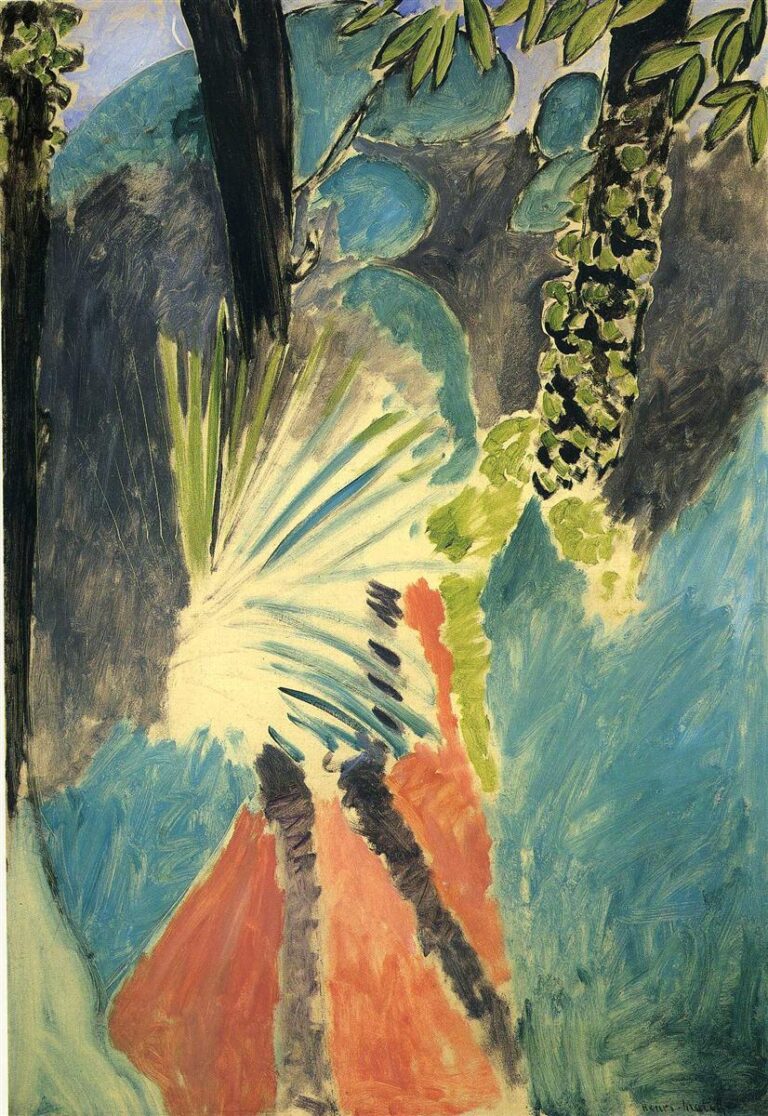
A 1912 painting by Henri Matisse showing a palm seen from below, with a central burst of pale light and radiating fronds, a black trunk on the left, a leafy green column on the right, and large coral and turquoise color fields that create a warm, sunlit atmosphere.

Painted in 1912 during Matisse’s Moroccan period, “The Palm” turns a fan of fronds, dark trunks, and warm–cool color planes into a radiant structure of light. This analysis explores its composition, color architecture, brushwork, and the modern clarity that transforms a tree into pure rhythm.

A Complete Analysis of “Moroccan Garden” by Henri Matisse

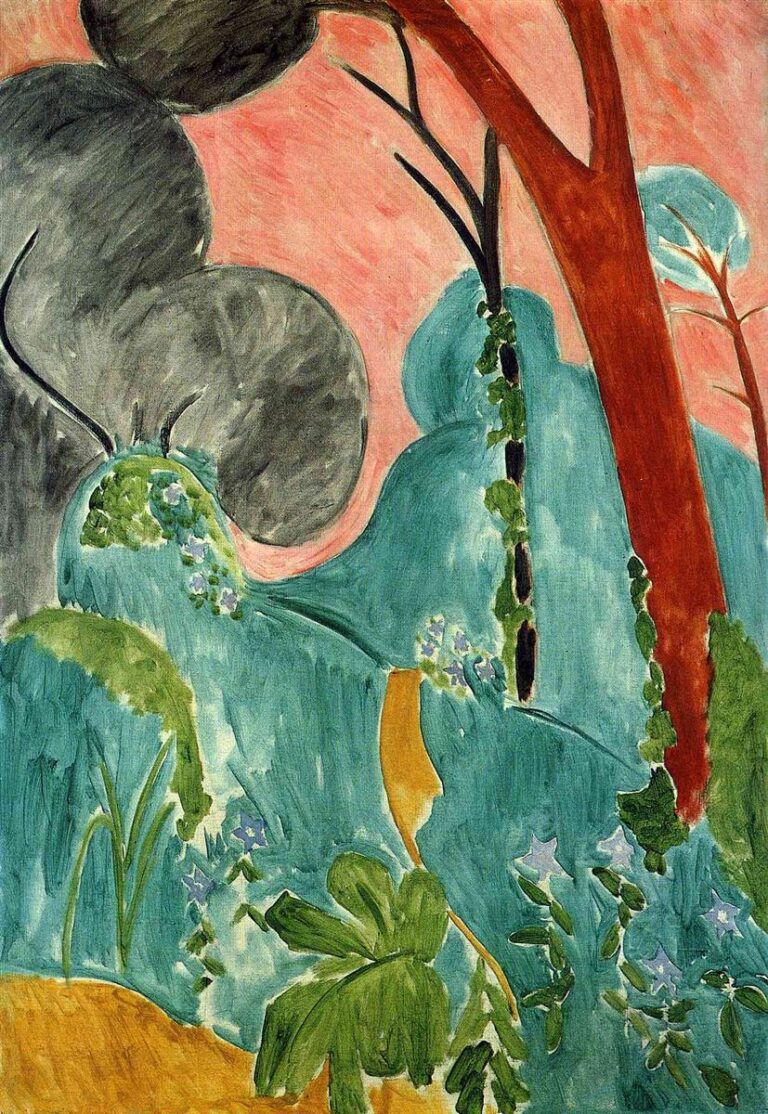
A 1912 painting by Henri Matisse showing a stylized garden with turquoise-green mounds of foliage, a salmon-pink sky, a vertical rust-red tree trunk, gray rounded canopies at left, scattered violet star-flowers, and a small ochre path, all rendered in broad, flattened color fields with soft contours.

Painted in 1912 during Matisse’s Moroccan period, “Moroccan Garden” transforms mounded foliage, a red trunk, and a pink sky into a luminous tapestry of color. This in-depth analysis explores its composition, brushwork, light, and the decorative rhythms that turn a small garden into a modern vision.