Category Rembrandt

A Complete Analysis of “The Denial of Peter” by Rembrandt

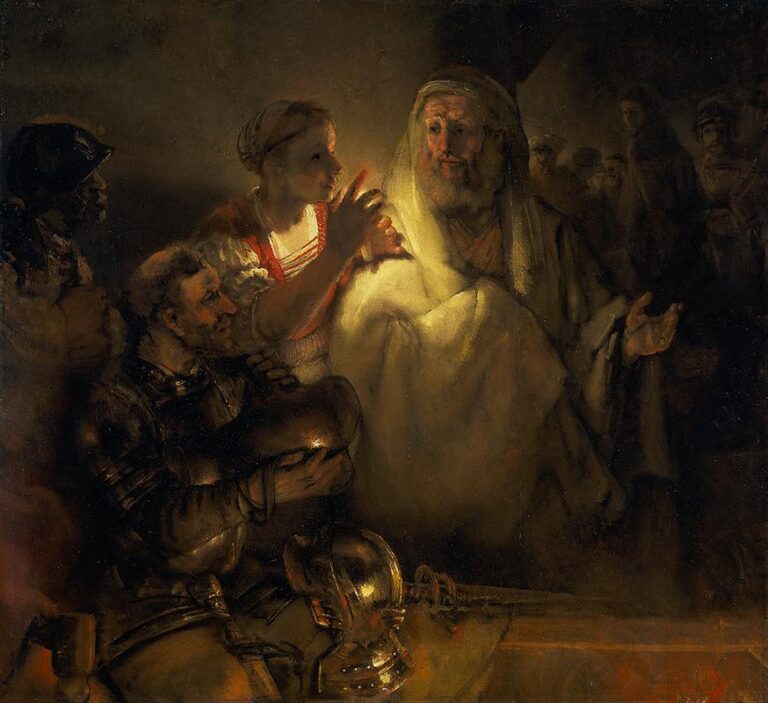
Candlelit Rembrandt scene of Peter confronted by a maidservant beside armed soldiers; the woman points as Peter deflects, armor and helmet gleam, and Christ is led away in the background, all modeled in warm golds and deep browns.

Rembrandt’s 1660 “The Denial of Peter” transforms a Gospel scene into a candlelit drama of fear and conscience. Flame-centered chiaroscuro, embered color, eloquent hands, and subtle background figures create a psychologically rich meditation on failure and coming restoration.

A Complete Analysis of “Self-portrait” by Rembrandt

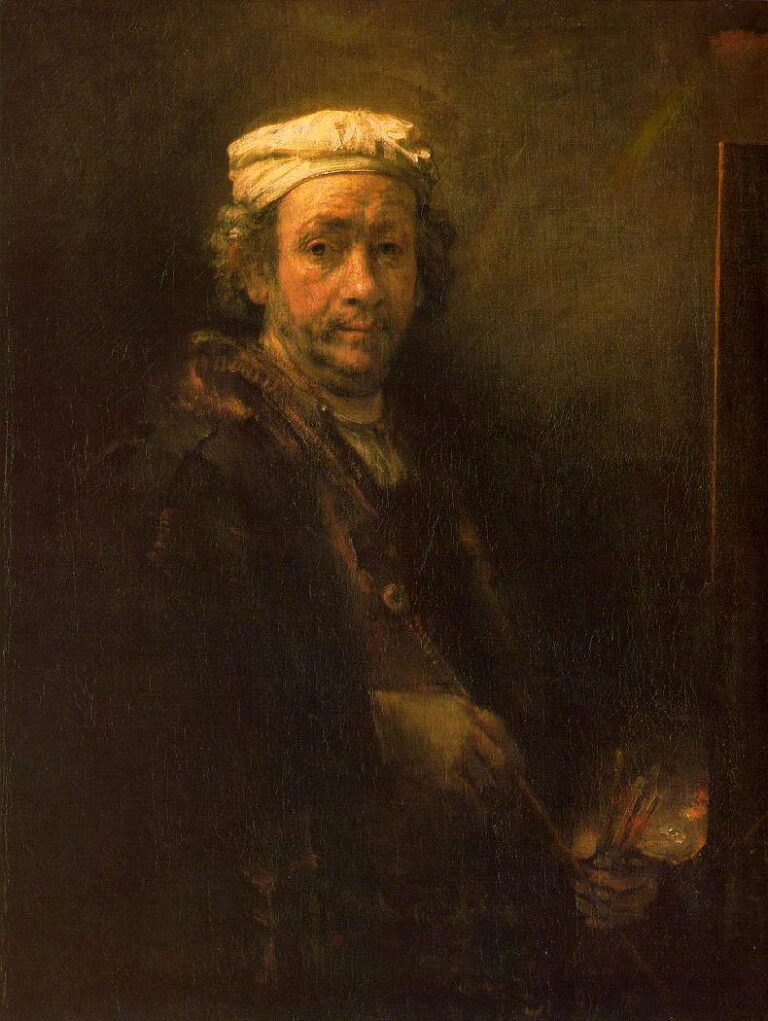
Rembrandt’s 1660 self-portrait showing the artist in a dark cap and brown garment, softly lit against a shadowed background, his weathered face rendered with rich, textured brushwork and a steady, contemplative gaze.

Explore Rembrandt’s 1660 “Self-portrait,” a late-career masterpiece of restrained color, living brushwork, and psychological depth. Learn how light, texture, and composition turn an honest likeness into a moving meditation on time, craft, and human dignity.

A Complete Analysis of “Self-portrait” by Rembrandt

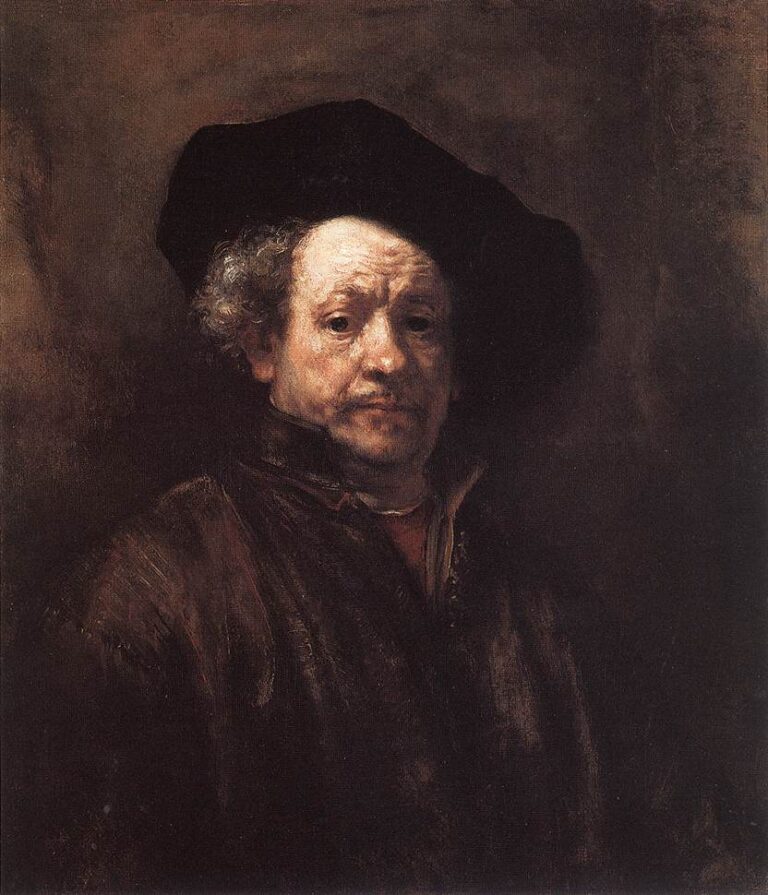
Extremely dark late Rembrandt self-portrait showing a beret-capped head modeled with heavy impasto; features flare in warm ochers against a black-brown background, the body barely indicated, creating a stark, psychological image.

Rembrandt’s 1660 “Self-portrait” is a radical late work where a head emerges from darkness in thick, sculptural paint. Severe chiaroscuro, earthy palette, and knife-edged impasto turn the artist’s face into a powerful meditation on presence, mortality, and truth.

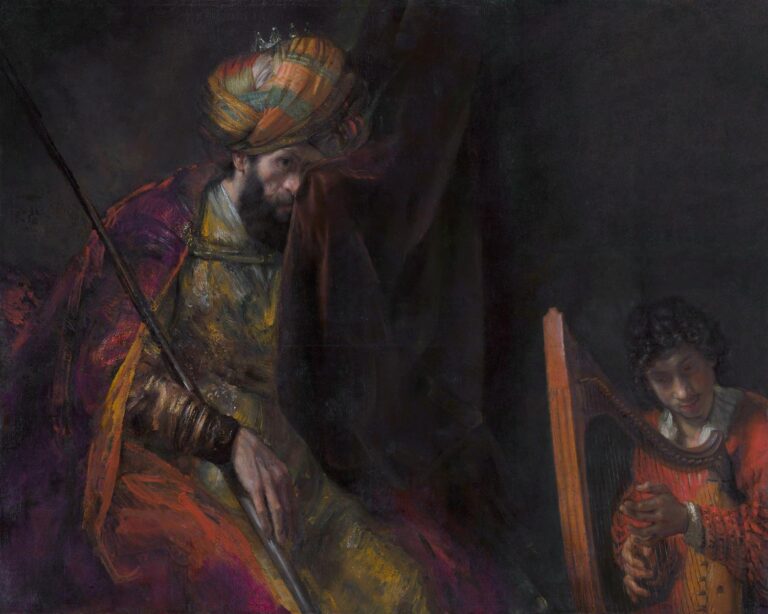
A Complete Analysis of “Saul and David” by Rembrandt

Late Rembrandt painting of King Saul in a jeweled turban, partly veiled by a dark curtain and holding a spear, while the young David at right plays a harp in warm light; deep browns and glowing reds create a tense, intimate atmosphere.

Rembrandt’s 1660 “Saul and David” stages a tense, intimate duet between a shadowed king and a luminous youth. Embered color, humane chiaroscuro, and a dividing curtain turn music, envy, and fragile power into one of the master’s most psychological biblical scenes.

A Complete Analysis of “Self-portrait” by Rembrandt

Half-length Rembrandt self-portrait from 1659 showing the artist in a dark beret and coat, face softly lit from the left against a brown-green background, with a calm, direct gaze and restrained earth-toned palette.

Rembrandt’s 1659 “Self-portrait” pairs humane light with an earthy palette to present an unguarded, late-life likeness. Subtle chiaroscuro, textured brushwork, and a pared-down composition turn a head in a beret into a profound meditation on presence and truth.

A Complete Analysis of “Tobit and Anna” by Rembrandt

Dusk-lit interior by Rembrandt showing an elderly blind Tobit seated near a large fireplace while Anna spins wool by a window, their modest chairs and tools glowing softly in brown, ember-toned light.

Rembrandt’s 1659 “Tobit and Anna” turns a humble room into a quiet epic. Warm chiaroscuro, earthy browns, and tactile brushwork portray an elderly couple at the hearth—work, worry, and enduring love—making domestic patience the heart of biblical faith.

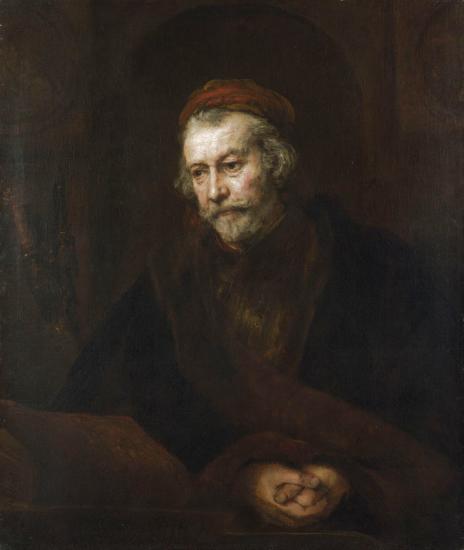
A Complete Analysis of “The Apostle Paul” by Rembrandt

Rembrandt’s late portrait of the Apostle Paul seated in a dark room, wearing a modest red cap and brown cloak, softly lit from the left, with an open book on the table and hands loosely clasped as he reflects in silence.

Rembrandt’s 1659 “The Apostle Paul” is a late-period masterpiece of quiet intensity. Warm chiaroscuro, earthy harmonies, and tactile brushwork reveal the apostle as writer and witness, turning a simple pause over an open book into a profound meditation on vocation and grace.

A Complete Analysis of “Self-portrait” by Rembrandt

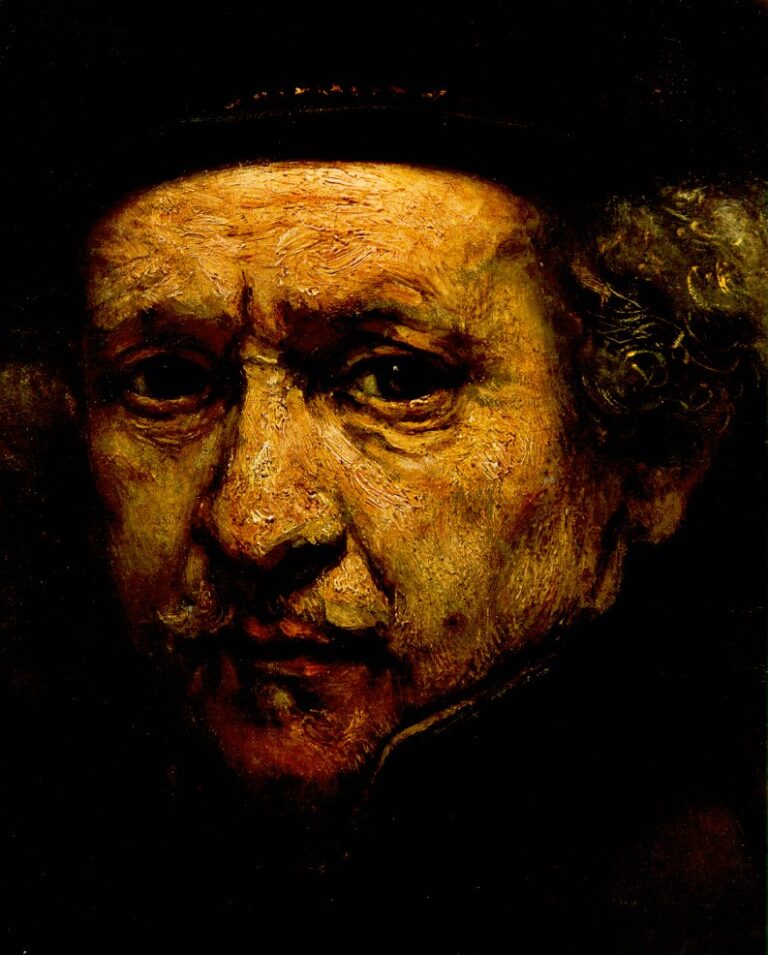
Close-up of Rembrandt’s face under a dark cap, illuminated from the left; thick, textured paint forms furrowed brow, deep-set eyes, and a firm mouth, with the surrounding background falling into warm brown-black shadow.

Rembrandt’s 1659 “Self-portrait” is an extreme close-up forged from thick impasto, earthen color, and humane light. Explore how cropped composition, living surface, and unwavering gaze turn a simple head into a profound meditation on time, craft, and truth.