Category Rembrandt

A Complete Analysis of “Christ Resurrected” by Rembrandt

Half-length Rembrandt image of the risen Christ in an oval frame, bare-chested with a white shroud draped across his shoulders, softly illuminated against a deep dark background, gazing gently downward with warm, naturalistic flesh tones.

Rembrandt’s 1661 “Christ Resurrected” transforms the Resurrection into intimate presence. An oval format, humane chiaroscuro, and a radiant white shroud focus attention on the living face and torso, demonstrating late-style mastery where cloth, light, and flesh become a theology of hope.

A Complete Analysis of “Two Negroes” by Rembrandt

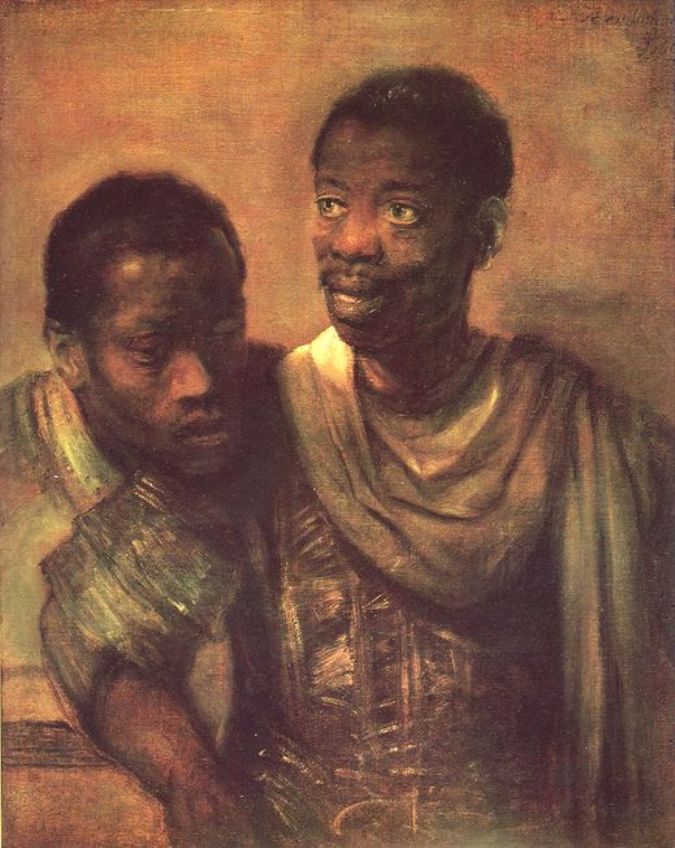
Rembrandt double portrait of two Black men at half length, one leaning with eyes downcast, the other upright with a gentle, lifted gaze; warm earth tones, soft golden light, and atmospheric brown background emphasize their individuality and shared presence.

Rembrandt’s 1661 “Two Negroes” is a late-style double portrait that treats two Black men with quiet dignity. Humane chiaroscuro, a restrained earth palette, and tactile brushwork create intimate presence and reveal how the painter privileged personhood over spectacle.

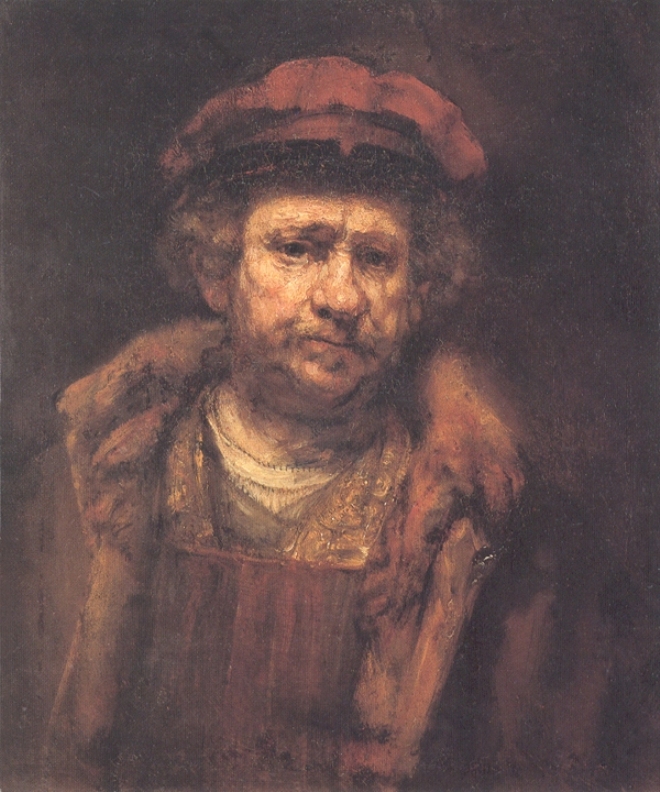
A Complete Analysis of “Self-portrait” by Rembrandt

Half-length late Rembrandt self-portrait with red beret and fur-trimmed mantle, softly lit in warm browns; steady gaze, subdued expression, and textured brushwork against a dark, atmospheric background.

Rembrandt’s 1660 “Self-portrait” embodies late-style candor: warm earth tones, humane chiaroscuro, tactile brushwork, and a quiet gaze framed by fur mantle and red beret. The painting trades spectacle for presence, turning biography into a study of character and light.