Category Rembrandt

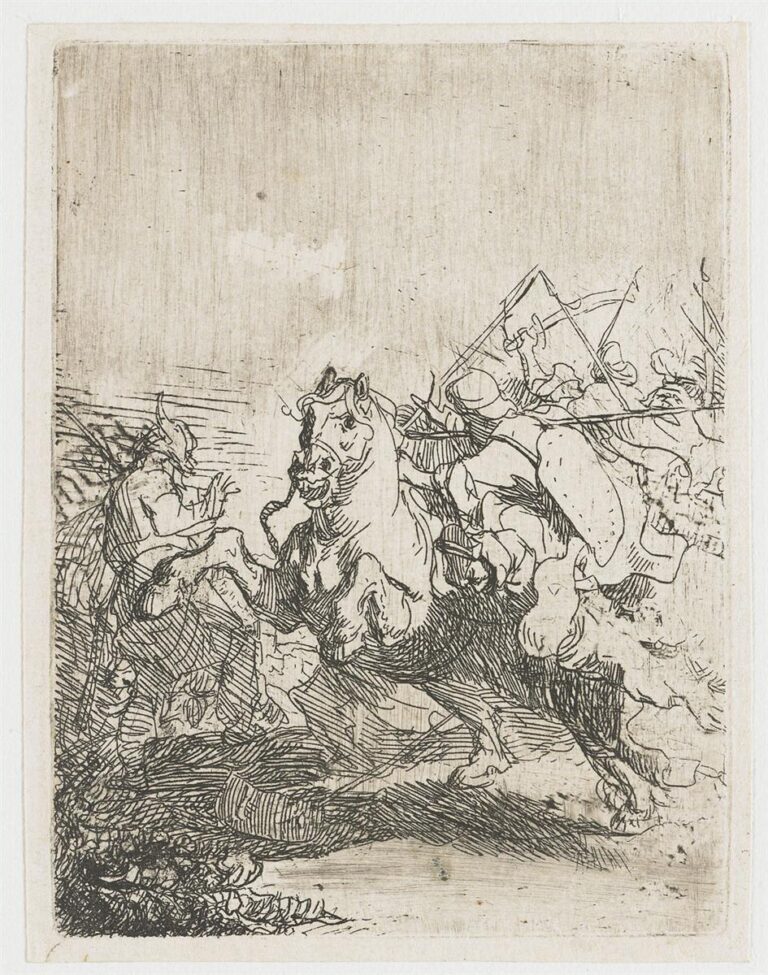
A Complete Analysis of “A Cavalry Fight” by Rembrandt

Rembrandt etching of a chaotic skirmish with a rearing horse and lance-bearing rider crashing toward a recoiling opponent, clustered fighters and pikes surging behind, and a pale, dusty sky that heightens the explosive action below.

An in-depth study of Rembrandt’s 1632 etching that turns copper lines into a burst of battlefield motion, examining diagonal composition, the kinetic rendering of horses and riders, the expressive role of plate tone, and why the print’s economy and immediacy still feel strikingly modern.

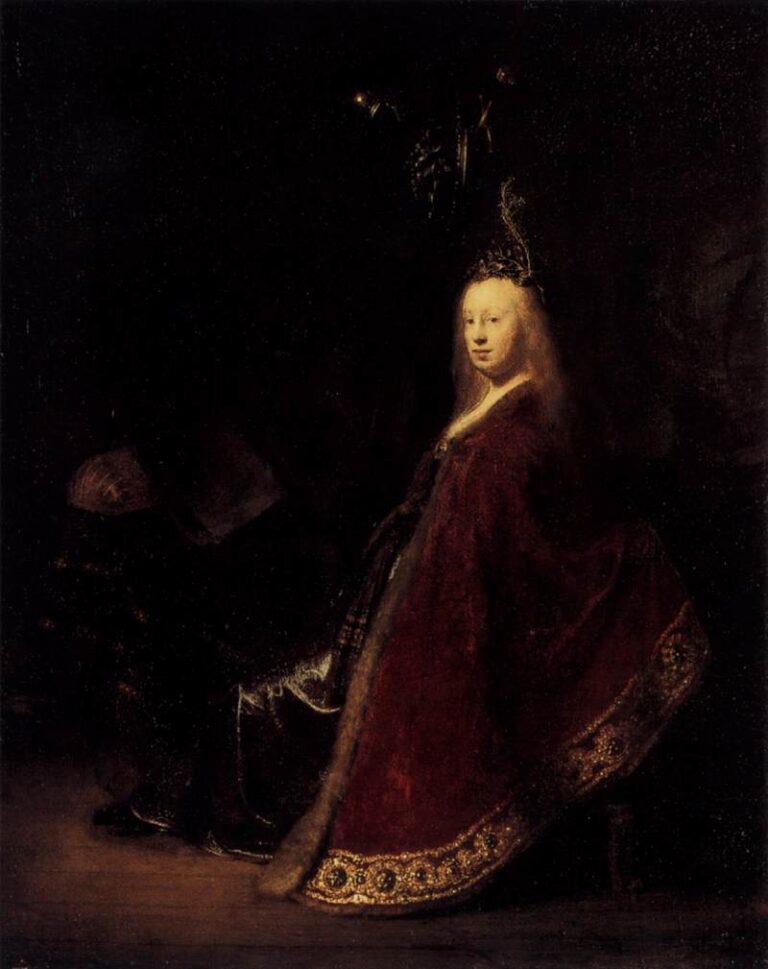
A Complete Analysis of “Minerva” by Rembrandt

Rembrandt’s 1631 painting of Minerva seated in a dark interior, her pale face illuminated as she wears a deep red, fur-trimmed robe with gold embroidery; armor glints in shadow at left while foliage or plumes hover above, emphasizing a serene, contemplative presence.

An in-depth study of Rembrandt’s 1631 “Minerva,” showing how the artist fuses allegory and portraiture through a theater of shadow, a crimson mantle alive with texture, restrained attributes, and a luminous face that embodies wisdom as calm attention.

A Complete Analysis of “Andromeda” by Rembrandt

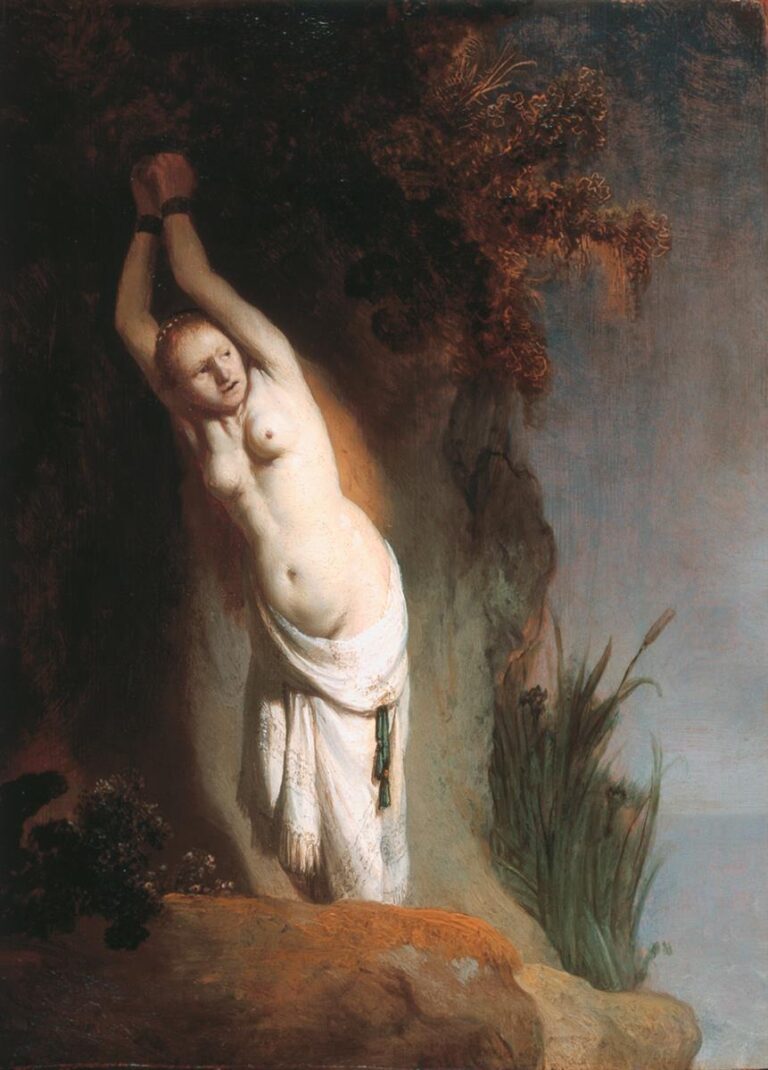
Rembrandt’s 1631 painting of Andromeda chained to a cliff, her bare torso lit against a dark rocky grotto as she twists toward a cool blue sea; white drapery at her hips and sparse foliage frame the figure, emphasizing the tense moment before rescue.

An in-depth study of Rembrandt’s 1631 “Andromeda,” showing how the artist strips the myth to a single figure in a rocky niche, uses thinking light and unidealized anatomy to humanize the heroine, and builds suspense through restrained composition, tactile surface, and a charged dialogue between warm flesh and cool sea.