Category Rembrandt

A Complete Analysis of “The Holy Family” by Rembrandt
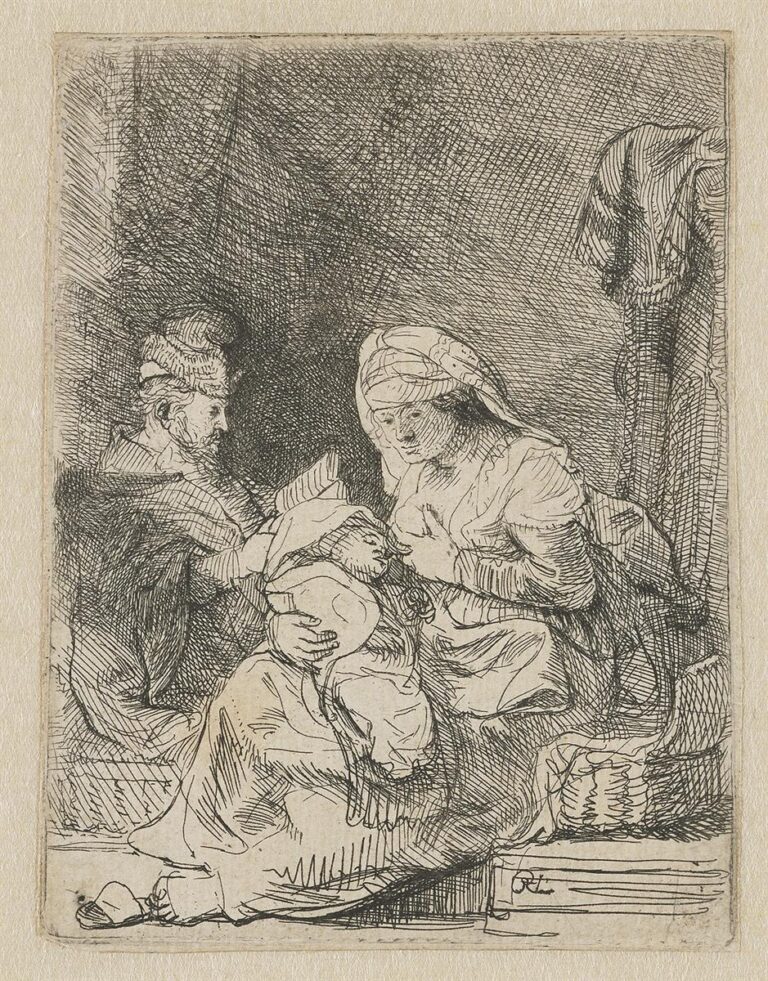
Mary cradles the Christ Child on her lap while Joseph leans in from the left; the three are tightly grouped in a shadowed interior, with a garment hanging on the wall and a block-like seat nearby, all drawn in delicate, cross-hatched etching lines.

Created in 1632, Rembrandt’s etching “The Holy Family” compresses sacred narrative into a tender domestic scene. Through supple line, concentrated hatching, and a triangular knot of figures, the image turns ordinary gestures of touch and care into the language of devotion, allowing light, drapery, and posture to carry meaning rather than overt symbols.
A Complete Analysis of “St. Jerome Praying” by Rembrandt

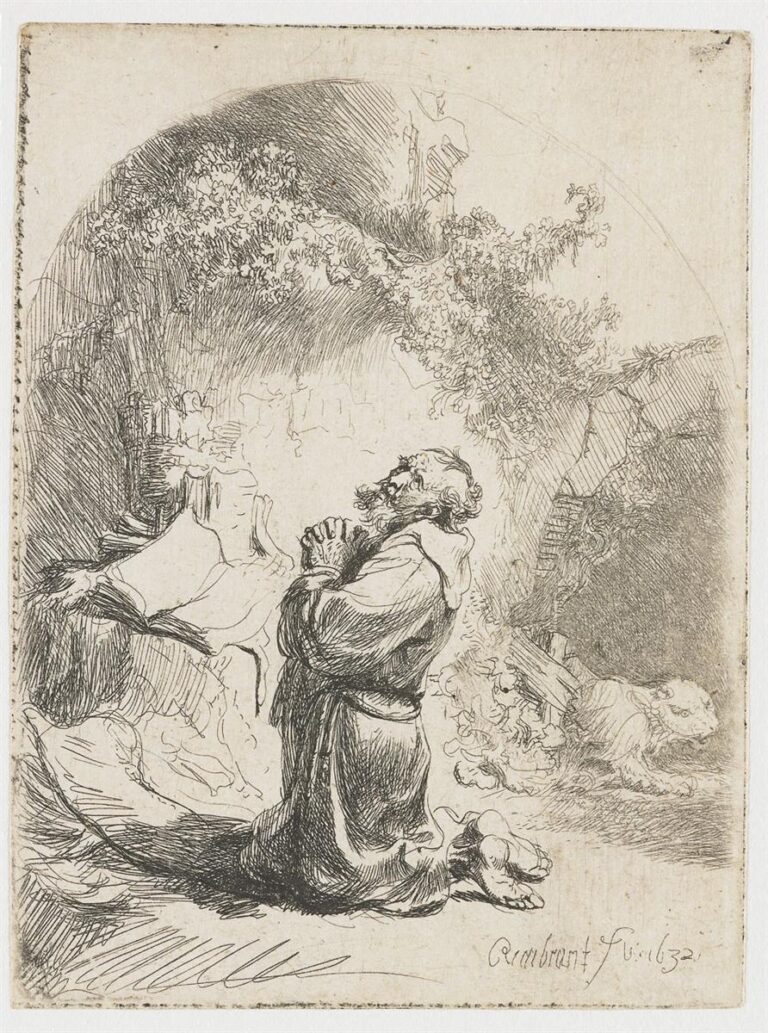
A kneeling St. Jerome in a simple robe prays in a cave, hands clasped and head lifted toward a bright opening; a relaxed lion lies nearby, books and drapery rest to the left, and delicate etched lines form foliage and rock around the illuminated figure.

Made in 1632, Rembrandt’s etching “St. Jerome Praying” presents the scholar-saint kneeling in a rocky grotto beneath a clearing of light. With supple lines, reserved paper whites, and a calm choreography of figure, lion, books, and cave, the image turns solitude into devotion and demonstrates how etching can render atmosphere, humility, and spiritual intensity without theatrical excess.

A Complete Analysis of “The Anatomy Lesson of Dr. Nicolaes Tulp” by Rembrandt

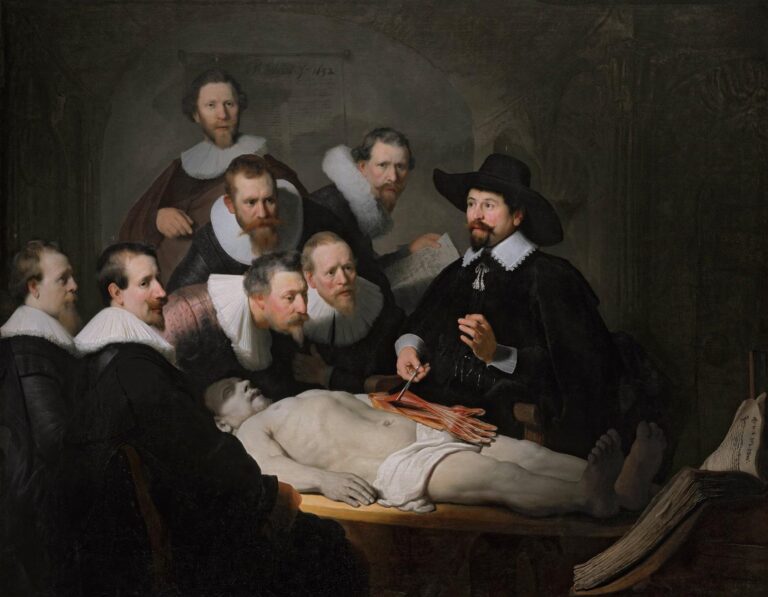
In a dark lecture hall, Dr. Nicolaes Tulp demonstrates the tendons of a cadaver’s forearm to seven ruff-collared colleagues gathered around a table; a beam of light illuminates the anatomist’s face, the white collars, and the pale, foreshortened body while an open book lies at the lower right.

Painted in 1632 for Amsterdam’s Surgeons’ Guild, Rembrandt’s “The Anatomy Lesson of Dr. Nicolaes Tulp” transforms a public dissection into a luminous group portrait that unites science, civic identity, and human empathy. Through a pyramidal composition, dramatic yet measured light, and individualized likenesses woven into a single act of instruction, the work elevates documentation into a meditation on knowledge and mortality.

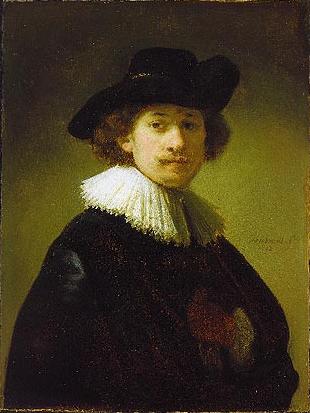
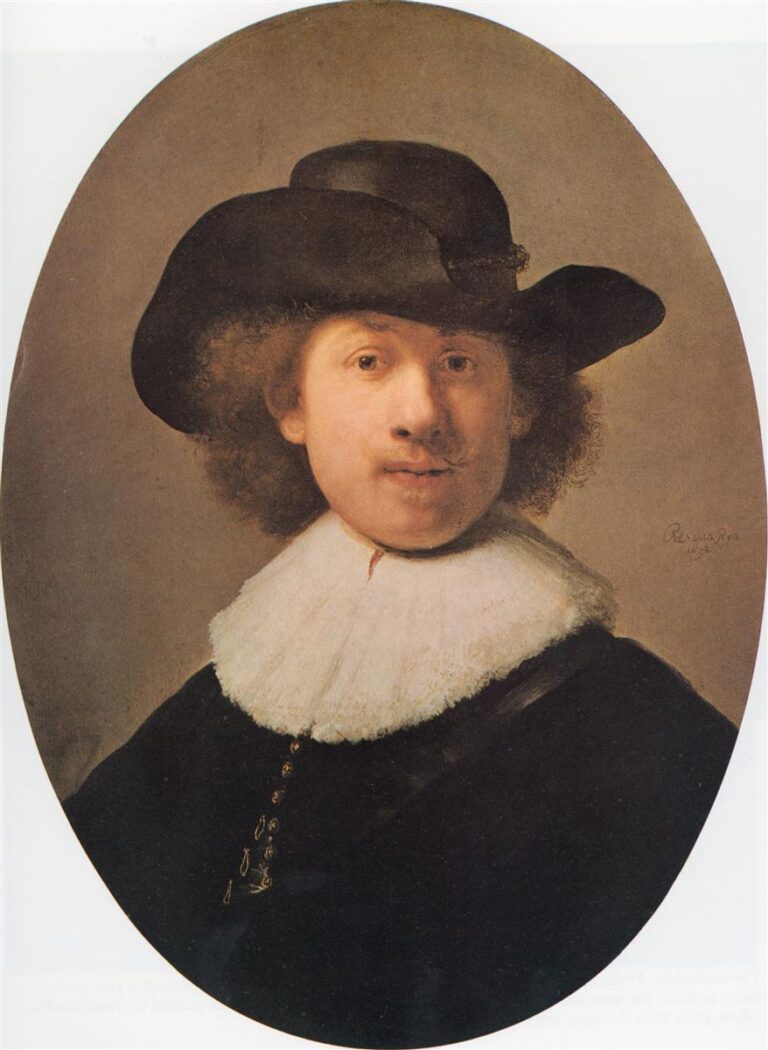
A Complete Analysis of “Self-portrait with Hat” by Rembrandt.

A young Rembrandt in a broad black hat and white ruff turns toward the viewer from a warm, shadowed background; his face is softly lit, with delicate mustache and auburn curls visible beneath the brim.

Painted in 1632 as he was establishing himself in Amsterdam, Rembrandt’s “Self-portrait with Hat” presents a poised young painter illuminated by soft studio light. The work balances sober fashion—black cloak and crisp white ruff—with nuanced chiaroscuro that sculpts the face, revealing ambition, tact, and psychological presence. Through restrained color, carefully tuned edges, and a conversational pose, the artist turns a simple likeness into a statement of arrival and identity.

A Complete Analysis of “Minerva” by Rembrandt

Rembrandt’s 1632 painting of Minerva shows a young woman seated in a dark interior, her pale face and hair illuminated while a deep red robe with a gold embroidered border spreads across the floor; a delicate diadem crowns her head, and faint armor and books recede into shadow.

An in-depth exploration of Rembrandt’s 1632 “Minerva,” showing how the painter transforms the goddess of wisdom into a luminous presence through diagonal composition, intelligent chiaroscuro, tactile fabrics, and a restrained symbolism that merges scholarship with poised strength.

A Complete Analysis of “Man in Oriental Costume (The Noble Slav / Man in a Turban)” by Rembrandt

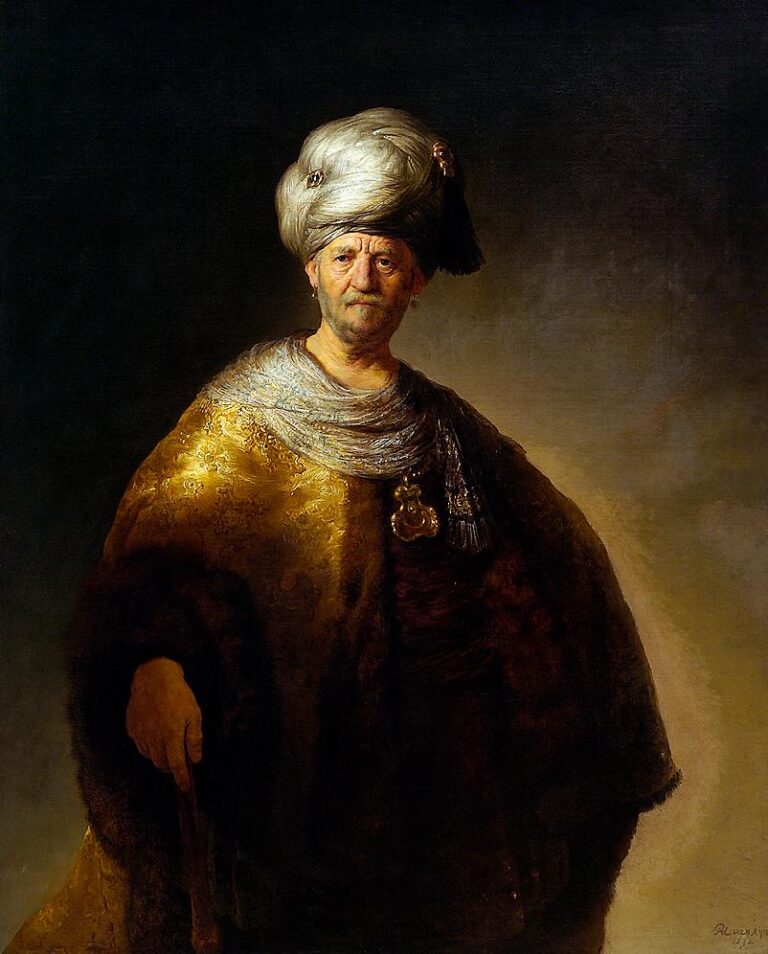
Half-length Rembrandt painting of an older man in a silver turban and golden fur-trimmed robe, illuminated against a dark ground; a jeweled pendant glitters at his chest while his lined face, calm and thoughtful, becomes the focus amid sumptuous fabrics.

A deep exploration of Rembrandt’s 1632 masterpiece in which a silver turban, golden brocade, and fur mantle become instruments of light and psychology. The essay traces the work’s Amsterdam context, its pyramidal design, dazzling textures, disciplined palette, and the humane gravity of the sitter’s face to show how spectacle and dignity are fused into a single, unforgettable presence.

A Complete Analysis of “Man Standing Up” by Rembrandt

Rembrandt’s 1632 portrait of a man rising to greet the viewer, wearing a wide-brimmed hat, black costume with elaborate lace collar and cuffs, one arm extended in welcome and the other at his side, warmly lit against a neutral background.

An in-depth reading of Rembrandt’s 1632 portrait that captures a gentleman mid-greeting, exploring how diagonal composition, intelligent chiaroscuro, lace that functions as light, and the rhetoric of the open hand transform civic elegance into a living encounter.