Category Rembrandt

A Complete Analysis of “Elsje Christiaens” by Rembrandt

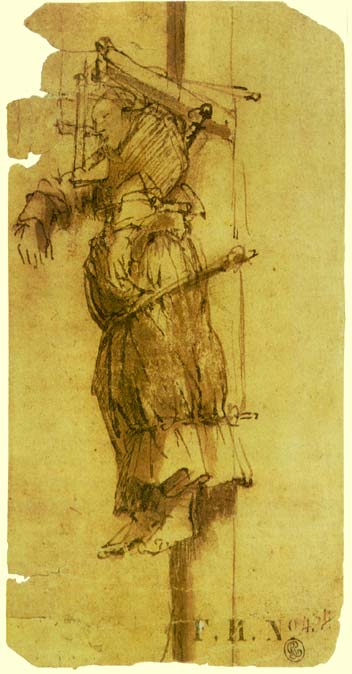
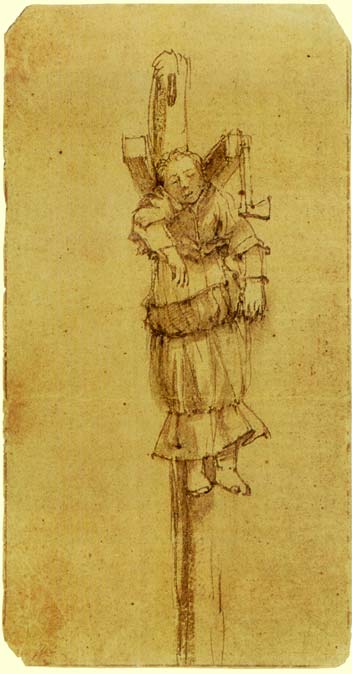
Rembrandt’s 1664 brown-ink drawing showing the body of Elsje Christiaens hanging from a tall post with an axe fixed above, her head tilted and one arm drooping, rendered with spare lines and soft wash against an empty ground.

Explore Rembrandt’s 1664 drawing of Elsje Christiaens, a haunting, compassionate record of a public execution. This in-depth analysis examines context, composition, line, light, and the ethical questions that make this small sheet one of the artist’s most powerful late works.

A Complete Analysis of “Portrait of a Young Man” by Rembrandt

Bust-length late Rembrandt portrait of a pale young man in a dark cap and russet robe, softly lit against a brown background, with sensitive modeling of the face and a quiet, thoughtful gaze.

Painted in 1663, Rembrandt’s “Portrait of a Young Man” transforms a simple bust-length likeness into a profound study of character. Through warm chiaroscuro, tactile brushwork, and elegant restraint, the master reveals youth poised between openness and reserve, making the sitter’s inner life the true subject.

A Complete Analysis of “Homer” by Rembrandt

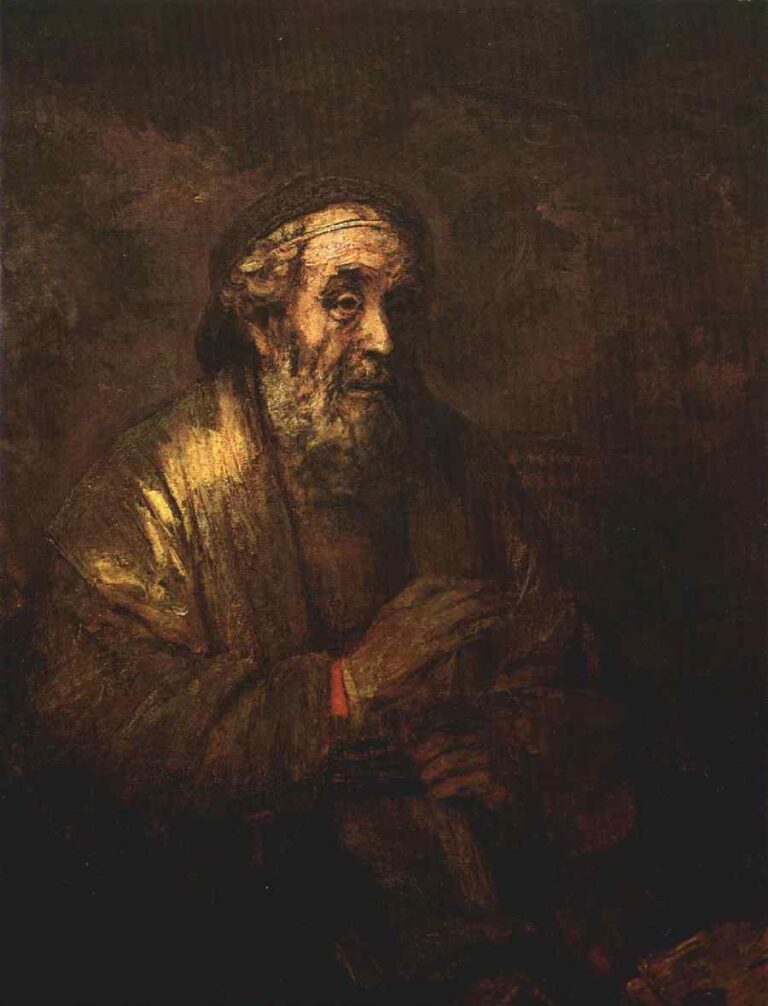
Late Rembrandt portrait of Homer seated in deep shadow, headbanded and bearded, face and robe softly illuminated as he holds a staff or manuscript, conveying thoughtful stillness.

Rembrandt’s 1663 portrait of Homer transforms the legendary poet into a living presence through restrained composition, chiaroscuro, and tactile brushwork. Light becomes a metaphor for memory, and age appears as the hard-won credential of genius in a painting that honors intellect over spectacle.

A Complete Analysis of “A Seated Female Nude” by Rembrandt

Ink-and-wash drawing of a nude woman seated on a low stool, head bowed and one arm across her torso, with soft shadows and broad diagonal washes creating intimate light in a simple studio setting.

Rembrandt’s 1662 drawing captures a woman resting on a low stool, rendered with swift washes and tender lines. Eschewing idealization, the artist honors gravity, light, and the sitter’s privacy, turning a simple studio moment into a meditation on truth, touch, and the quiet dignity of the ordinary.

A Complete Analysis of “The Syndics” by Rembrandt

Six Dutch officials in black hats and white collars sit around a red-carpeted table, turning toward the viewer from an open ledger in a wood-paneled room; Rembrandt’s warm light clarifies their faces and hands.

Rembrandt’s 1662 masterpiece captures six Amsterdam cloth officials at work, turning from a ledger as an unseen visitor enters. With humane light, a thrusting red table, eloquent hands, and a horizon of black hats, the painting reimagines the civic group portrait as a candid moment of responsibility and collective attention.

A Complete Analysis of “The Conspiracy of the Batavians” by Rembrandt

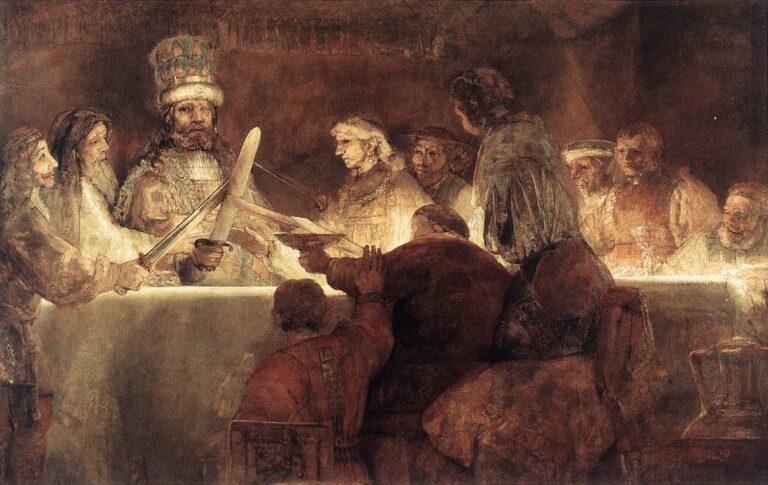
Large Rembrandt scene showing Claudius Civilis and companions gathered around a glowing banquet table, swords crossed above a ritual cup as figures lean in to swear an oath; faces and hands lit against a warm, shadowed interior.

Rembrandt’s 1662 “The Conspiracy of the Batavians” captures the charged instant when Claudius Civilis and his followers swear rebellion. With a blade-bright table, a choreography of hands, earth-warm color, and humanized leadership, the late master turns political myth into a tactile drama of choice and collective resolve.

A Complete Analysis of “The Knight with the Falcon” by Rembrandt

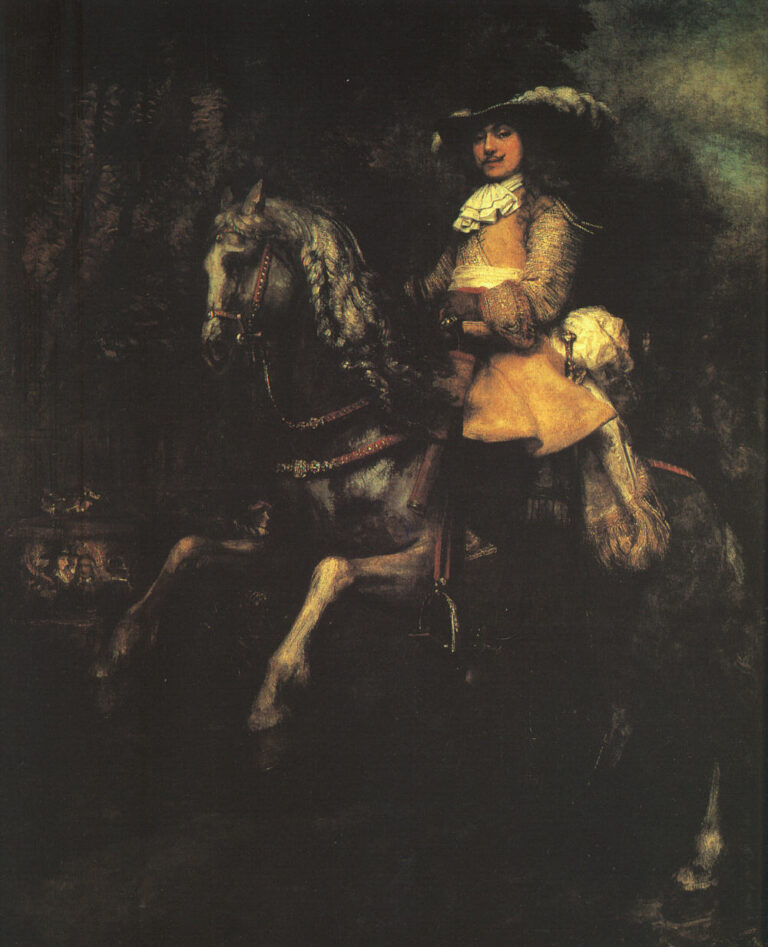
Dark, intimate Rembrandt portrait of a bearded man in feathered hat holding a falcon on a gloved hand; face and glove lit against a deep brown background with faint attendant figures, textured paint suggesting metal, leather, and feather in moody chiaroscuro.

Rembrandt’s 1661 “The Knight with the Falcon” turns a courtly falconry scene into a psychological nocturne. A pyramid composition, humane chiaroscuro, tactile surfaces, and the symbolic exchange between knight and bird reveal late Rembrandt’s vision of authority as disciplined vigilance rather than spectacle.