Category Rembrandt

A Complete Analysis of “Belshazzar’s Feast” by Rembrandt

Rembrandt’s banquet scene with King Belshazzar twisting toward a glowing Hebrew inscription on the wall, guests recoiling in shock as wine spills and gold vessels gleam under supernatural light.

Rembrandt’s 1635 “Belshazzar’s Feast” captures the split-second when the miraculous inscription blazes on the wall—gold glitters, wine spills, faces freeze—uniting opulent detail, baroque choreography, and moral urgency in one of the artist’s most dramatic masterpieces.
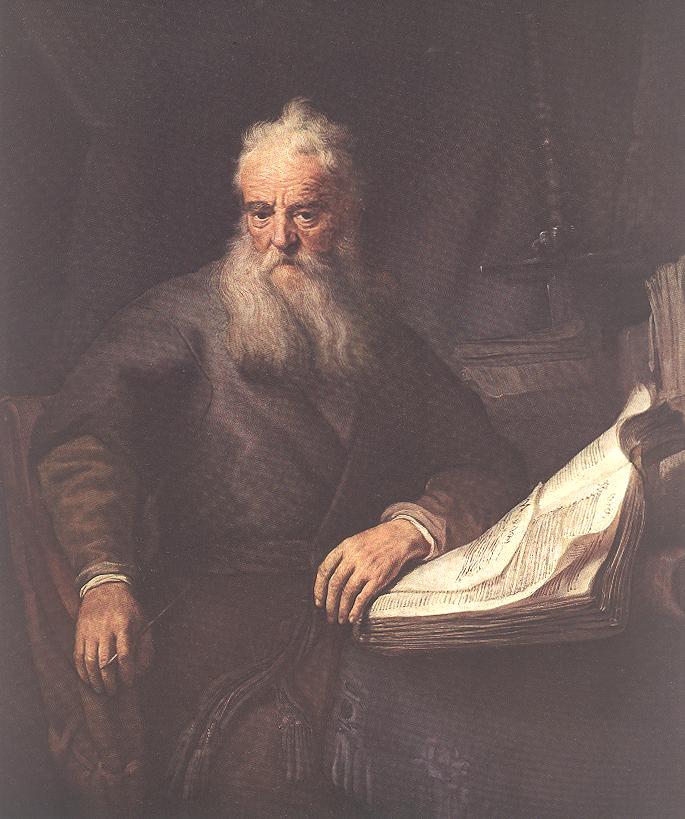
A Complete Analysis of “Apostle Paul” by Rembrandt

Elderly Apostle Paul seated in a dim interior, long white beard and thoughtful gaze, left hand resting on a large open book that glows in the light while the surrounding room fades into shadow.

Rembrandt’s 1635 “Apostle Paul” presents the saint as a thinking writer—bathed in quiet light, hands poised over a monumental book—uniting chiaroscuro, restrained color, and psychological depth in a profound portrait of conscience and study.

A Complete Analysis of “Flora” by Rembrandt

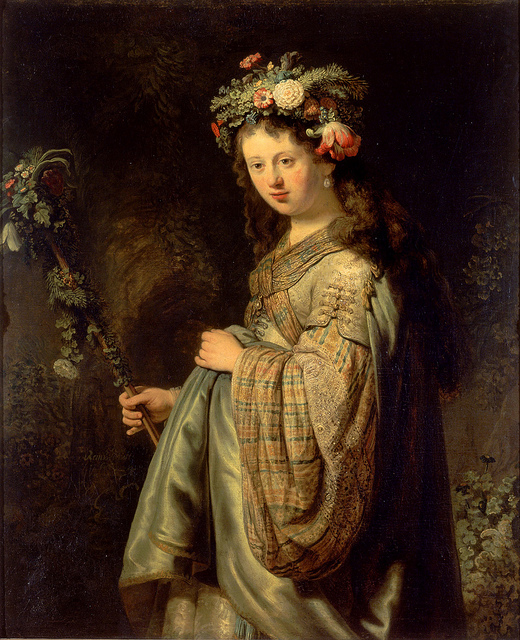
Rembrandt’s “Flora” shows a young woman crowned with flowers holding a blossom-wrapped staff, dressed in embroidered robes and a silvery mantle, softly lit against a dark garden background.

Rembrandt’s 1634 “Flora” blends portrait and allegory as a flower-crowned figure emerges from a dark arbor in shimmering textiles; this analysis explores composition, light, costume, symbolism, technique, and the painting’s enduring intimacy.