Category Rembrandt

A Complete Analysis of “Portrait of a Boy” by Rembrandt
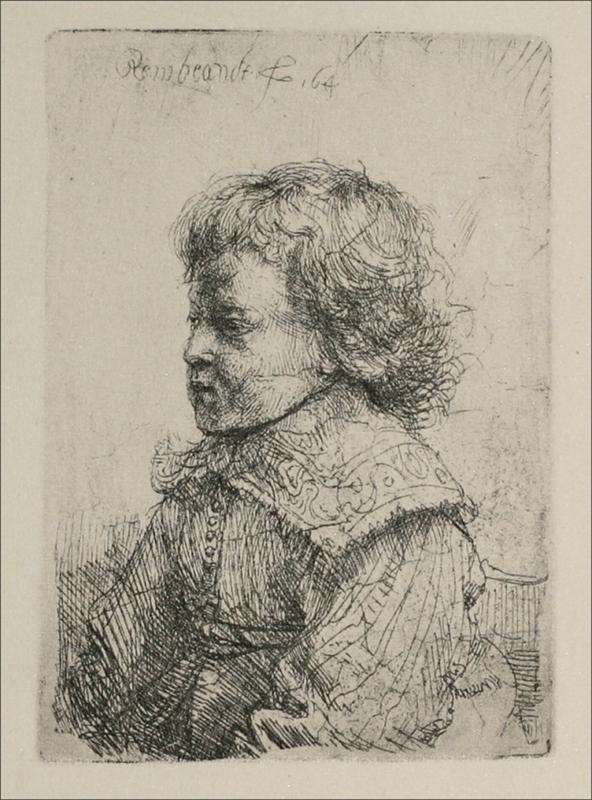
Small etched profile portrait of a young boy by Rembrandt, with tousled hair, an ornate collar, and a patterned doublet; delicate cross-hatching models the soft face against a lightly shaded background.

Rembrandt’s 1641 etching “Portrait of a Boy” captures childhood with rare gravity. This in-depth analysis explores the power of the profile, expressive cross-hatching, costume and social context, and the quiet psychology that makes the small print a lasting masterpiece of the Dutch Golden Age.
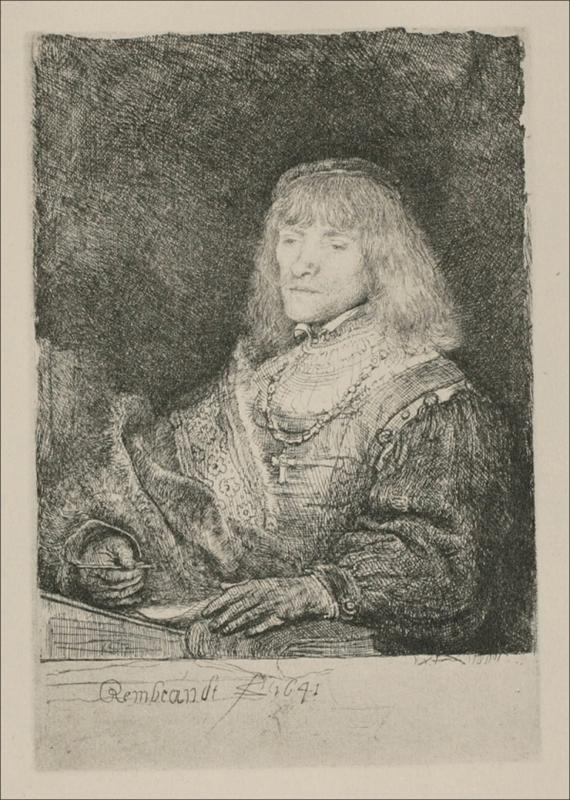
A Complete Analysis of “Man Drawing from a Cast” by Rembrandt

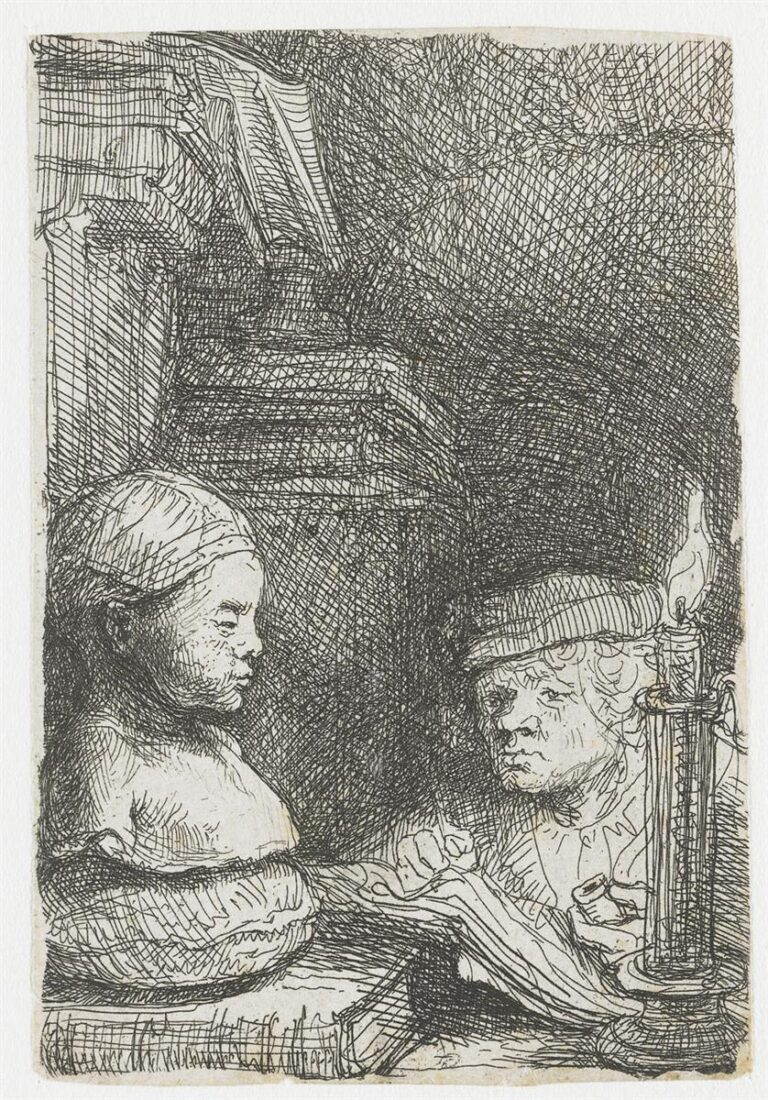
Etching by Rembrandt of a young draughtsman studying a plaster bust beside a tall candle; the figure leans over papers while the cast sits on a pedestal, all set against a dark, cross-hatched studio background that pushes the lit forms forward.

Rembrandt’s 1641 etching “Man Drawing from a Cast” transforms a modest studio exercise into a profound meditation on seeing and learning. Discover how candlelight, cross-hatching, tight composition, and the dialogue between plaster bust and student reveal the artist’s philosophy of practice and perception.

A Complete Analysis of “Agatha Bas” by Rembrandt

Half-length portrait by Rembrandt of Agatha Bas facing forward against a dark background, wearing a black dress with elaborate white lace collar and cuffs, jeweled bodice and pearls, and holding a folded fan; soft, directional light models her calm face and hands while the surroundings fade into shadow.

Rembrandt’s 1641 portrait “Agatha Bas” unites luminous craft with psychological poise. Explore how light, costume, gesture, and edge control create a refined yet intimate image that honors status without sacrificing individuality, establishing the painting as a pinnacle of Dutch Golden Age portraiture.

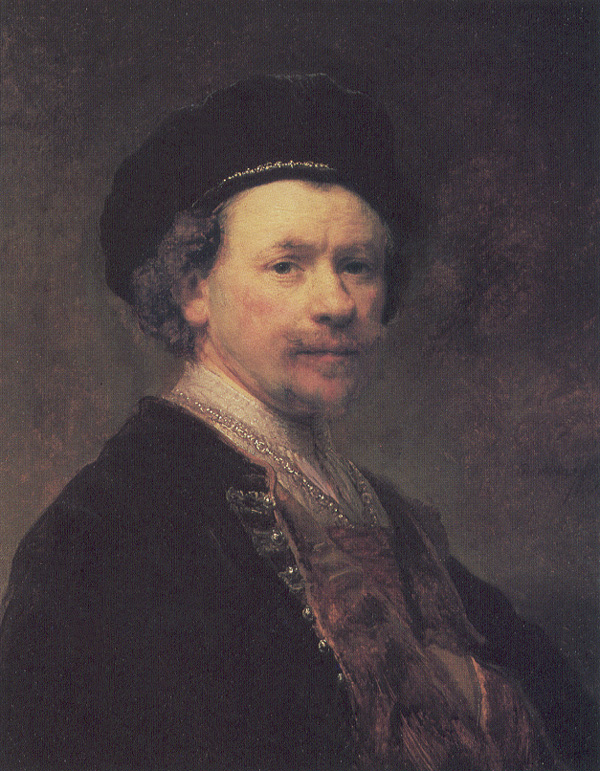
A Complete Analysis of “Self-portrait” by Rembrandt

Half-length self-portrait by Rembrandt from 1640 showing the artist in a dark cap and elegant mantle with a warm tabard and clasp, turning toward soft light against an atmospheric background, his gaze steady and expression composed.

Rembrandt’s 1640 “Self-portrait” captures the artist at a peak of confidence and craft. Explore how composition, controlled light, nuanced brushwork, and richly textured costume create a poised, modern-feeling image that defines the painter’s identity and technique.

A Complete Analysis of “Landscape” by Rembrandt

Atmospheric landscape by Rembrandt showing a stormy sky over a sunlit hill with scattered ruins, dark trees and cottages in the foreground, and a winding watercourse leading to a pale plain at right; warm earth tones and smoky grays create a dramatic play of light and shadow.

Rembrandt’s 1640 “Landscape” turns storm light, ruins, and rolling hills into a profound meditation on weather and memory. Explore how diagonal composition, selective illumination, layered brushwork, and a restrained earth palette create a living atmosphere where sky and land share the drama.

A Complete Analysis of “The Visitation” by Rembrandt

Evening scene by Rembrandt showing Mary and Elizabeth embracing on a lit stone landing before a classical portico, with Zechariah and attendants nearby, a small dog and peacocks on the steps, and a densely detailed hillside town receding into shadow at right.

Rembrandt’s 1640 “The Visitation” captures Mary and Elizabeth’s embrace as a pool of light on a porticoed terrace. Explore how composition, architecture, symbolic animals, and luminous chiaroscuro turn a biblical greeting into a richly human scene of hospitality and recognition.

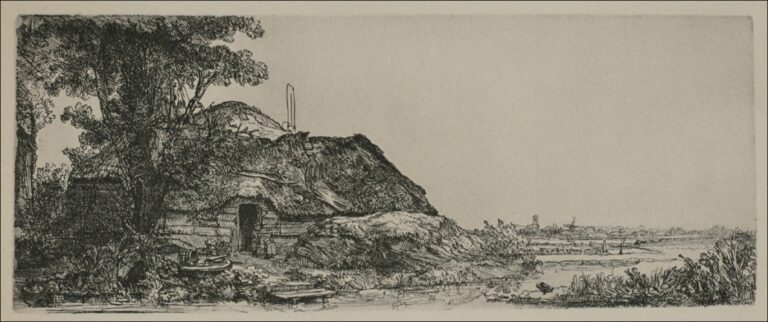
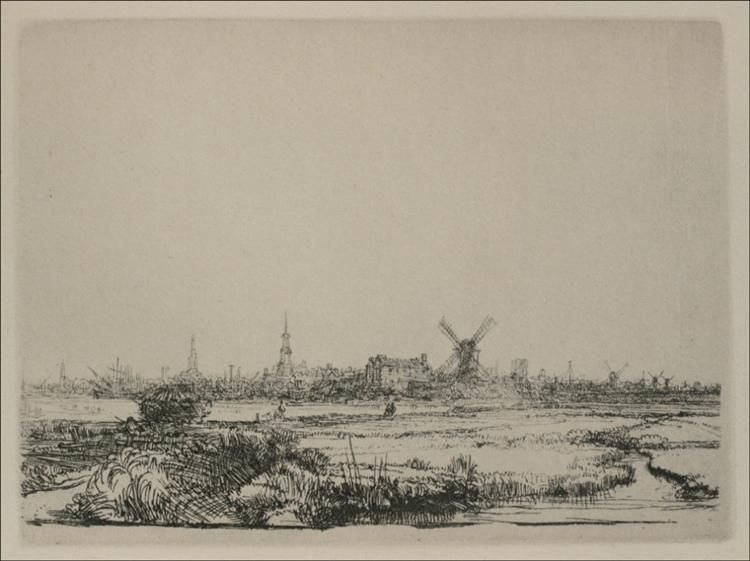
A Complete Analysis of “View of Amsterdam” by Rembrandt

Wide etching by Rembrandt showing Amsterdam as a thin distant skyline of spires and windmills above marshy meadows and ditches, with dense reeds in the foreground and a vast blank sky occupying most of the image.

Rembrandt’s 1640 etching “View of Amsterdam” turns a low horizon of spires and windmills into lyrical civic portraiture. Learn how sky, polder foreground, water channels, and masterful linework create depth, atmosphere, and a quietly triumphant image of the Dutch republic.