Category Rembrandt

A Complete Analysis of “The Mill” by Rembrandt

Etching of a Dutch windmill on a raised platform with cottages clustered at its base; dense cross-hatching defines the mill and roofs on the left, while the right half opens into a bright, nearly empty sky and distant river plain, conveying light, air, and spacious horizon.

Rembrandt’s 1641 etching “The Mill” transforms a humble Dutch windmill into a monumental meditation on labor, weather, and space. This in-depth analysis explores composition, scale, line, mechanics of the mill, human presence, and the tonal architecture that makes the sky breathe across the page.

A Complete Analysis of “The Large Lion Hunt” by Rembrandt

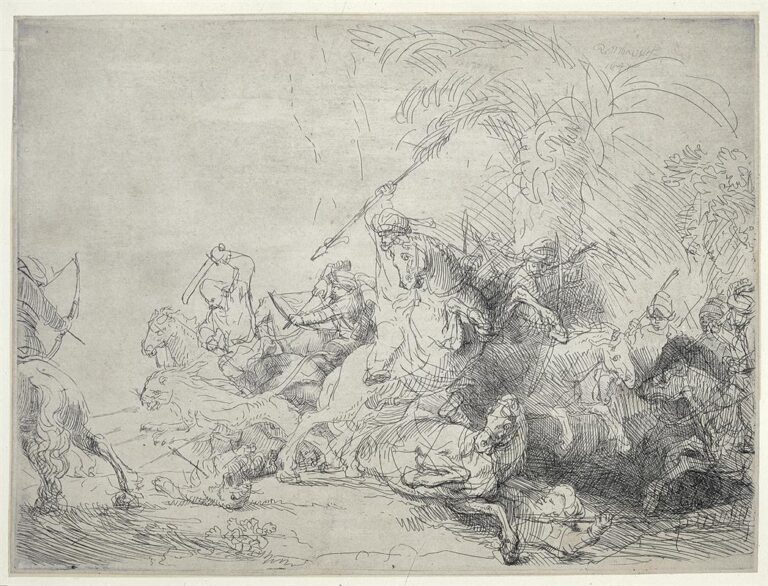
Etching by Rembrandt showing a sweeping melee of mounted hunters attacking lions; rearing horses, curved sabers, and leaping cats surge from a dark mass at right across the page, with spare landscape and palm fronds behind, all rendered in energetic crosshatched lines.

Rembrandt’s 1641 etching “The Large Lion Hunt” transforms a baroque hunting theme into a kinetic storm of riders, horses, and lions. This deep dive explores the diagonal composition, variations of etched and drypoint line, orchestration of weapons, animal anatomy, and the print’s balance between high drama and sober ethics.

A Complete Analysis of “The Mennonite Preacher Anslo and His Wife” by Rembrandt

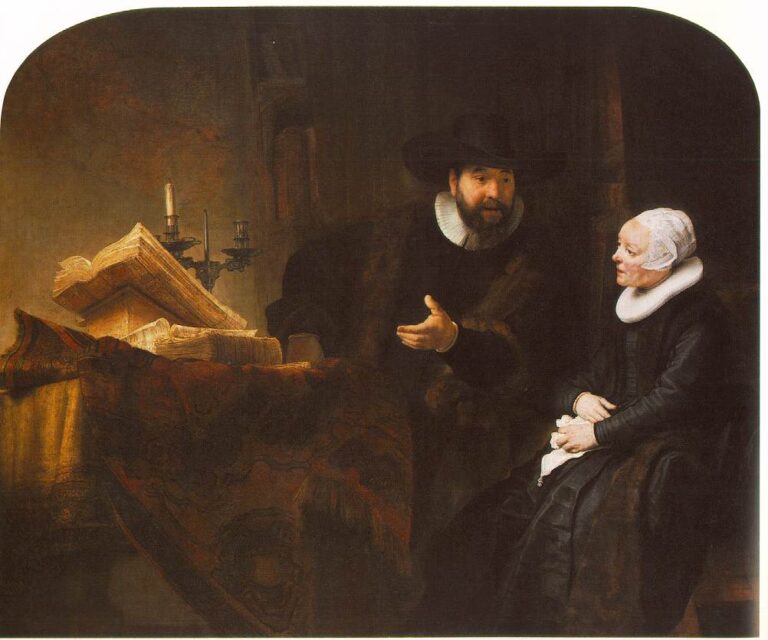
Rembrandt’s interior double portrait showing the Mennonite preacher Cornelis Anslo speaking with an open hand toward his seated wife; a pile of large books draped with a patterned carpet and an unlit candelabrum glow at left, while warm light models the couple’s attentive faces against a dark room.

Rembrandt’s 1641 double portrait of the Mennonite preacher Cornelis Anslo and his wife captures a sermon transformed into intimate dialogue. This in-depth analysis explores the diagonal composition, dramatic chiaroscuro, the book-laden table and unlit candelabrum, the symbolism of costume, and how listening itself becomes luminous in one of the Dutch master’s most humane interiors.

A Complete Analysis of “The Baptism of the Eunuch” by Rembrandt

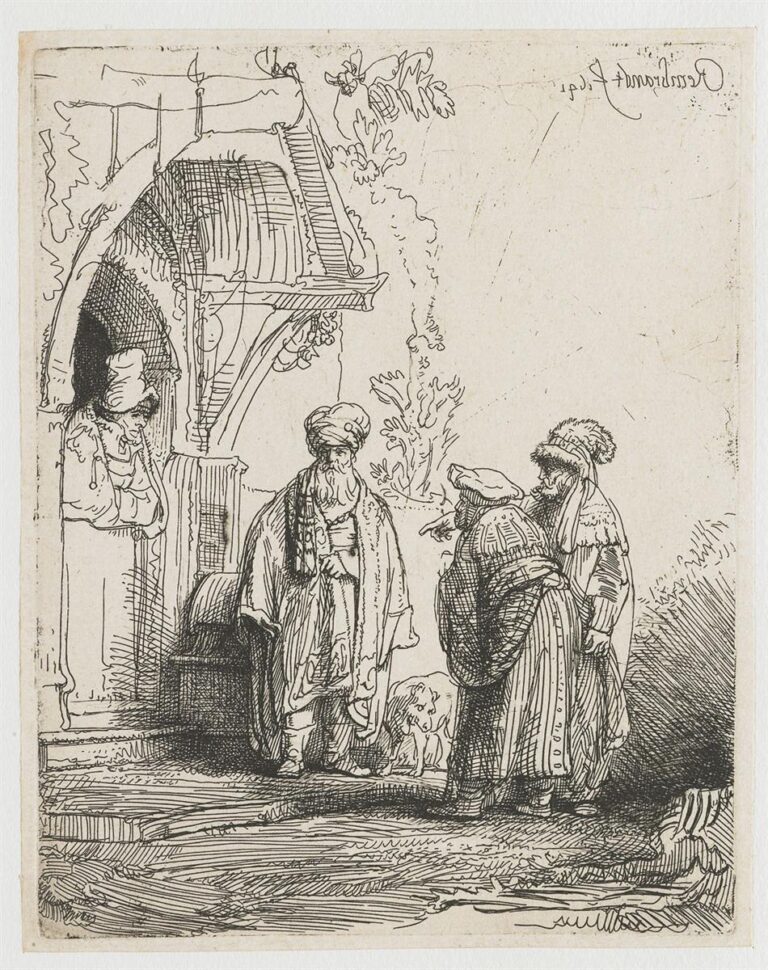
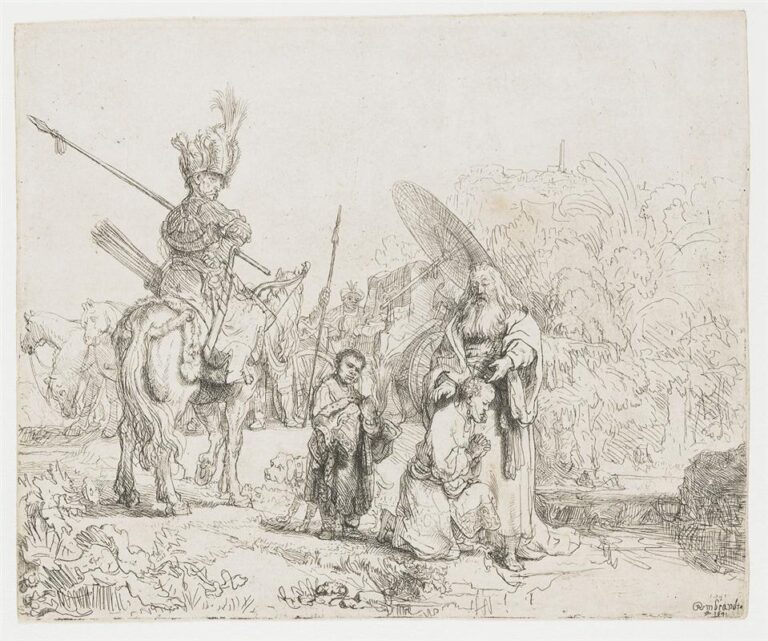
Etching by Rembrandt showing Philip baptizing the kneeling Ethiopian eunuch beside a stream, with attendants holding a parasol and a mounted guard leading a halted caravan; delicate lines describe figures, horses, and landscape in a calm, dignified scene.

Rembrandt’s 1641 etching “The Baptism of the Eunuch” blends biblical narrative with everyday realism. This in-depth study examines the diagonal composition, the mounted guard and parasol-bearing attendants, the luminous stream, and Rembrandt’s masterful etching line that turns a roadside pause into a profound ceremony of faith and encounter.

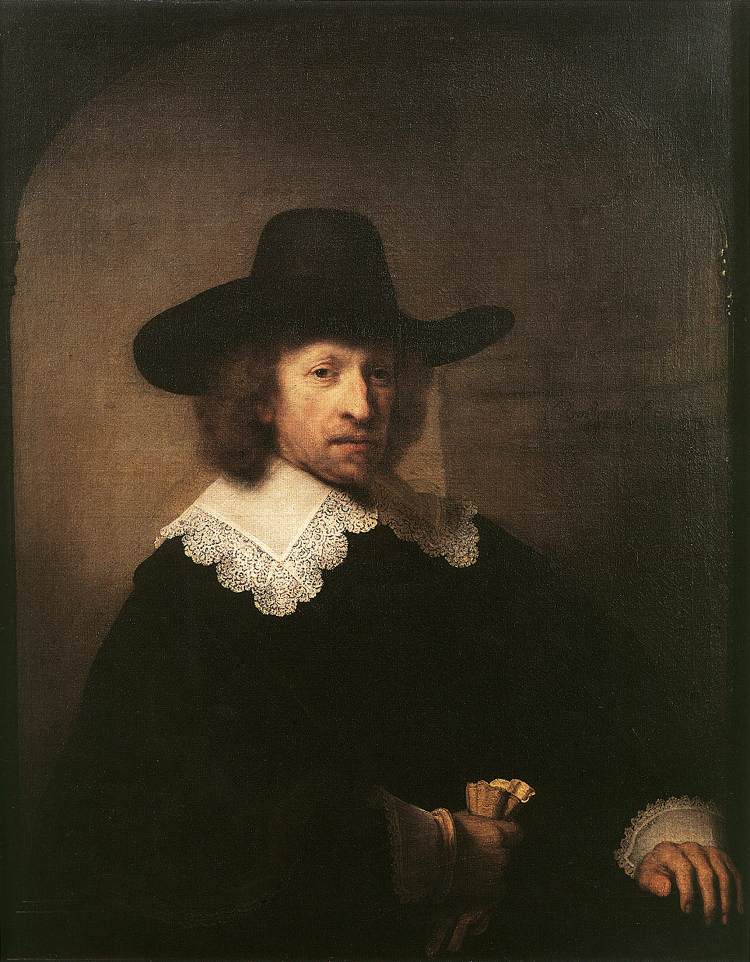
A Complete Analysis of “Portrait of Nicolas van Bambeeck” by Rembrandt

Half-length portrait of the Amsterdam merchant Nicolas van Bambeeck by Rembrandt, wearing a broad black hat and lace collar, seated against a warm dark background with a glove in his right hand; soft light models his thoughtful face and refined attire.

Rembrandt’s 1641 “Portrait of Nicolas van Bambeeck” transforms a sober merchant likeness into a study of light and character. This analysis explores the nuanced blacks of costume, the lace collar’s disciplined brilliance, the symbolic glove, and the psychological reserve that make this Dutch Golden Age portrait enduringly compelling.

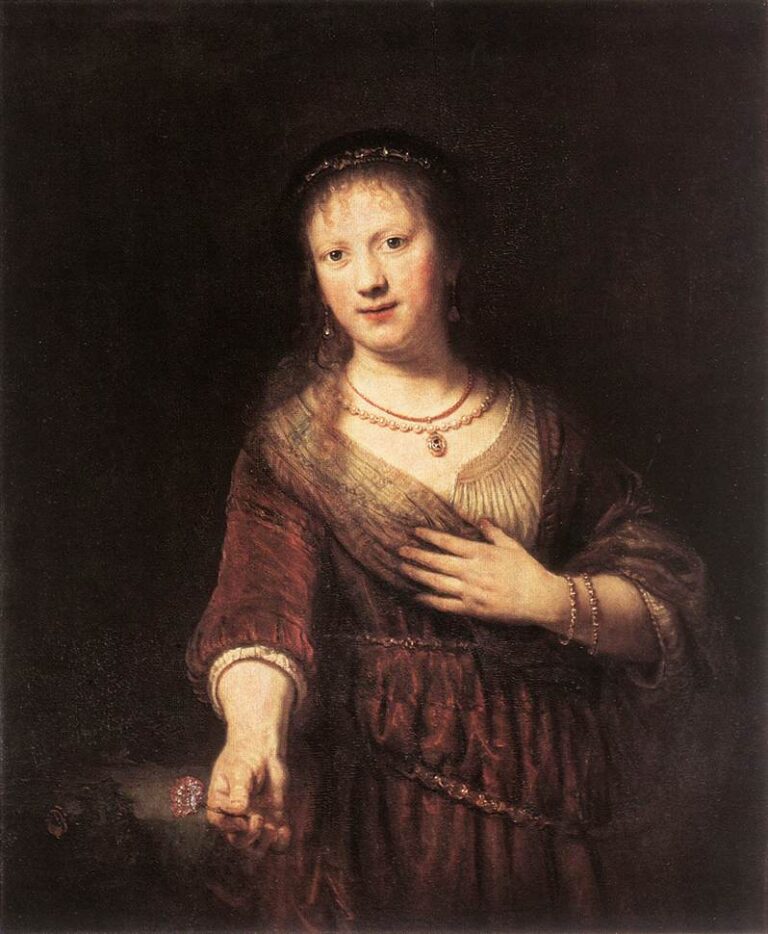
A Complete Analysis of “Saskia with a Red Flower” by Rembrandt

Half-length portrait of Saskia van Uylenburgh by Rembrandt, warmly lit against a dark background, wearing a red gown and pearls, one hand over her chest and the other offering a small red flower toward the viewer.

Rembrandt’s 1641 portrait “Saskia with a Red Flower” blends intimate gesture with luminous chiaroscuro. Explore how the red bloom’s symbolism, the S-curve composition, and masterful textures of skin, silk, and pearls transform a private moment with Saskia van Uylenburgh into one of the Dutch Golden Age’s most tender images.