Category Rembrandt

A Complete Analysis of “Saskia Asleep in Bed” by Rembrandt
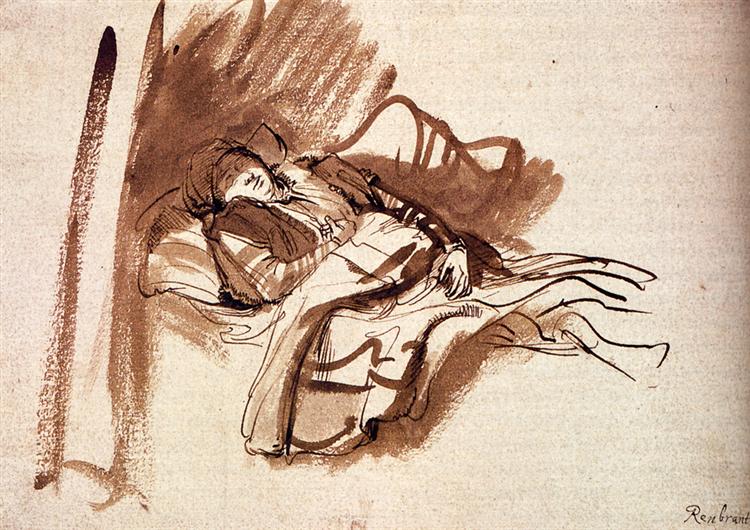
Brown ink and wash drawing of a woman sleeping diagonally across a bed; head on a pillow, one hand tucked to her cheek, blanket and skirt indicated with flowing lines, and a simple bed rail and shadowed wall behind her.

Rembrandt’s 1638 pen-and-wash drawing captures his wife Saskia asleep, using diagonal composition, supple line, and soft brown washes to turn a domestic moment into a tender study of light, weight, and rest. Minimal background, expressive gesture, and visible process make the scene feel intimate and modern.
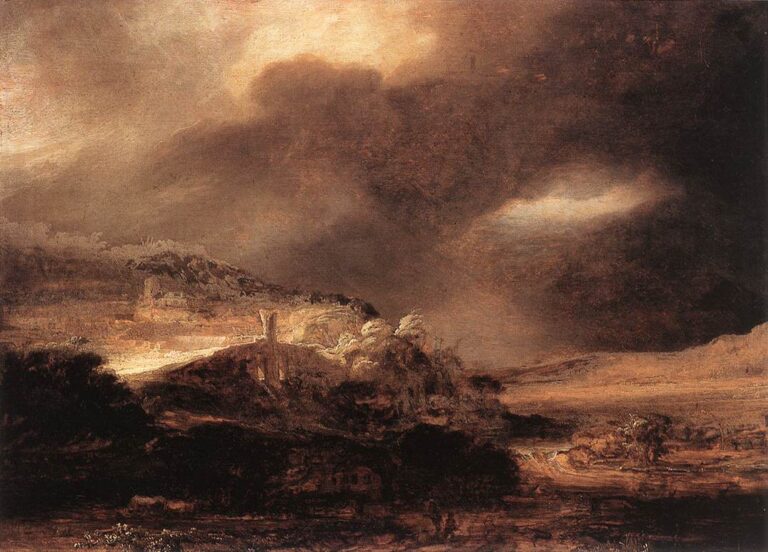
A Complete Analysis of “Stormy Landscape” by Rembrandt

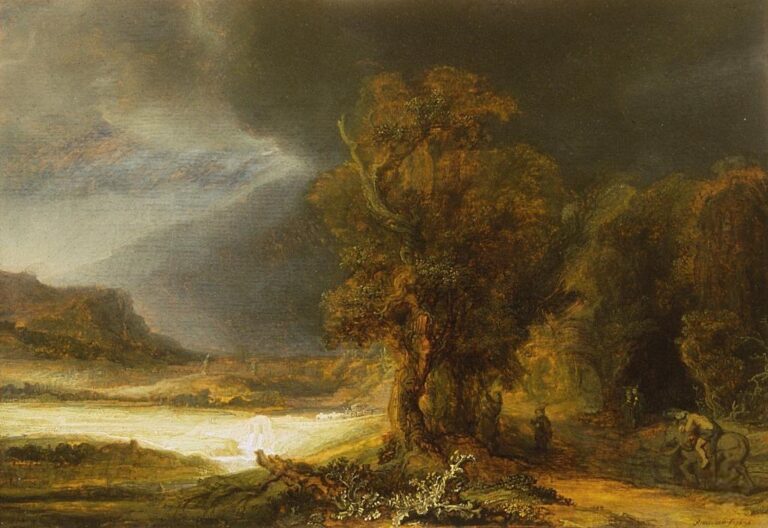
Brooding landscape under a massive storm sky, with dark foreground trees, a glowing ridge with a small ruin lit by a break in the clouds, and a river flashing across the middle distance as heavy clouds gather to the right.

Rembrandt’s 1638 landscape turns weather into narrative: a bruised sky rolls over a bright ridge and ruin while rivers flash and shadow banks hold the foreground. With austere color, layered brushwork, and a precise sense of scale, the painting captures the charged minute before a storm breaks.

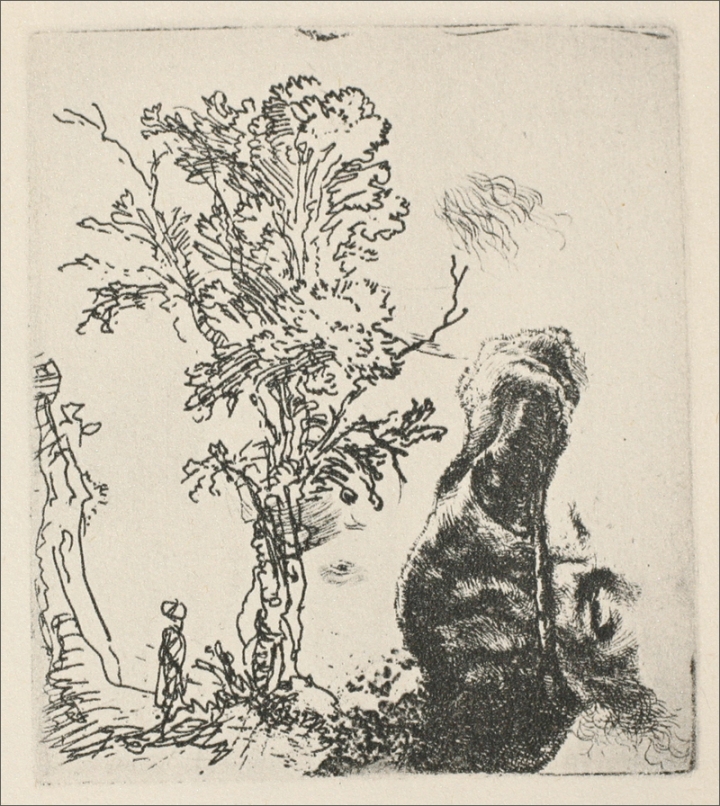
A Complete Analysis of “Sketch of a Tree” by Rembrandt

Etching showing a quick, calligraphic tree with a tiny standing figure at its base on the left; at the right edge a large sideways head in profile is densely hatched, leaving ample blank paper between the two studies.

Rembrandt’s 1638 etching pairs a lively tree study with a boldly cropped, sideways head, turning a simple landscape sketch into a candid record of process. Elastic line, generous white space, and subtle scale cues create a breathing scene where outdoor observation and studio memory share the same copper plate.

A Complete Analysis of “Jacob Telling his Dreams” by Rembrandt

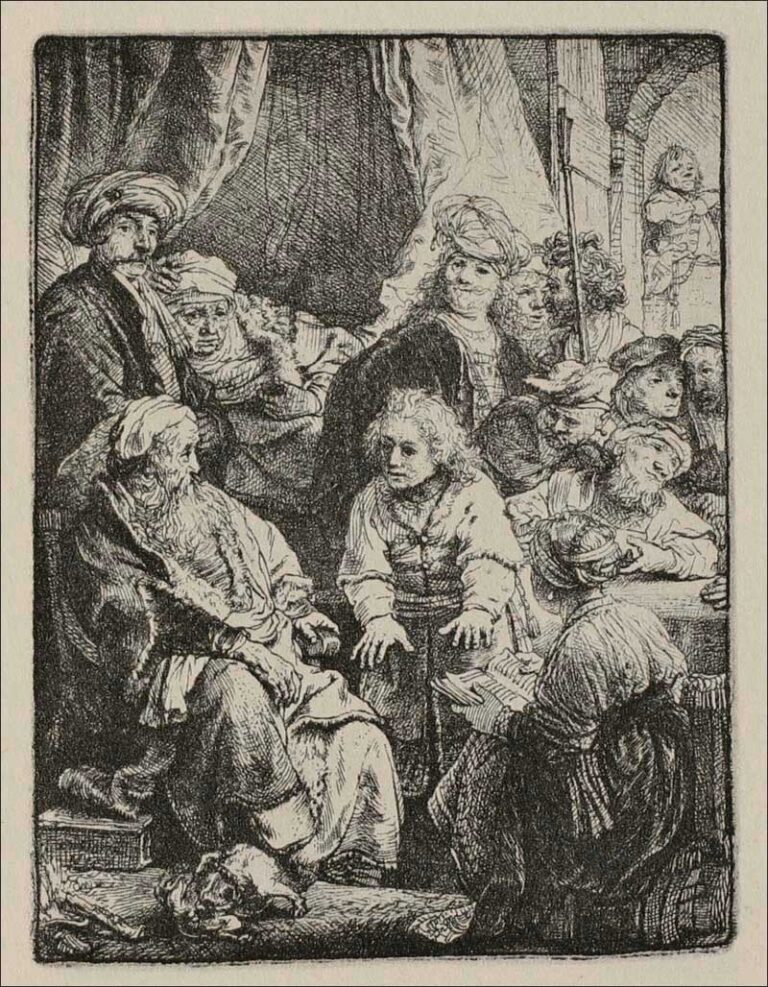
Etching of a packed interior where a youth with open palms stands before the seated patriarch Jacob; brothers cluster around with mixed reactions, a woman at lower right holds an open book, a curtain frames the scene, and a small child peers from a doorway.

Rembrandt’s 1638 etching crowds a family into a single room as the young dreamer recounts his vision to Jacob. With spiraling composition, expressive hands, and light that falls on the speaker, the listener, and an open book, the print turns Genesis into a vivid domestic drama about revelation, skepticism, and memory.

A Complete Analysis of “Adam and Eve” by Rembrandt

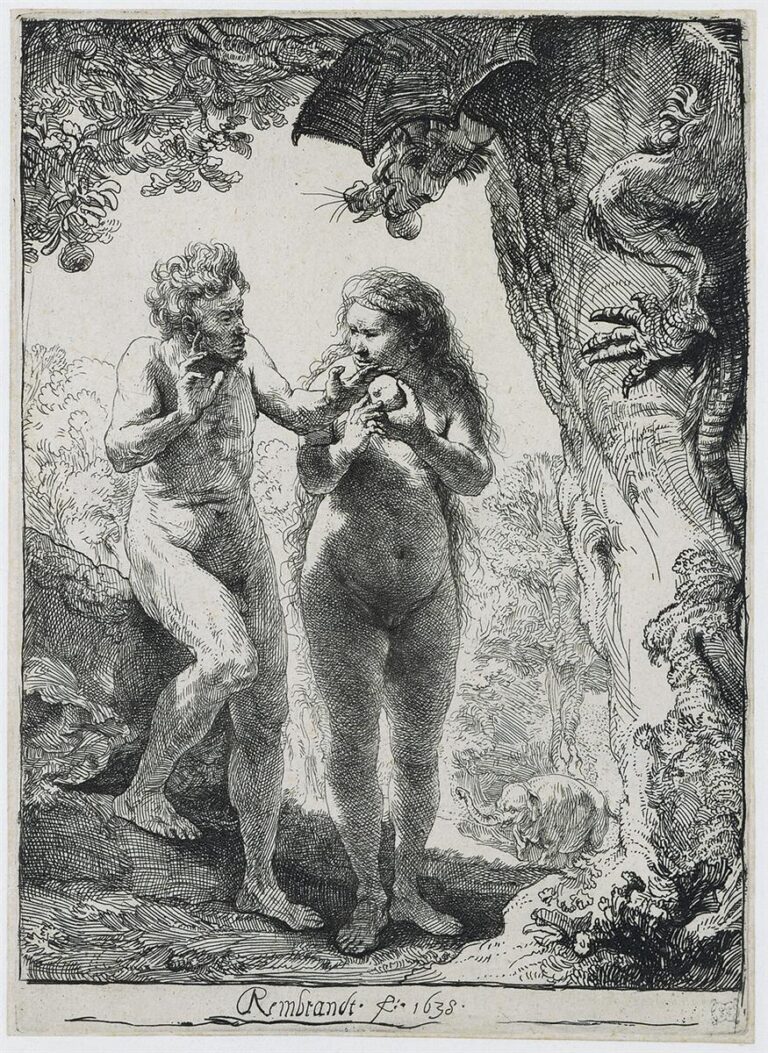
Etching of Adam and Eve standing in a forest clearing as a clawed serpent leans from the tree at right; Eve holds a round fruit to her chest while Adam gestures anxiously; heavy foliage frames the top and distant animals graze in the background.

Rembrandt’s 1638 etching stages the first couple and the serpent in a tight triangular composition where hands, glances, and a tangible fruit carry the drama. Frankly human bodies, dense hatching, and moral chiaroscuro turn Eden into a psychologically exact moment before the fall.