Category Henri Matisse

A Complete Analysis of “Portrait of Pierre Matisse” by Henri Matisse
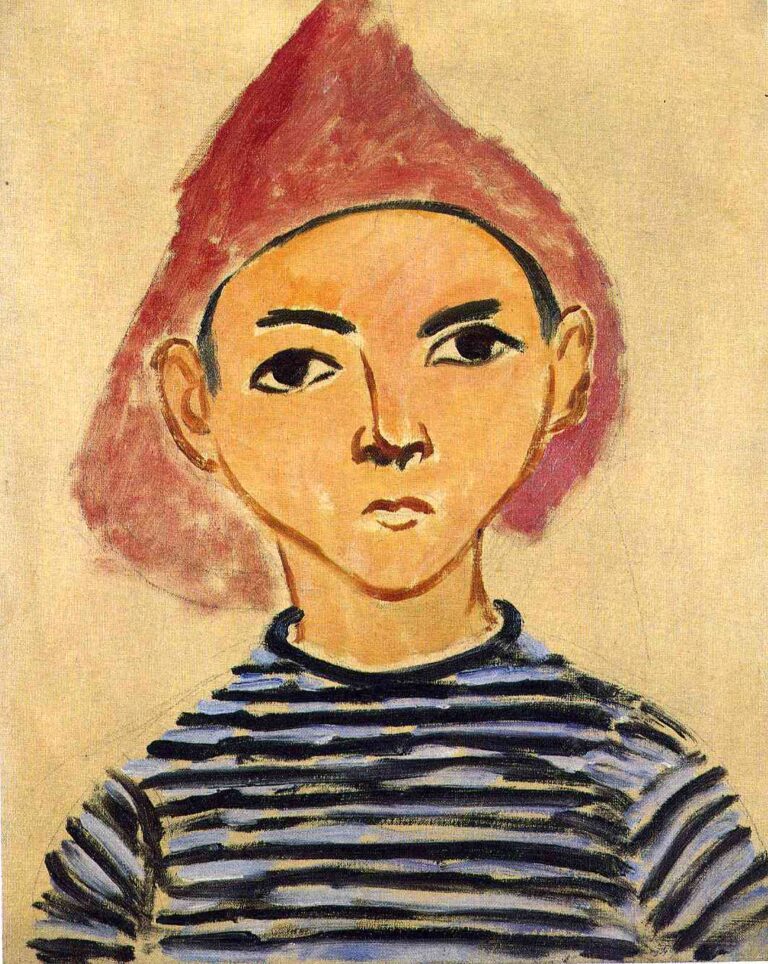
Front-facing bust of a boy wearing a red triangular cap and a blue-black striped sailor shirt; simplified almond eyes, small mouth, and bold dark contours stand against an unpainted linen background in Henri Matisse’s 1909 “Portrait of Pierre Matisse.”

Henri Matisse’s “Portrait of Pierre Matisse” (1909) turns a child’s face, a red triangular hat, and a striped sailor’s shirt into a strikingly modern image. This analysis explores the painting’s pared-down composition, limited palette, decisive brush-drawn contour, and how the bare canvas background and rhythmic stripes create a lucid, enduring presence.
A Complete Analysis of “Pink Nude” by Henri Matisse

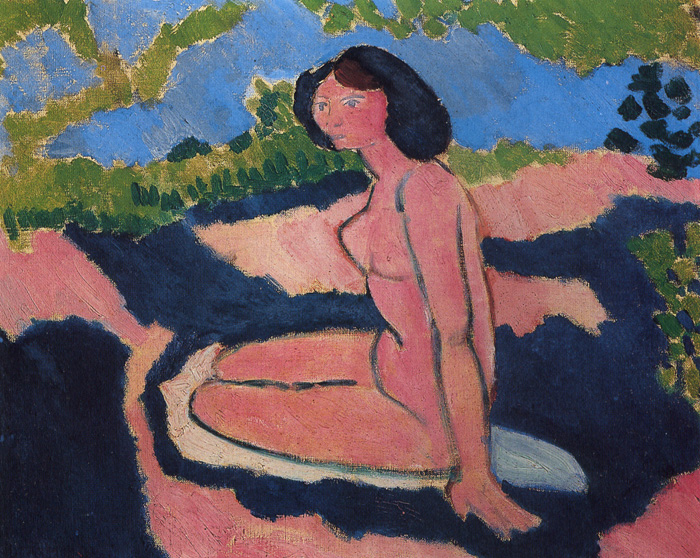
Seated nude in profile on a pale oval, turning her head toward the viewer; broad pink flesh tones outlined by dark contours sit amid bands of deep blue, chalky pink ground, and green foliage beneath an open blue sky in Henri Matisse’s 1909 “Pink Nude.”

Matisse’s “Pink Nude” (1909) presents a seated figure built from bold contour and a concise palette of pinks, blues, and greens. This in-depth analysis explains how composition, color architecture, planar modeling, and a shallow stage transform a classical subject into a modern image of poise and light.

A Complete Analysis of “Nymph and Satyr” by Henri Matisse

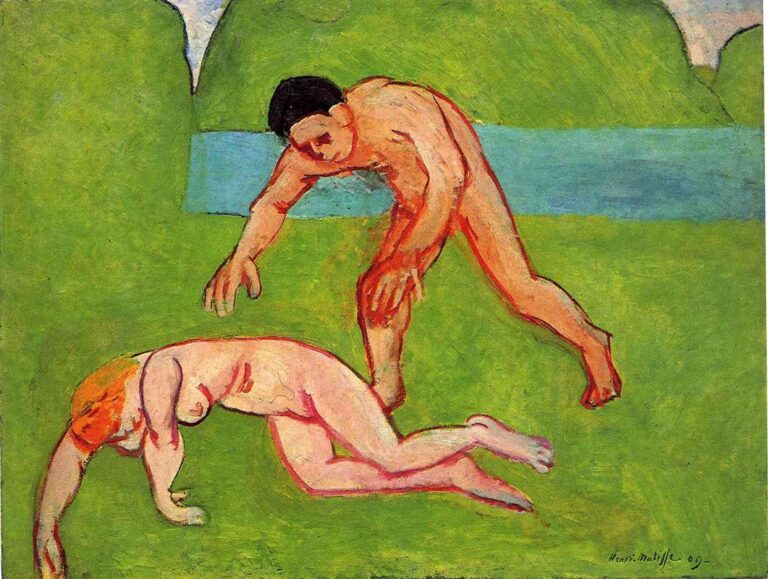
Two simplified nude figures in a bright green meadow before a narrow blue river and rounded hills; a pale, orange-haired nymph reclines diagonally at the left while a darker satyr leans toward her from the right, both outlined by red contours in Henri Matisse’s 1909 “Nymph and Satyr.”

Matisse’s 1909 “Nymph and Satyr” reduces myth to pure rhythm and color: two nude figures—one reclining, one descending—set against bands of green meadow and blue water. This concise analysis explores its diagonal composition, red-contour drawing, limited palette, and how the painting transforms an ancient subject into a modern emblem of energy and repose.

A Complete Analysis of “Algerian Woman” by Henri Matisse

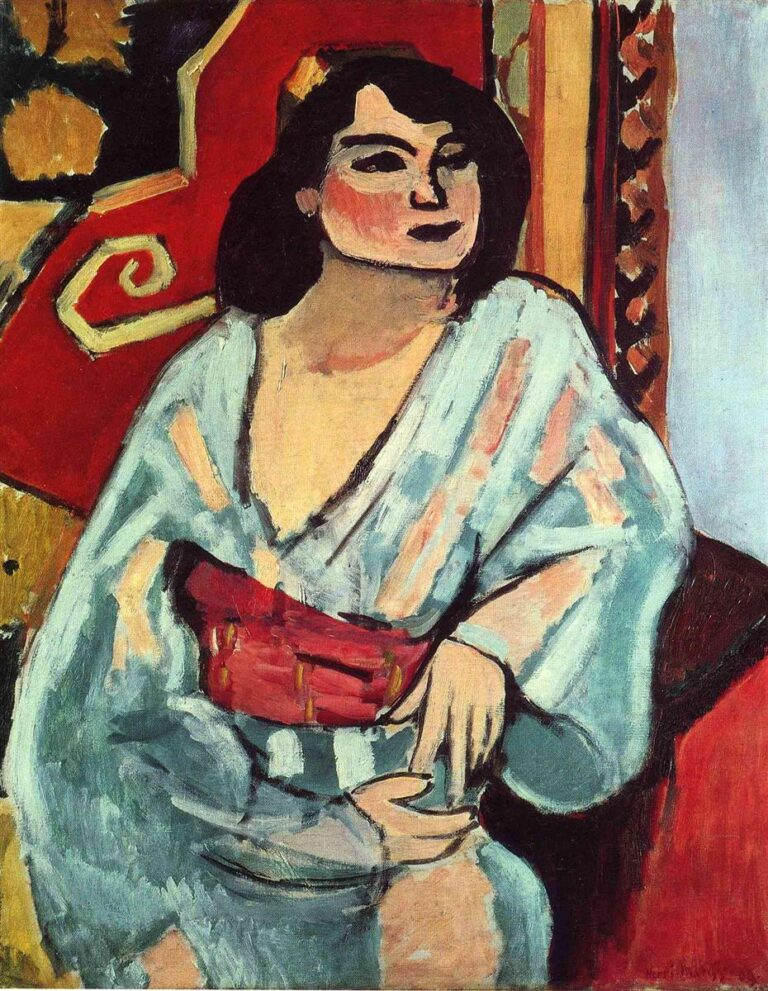
A seated woman in a pale blue-gray robe with a vivid red sash faces left before a red patterned backdrop; firm black contours, simplified features, and broad color planes create a decorative, modern portrait in Matisse’s 1909 “Algerian Woman.”

Henri Matisse’s 1909 “Algerian Woman” fuses post-Fauvist color with North African ornament to create a poised, modern portrait. This in-depth analysis explores composition, color architecture, contour, brushwork, decorative space, cultural context, and the painting’s lasting influence.

A Complete Analysis of “Dance” by Henri Matisse

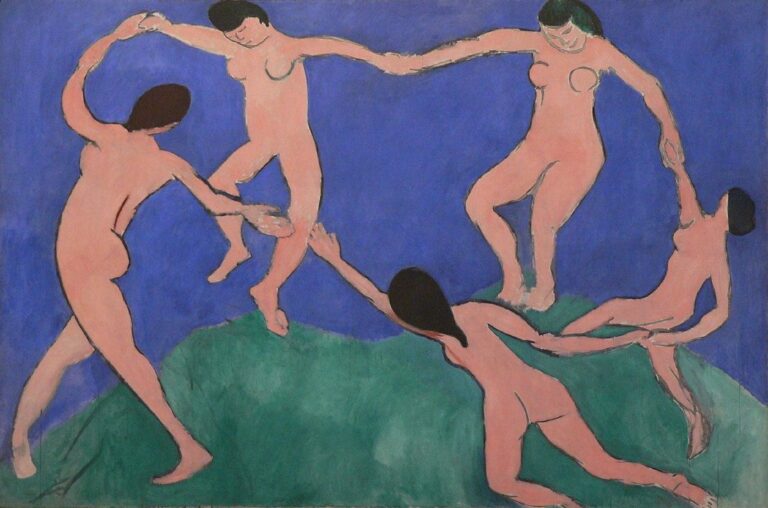
Five simplified nude figures form a hand-linked circle on a green hill against a broad blue field; dark contours and large pink planes emphasize motion as they dance counter-clockwise in Matisse’s 1909 “Dance.”

Henri Matisse’s 1909 “Dance” distills five nude figures into a monumental ring of motion against fields of blue and green. This analysis explores its composition, color architecture, contour, rhythm, relation to “Music,” and the painting’s pivotal role in Matisse’s post-Fauvist turn toward clarity.

A Complete Analysis of “Girl Seated” by Henri Matisse

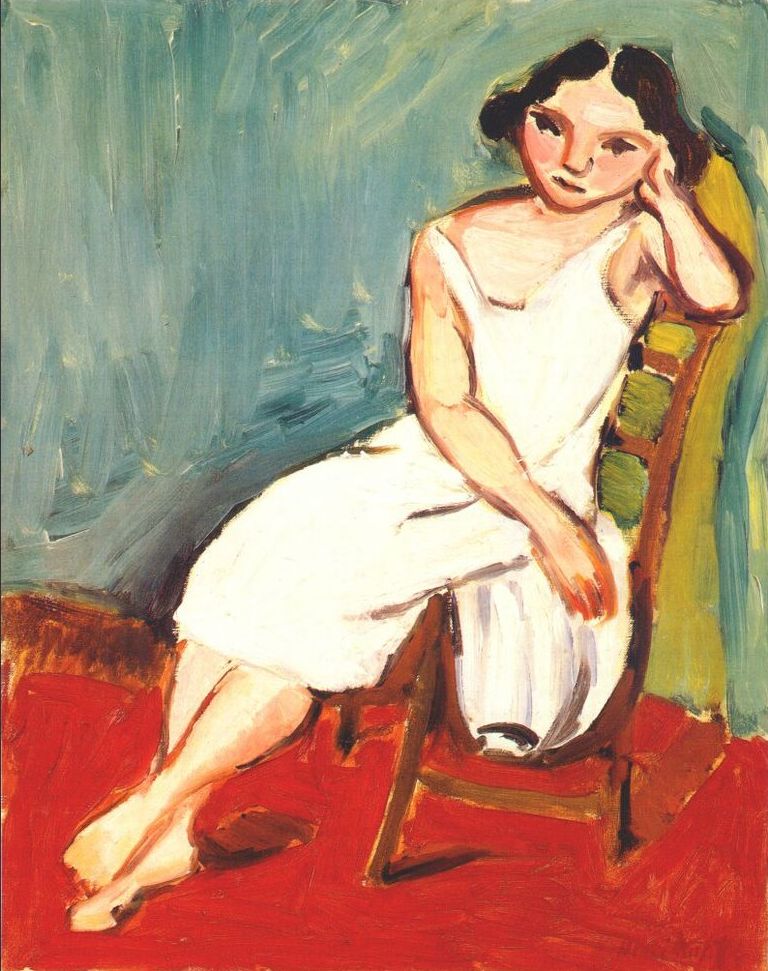
A young woman in a simple white slip sits diagonally on a wooden chair with a green cushion, resting her cheek in her hand; a vivid red floor meets a blue-green wall painted with broad strokes, while bold dark contours define the figure in Matisse’s 1909 “Girl Seated.”

Henri Matisse’s 1909 “Girl Seated” turns a quiet interior into a luminous harmony of red floor, blue-green wall, and a white dress. This in-depth analysis explores composition, color architecture, contour, brushwork, and the painting’s place in Matisse’s shift from Fauvism to a clear, balanced style.

A Complete Analysis of “Woman in Green” by Henri Matisse

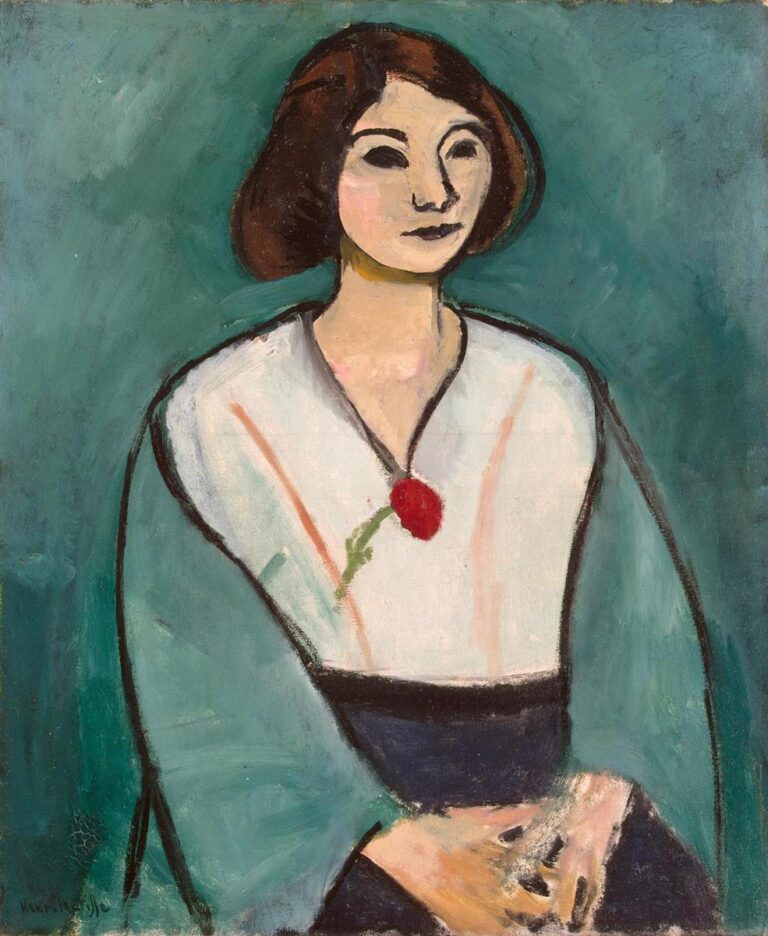
Half-length portrait of a woman seated before a teal background, wearing a pale tunic with a dark waistband and a green mantle; simplified features with almond eyes and short brown hair, hands resting in her lap, and a small red ornament at the chest, painted with bold contours in Matisse’s 1909 style.

Henri Matisse’s 1909 “Woman in Green” reduces portraiture to luminous essentials—teal ground, framing mantle, decisive contour, and a single red accent. This in-depth analysis explores composition, color architecture, brushwork, and the painting’s place in Matisse’s turn toward clarity after Fauvism.