Category Caravaggio

A Complete Analysis of “Sacrifice of Isaac” by Caravaggio
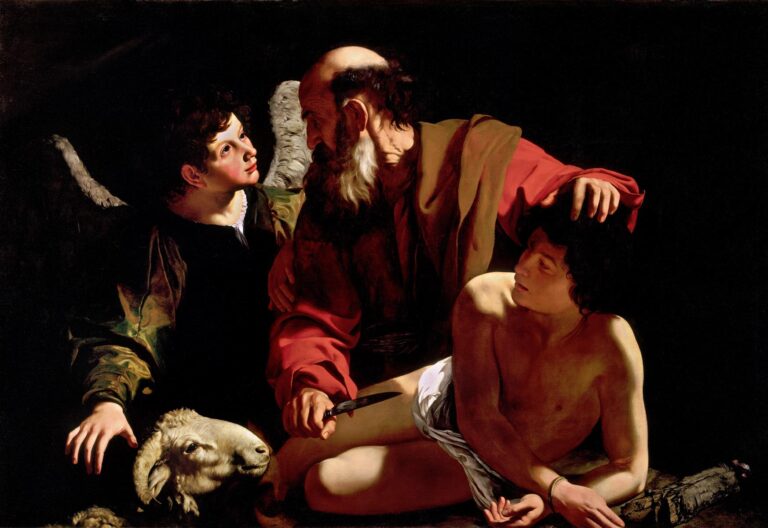
In a dark setting, an aged Abraham grips a knife over his bound son Isaac as a youthful angel seizes his wrist; a ram with curling horns presses into the scene while harsh light illuminates the figures against deep shadow.

Caravaggio’s “Sacrifice of Isaac” (1598) freezes the instant of divine intervention as an angel stays Abraham’s hand, Isaac twists in fear, and a ram appears at the edge of the light. This analysis explores composition, chiaroscuro, gesture, and symbolism to reveal the painting’s psychological and theological power.
A Complete Analysis of “John the Baptist” by Caravaggio

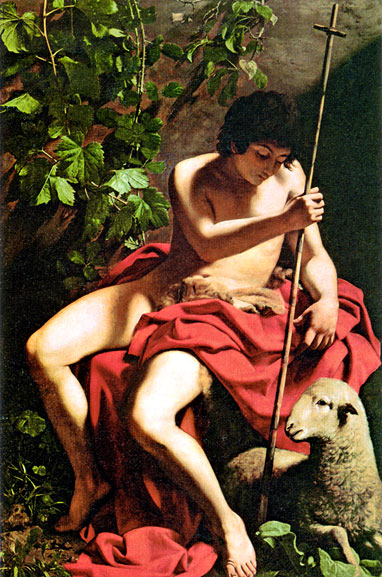
A youthful John the Baptist sits in a rocky wilderness draped in a red mantle, head bowed as he holds a tall reed cross while a lamb nuzzles his knee and grape leaves climb the wall behind him in soft directional light.

Caravaggio’s “John the Baptist” (1598) portrays the forerunner as a thoughtful youth resting in the wilderness, draped in a vivid red mantle beside a lamb and reed cross. This analysis explores composition, light, color, gesture, and symbolism to reveal how the painting unites body and vocation.

A Complete Analysis of “The Lute Player” by Caravaggio

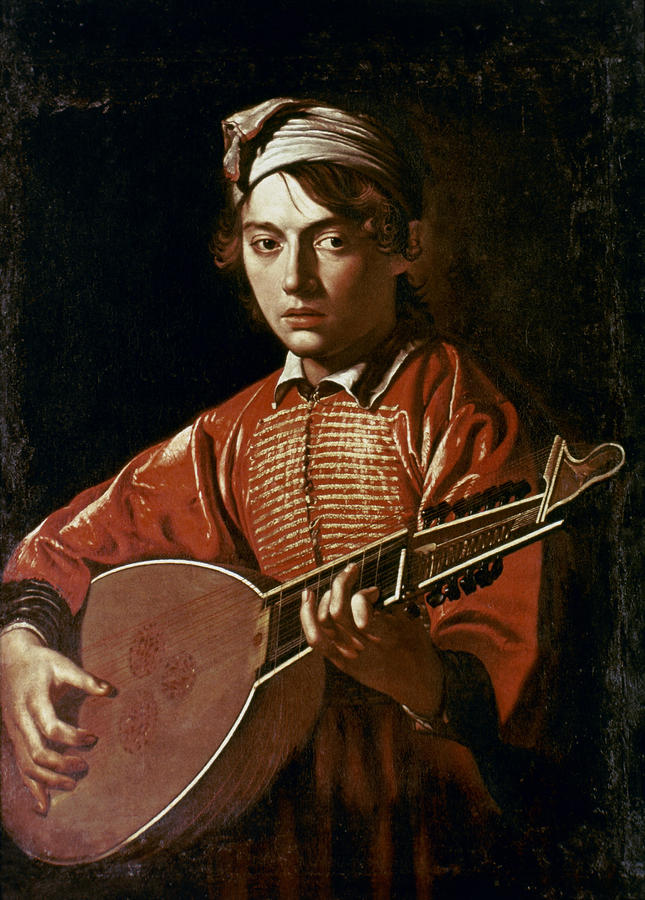
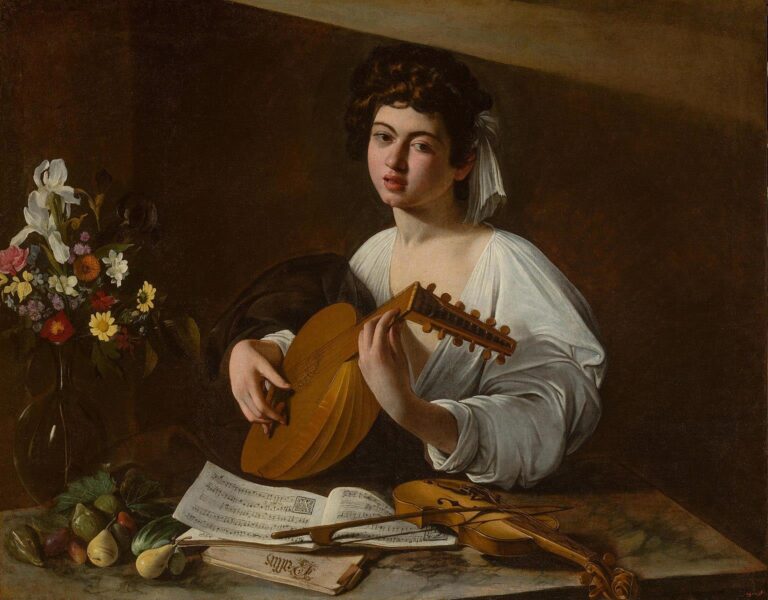
A young musician in a red garment and white headscarf holds a lute against a dark background, his right hand poised to pluck and his steady gaze turned toward the viewer as light glints across the instrument and sleeves.

Caravaggio’s “The Lute Player” (1597) turns a solitary musician into a vivid drama of light, color, and craft. This in-depth analysis explores composition, chiaroscuro, gesture, instrument detail, and the painting’s place in Caravaggio’s musical world to reveal how sight can make sound visible.

A Complete Analysis of “Penitent Magdalene” by Caravaggio

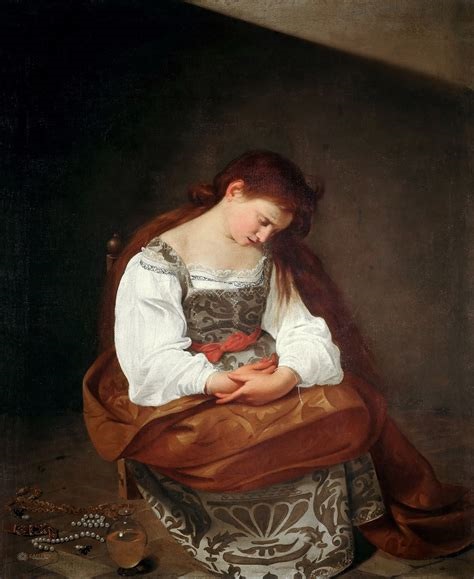
A young woman identified as Mary Magdalene sits in a dim room with head bowed and hands folded, wearing a white chemise and brocaded skirt while jewels and a glass ointment jar lie on the floor beside her, illuminated by soft directional light.

Caravaggio’s “Penitent Magdalene” (1597) turns a familiar saint into a quietly transformative presence, using restrained chiaroscuro, tactile textiles, and pared-down symbolism to depict a decisive moment of renunciation. This in-depth analysis explores composition, light, psychology, and the painting’s place in Caravaggio’s evolving style.

A Complete Analysis of “Jupiter, Neptune and Pluto” by Caravaggio

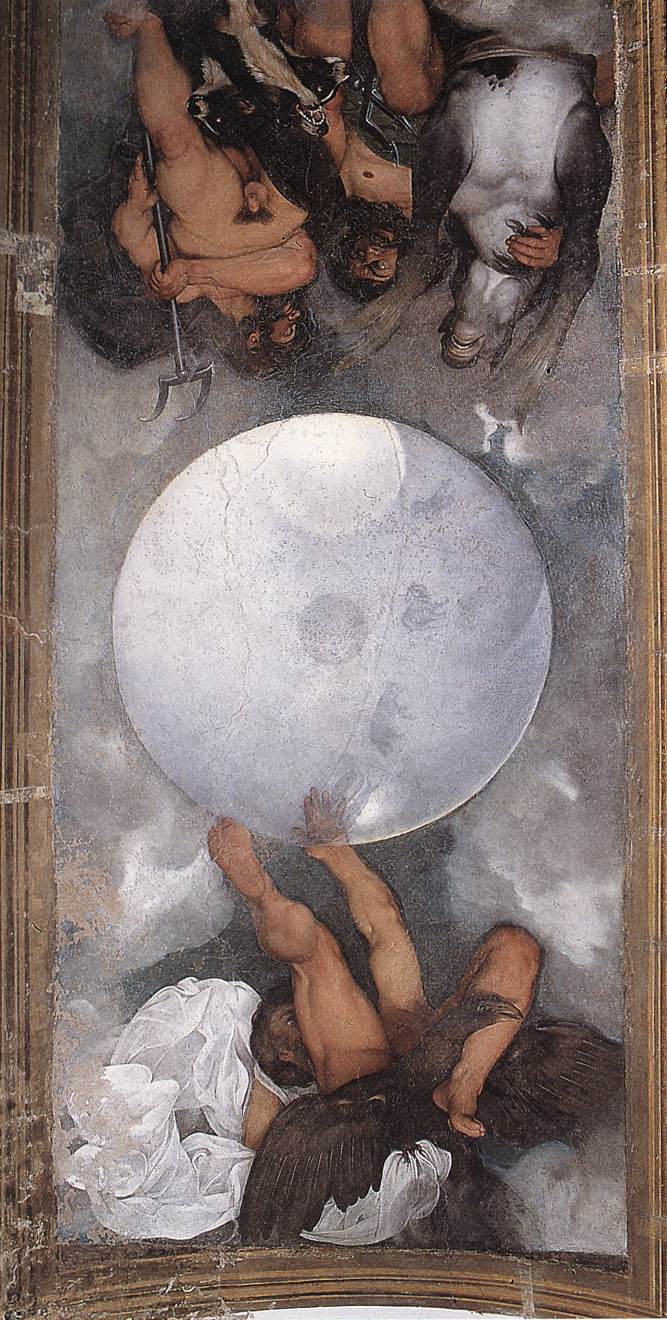
Ceiling painting showing three foreshortened male deities circling a silver-grey celestial sphere, with an eagle beneath, a horse above, and clouds framing the scene; oil on plaster by Caravaggio, 1597, in the Villa Ludovisi, Rome.

Caravaggio’s only surviving ceiling transforms a small Roman study into a vortex of myth and natural philosophy: three foreshortened gods whirl around a luminous celestial sphere, embodying the elements and the Paracelsian principles while showcasing the painter’s daring use of oil on plaster, radical illusion, and belief that ideas become visible through bodies, light, and motion.

A Complete Analysis of “A Lute Player” by Caravaggio

Smiling young man in black doublet with white ruff and feathered cap plays a lute while looking toward the viewer; an open music book rests on the table before him against a dark background; natural side light models hands, instrument, and costume; oil on canvas by Caravaggio, 1596.

A jovial young performer leans toward the viewer, strumming a golden lute above an open music book; Caravaggio’s focused light, tactile realism, and crisp costume details turn a casual performance into a vivid meditation on sociability, craft, and the joy of making music.

A Complete Analysis of “Basket of Fruit” by Caravaggio

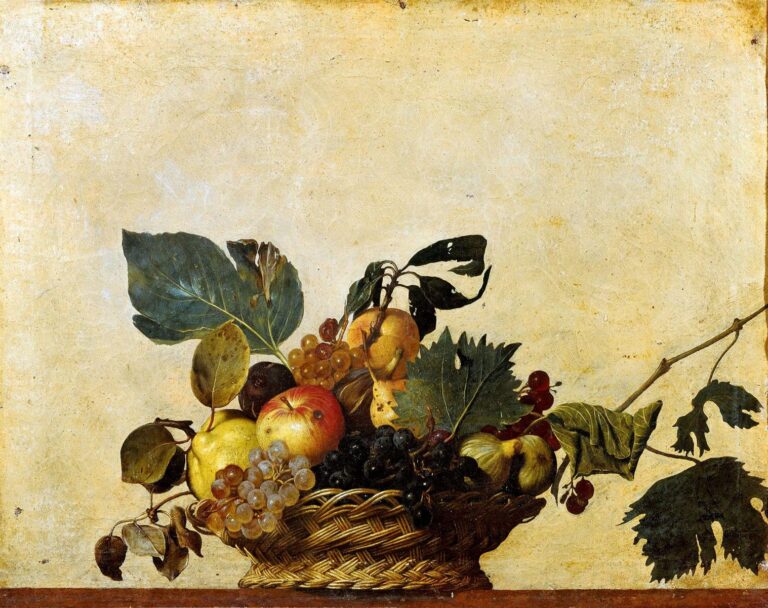
Wicker basket of assorted fruit—apples, pears, figs, green and dark grapes—with curling, blemished leaves and a trailing vine, placed on a wooden ledge against a pale, scumbled wall; natural light from the left creates crisp highlights and soft shadows; oil on canvas by Caravaggio, 1596.

A wicker basket brimming with apples, pears, figs, and grapes sits on a ledge before a pale wall; Caravaggio’s cool light, meticulous textures, and frank signs of ripeness and decay transform a simple arrangement into a meditation on time, care, and the dignity of the ordinary.

A Complete Analysis of “Bacchus” by Caravaggio

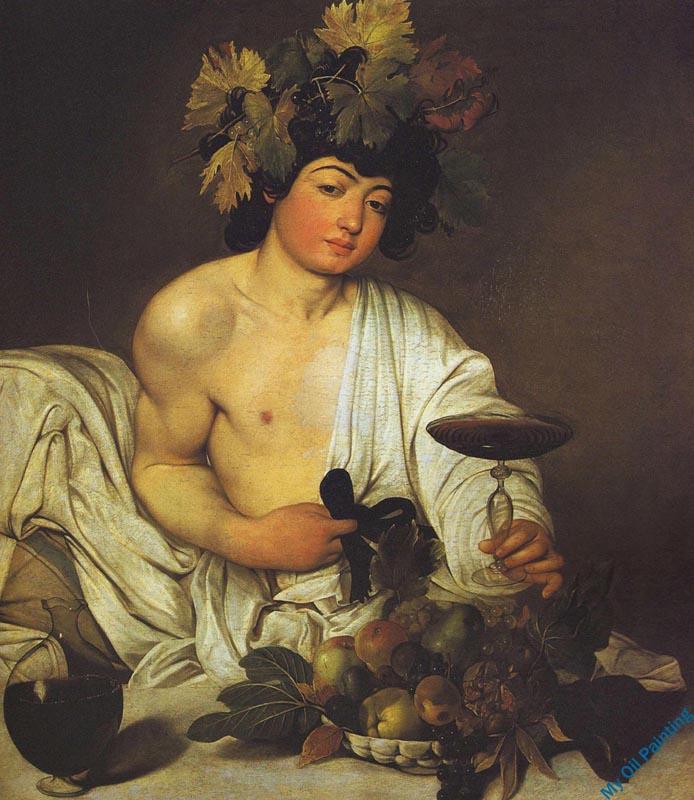
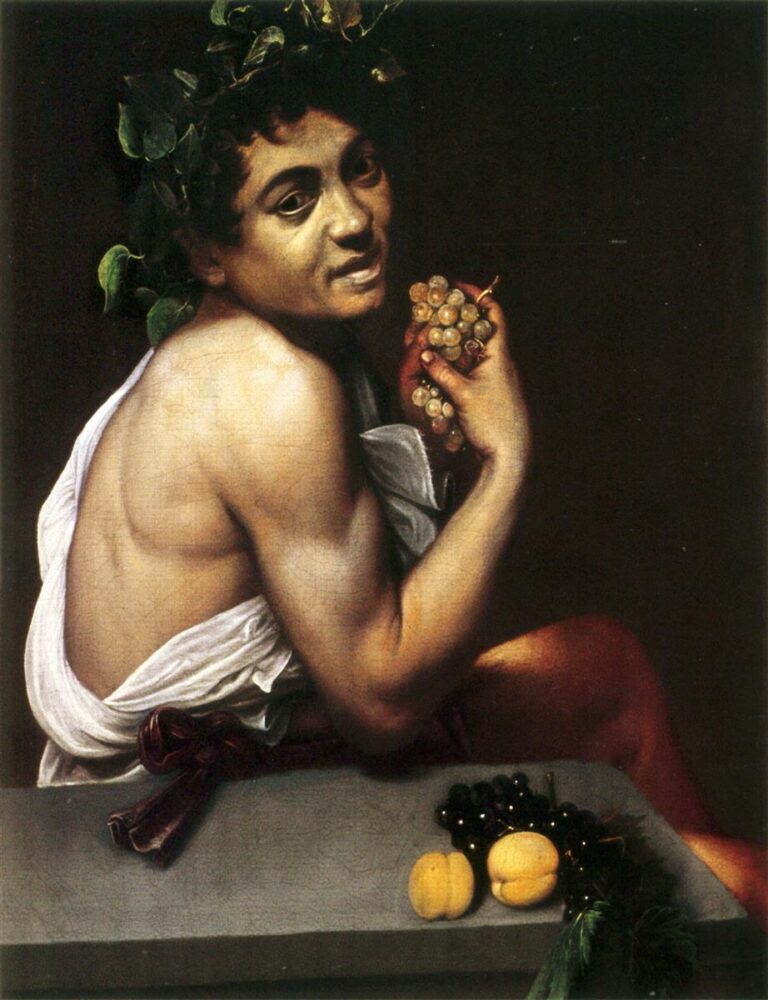
Half-length youth crowned with ivy offers a shallow glass of red wine across a stone table; white drapery slips from his shoulder, and a basket of varied fruit with curling leaves fills the foreground beside a dark glass decanter; warmly lit against a plain background, oil on canvas by Caravaggio, 1596.

A youthful Bacchus leans across a stone table with a shallow glass of wine while a basket of fruit and curling leaves crowds the foreground; Caravaggio’s lucid light, unidealized flesh, and exquisitely observed still life turn classical myth into a present-tense invitation where pleasure, time, and truth meet.

A Complete Analysis of “Cardsharps” by Caravaggio

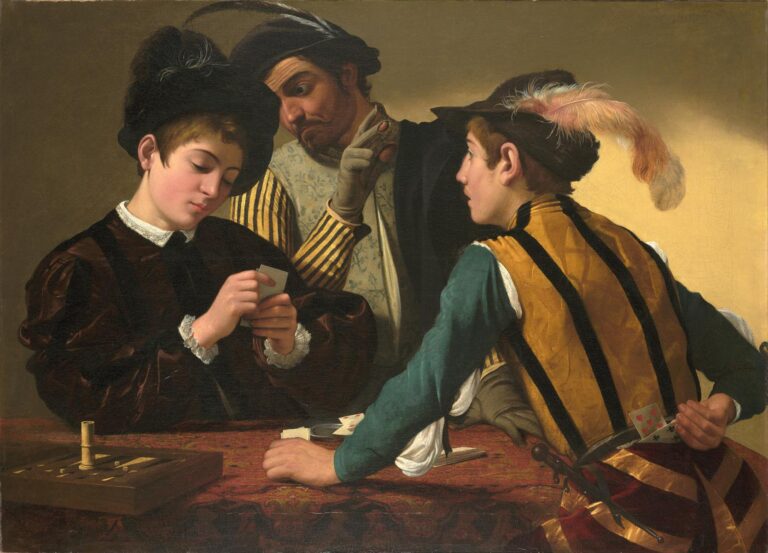
Interior scene of three half-length figures at a table: a well-dressed boy at left examines playing cards, a middle figure in striped sleeves signals with gloved fingers, and a youth in a yellow doublet at right slyly draws a card from behind his back; crisp side light against a plain wall emphasizes fabrics, gestures, and the hidden cheat; oil on canvas by Caravaggio, 1594.

Three figures gather at a gaming table as a trusting youth studies his hand, a sharper withdraws a hidden card, and an accomplice signals the suit; Caravaggio’s tight composition, incisive light, and tactile costumes turn a street con into a timeless meditation on attention, deception, and complicity.