Category Alphonse Mucha

A Complete Analysis of “Fruit” by Alphonse Mucha

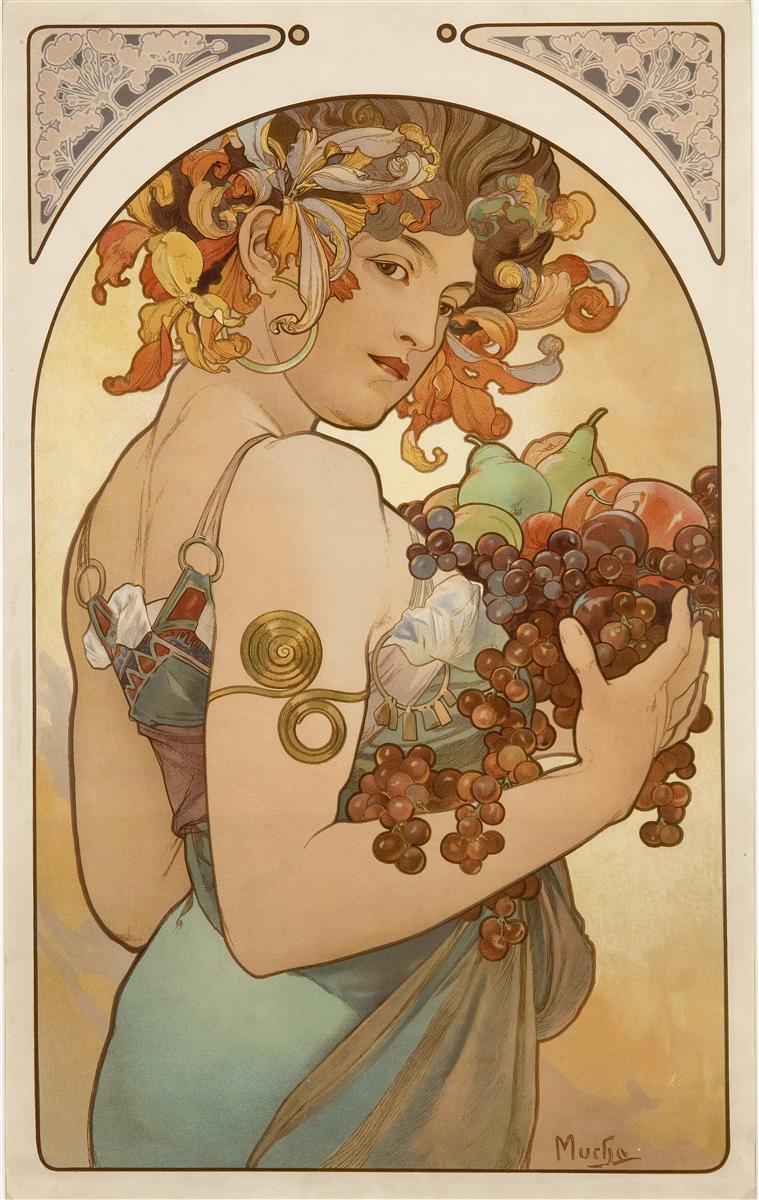
Art Nouveau panel by Alphonse Mucha showing a young woman turned over her shoulder, crowned with lilies and flowing curls, cradling clusters of grapes and assorted fruit against a warm golden background. She wears spiral armlets and a teal draped dress; the image is framed by an arched border with patterned spandrels. 1897.

Alphonse Mucha’s 1897 decorative panel “Fruit” turns autumn harvest into Art Nouveau poetry. A turned heroine gathers grapes and pears within an arched frame, her hair and floral crown echoing vine curls. This in-depth analysis explores composition, color, line, symbolism, printing craft, and the panel’s enduring appeal.

A Complete Analysis of “Flower” by Alphonse Mucha

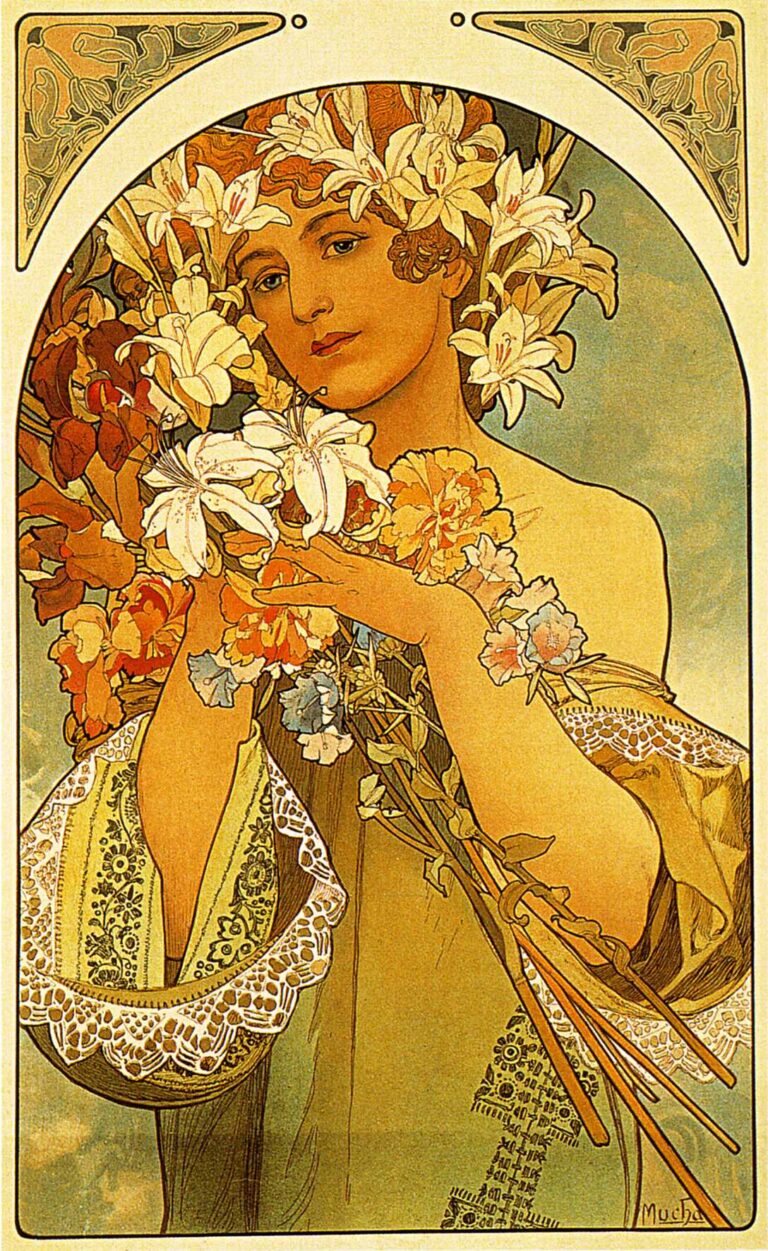
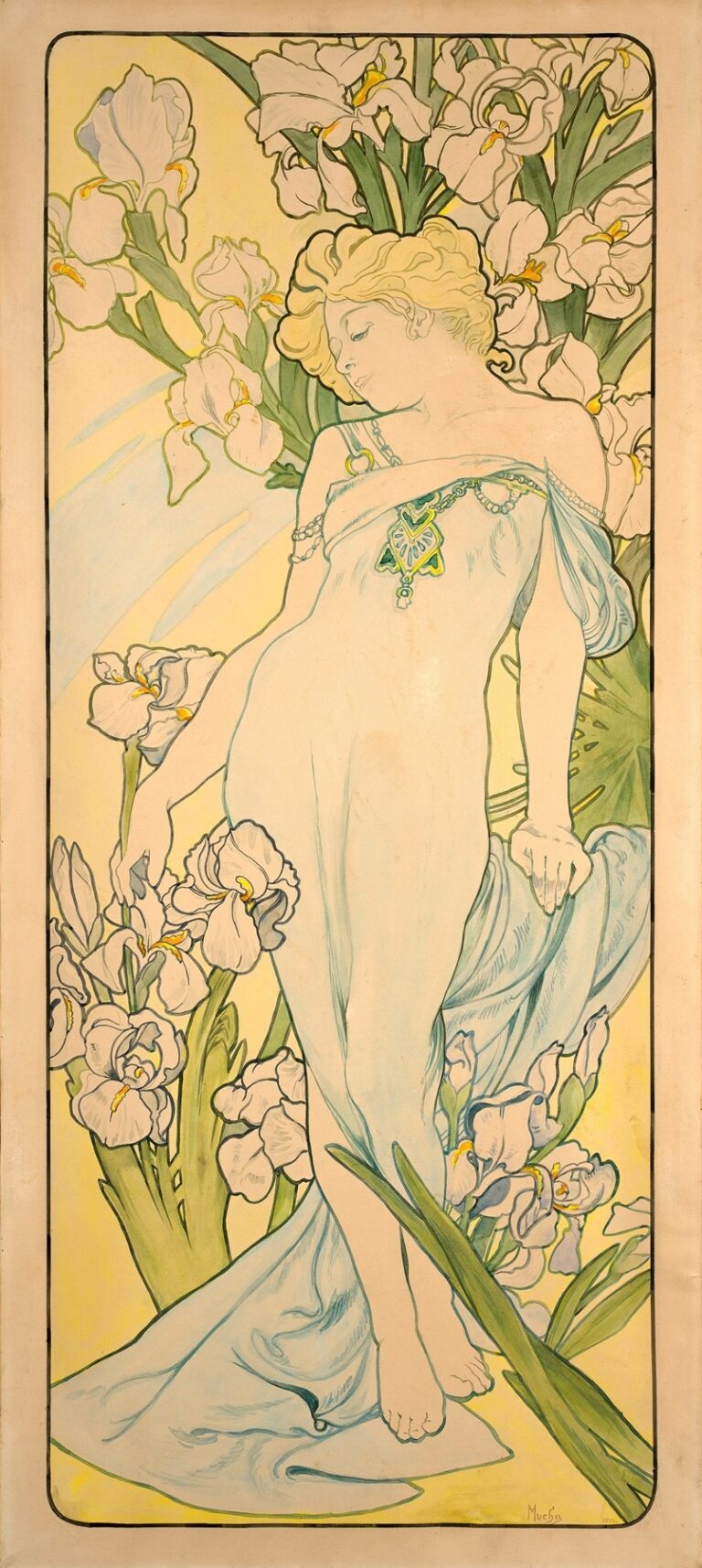
Tall Art Nouveau panel of a young woman crowned with white lilies, holding a lush bouquet against a soft blue-green background. She wears embroidered, lace-trimmed sleeves; stems and petals cascade across the frame beneath an arched border with patterned spandrels. Warm ochres and creams dominate; signed “Mucha,” 1897.

Alphonse Mucha’s 1897 decorative panel “Flower” presents a serene heroine crowned with lilies, surrounded by lace, embroidery, and cascading blossoms. This in-depth analysis explores composition, color, line, symbolism, printing craft, and why the work remains an enduring icon of Art Nouveau elegance.

A Complete Analysis of “Bleu Deschamps” by Alphonse Mucha

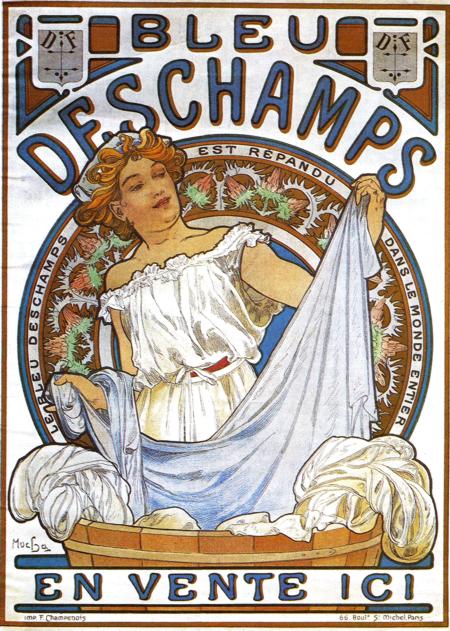
Art Nouveau poster showing a woman at a wooden washtub lifting a blue-white sheet. A circular floral medallion forms a halo behind her, and large curved lettering reads “Bleu Deschamps.” Cool blues and warm ochres dominate; the lower banner states “En vente ici.” Lithograph by Alphonse Mucha, 1897.

Alphonse Mucha’s 1897 poster “Bleu Deschamps” elevates a laundry bluing brand with a radiant laundress, a halo of ornament, and integrated typography. This analysis explores composition, color logic, lettering, lithographic craft, and how the image transforms domestic work into Art Nouveau poetry.

A Complete Analysis of “Prophetess” by Alphonse Mucha

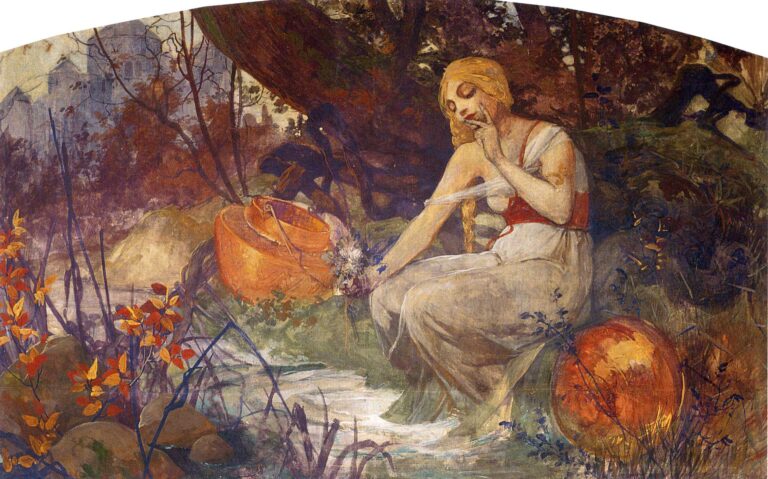
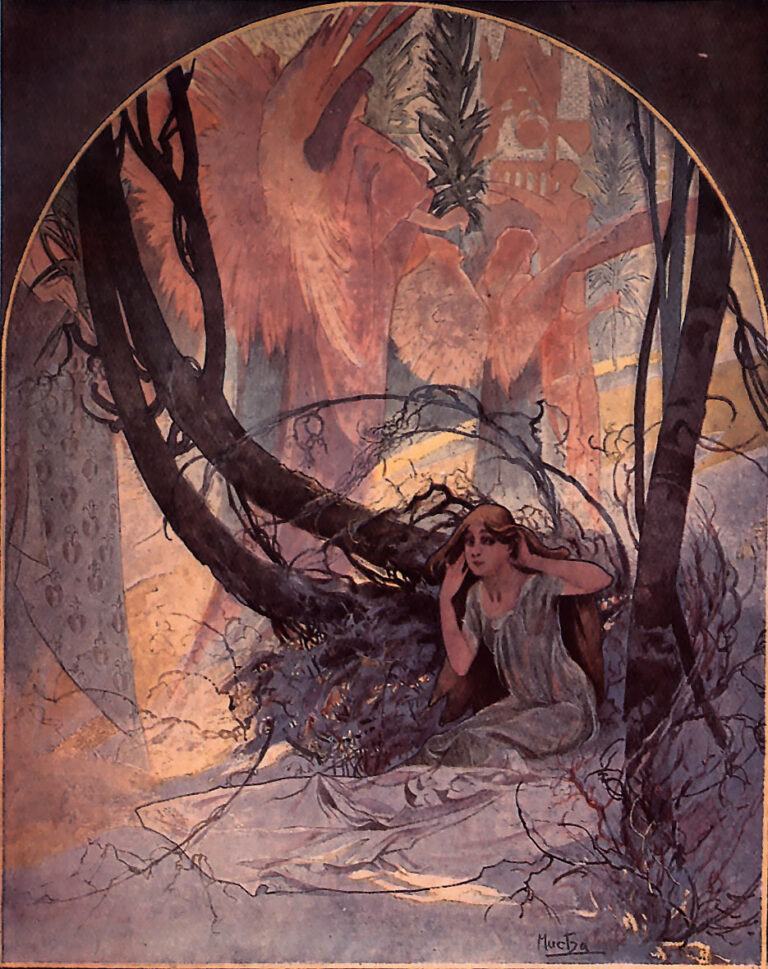
Arched Art Nouveau scene of a woman seated at a stream in a wooded landscape. She wears a pale dress with a red sash, touches her cheek thoughtfully, and lifts a small bouquet from the water. Large orange clay vessels rest beside her; reeds, stones, and autumn shrubs frame the foreground, with distant pale buildings beyond the trees. 1896, Alphonse Mucha.

Alphonse Mucha’s 1896 “Prophetess” presents a contemplative woman at a stream with glowing clay vessels, an arched landscape, and autumn foliage. This analysis explores composition, gesture, color, symbolism, and how the painting merges Art Nouveau elegance with a folk-legend mood.

A Complete Analysis of “Luchon” by Alphonse Mucha

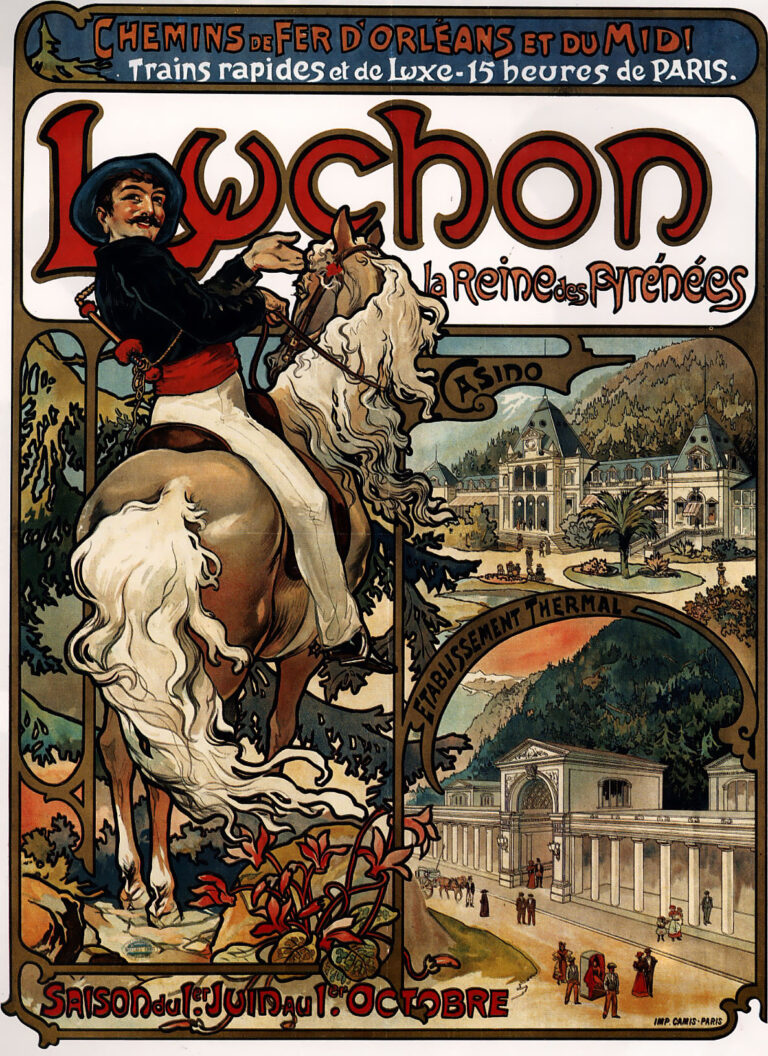
Art Nouveau travel poster by Alphonse Mucha advertising Bagnères-de-Luchon. Foreground: local horseman on a rearing white horse. Background: framed views of a grand casino and thermal bath complex set in mountain gardens. Large red “Luchon” lettering, railway banner at top, and season dates at bottom; flowing decorative border and earth-toned palette. 1895 lithograph.

Alphonse Mucha’s 1895 travel poster “Luchon” blends Art Nouveau elegance with persuasive design: a rearing horseman, ornate lettering, and vignettes of casino and thermal baths promote the Pyrenees spa town via the Chemins de fer d’Orléans et du Midi. Explore composition, color, typography, and the Belle Époque context behind this landmark lithograph.

A Complete Analysis of “Spirit of Spring” by Alphonse Mucha

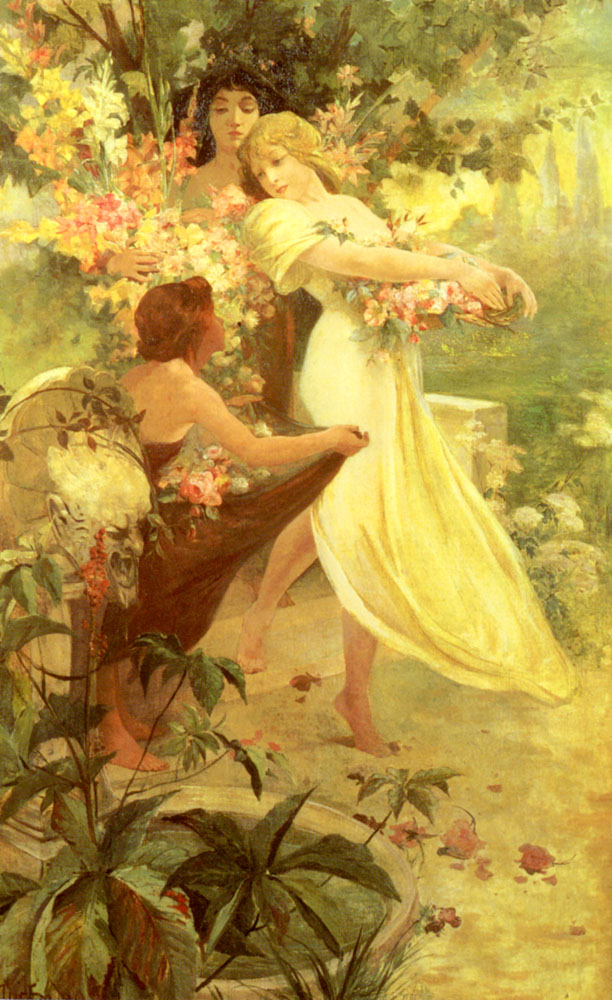
Vertical painting of a lush garden where three young women with garlands of flowers embody spring. A blonde figure in a pale yellow dress turns gracefully, a dark-haired woman stands behind her with more blossoms, and a seated figure gathers flowers near a stone fountain. Soft golden light, abundant foliage, and flowing lines create an Art Nouveau mood.

Alphonse Mucha’s 1894 painting “Spirit of Spring” blends allegory and Art Nouveau lyricism: three women garlanded with blossoms move through a sun-lit garden of flowing lines and pastel color. This in-depth analysis explores composition, symbolism, light, and how the work foreshadows Mucha’s celebrated posters.