Category Henri Matisse

A Complete Analysis of “Flowers in a Pitcher” by Henri Matisse
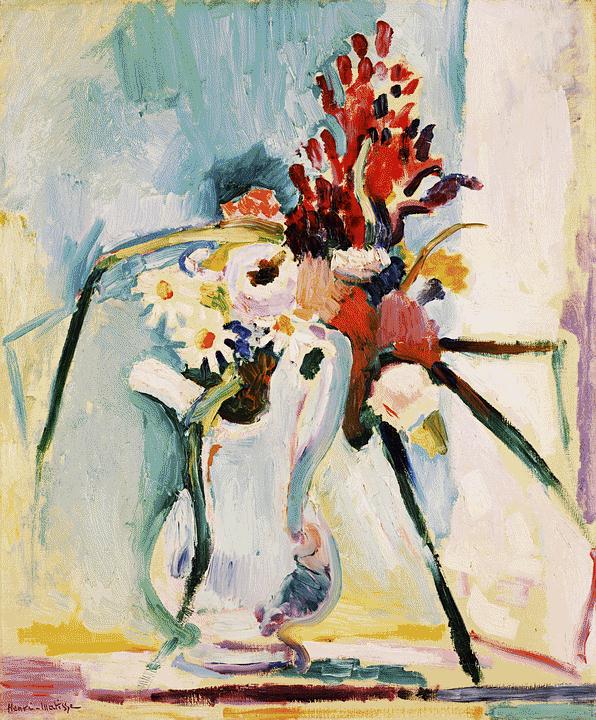
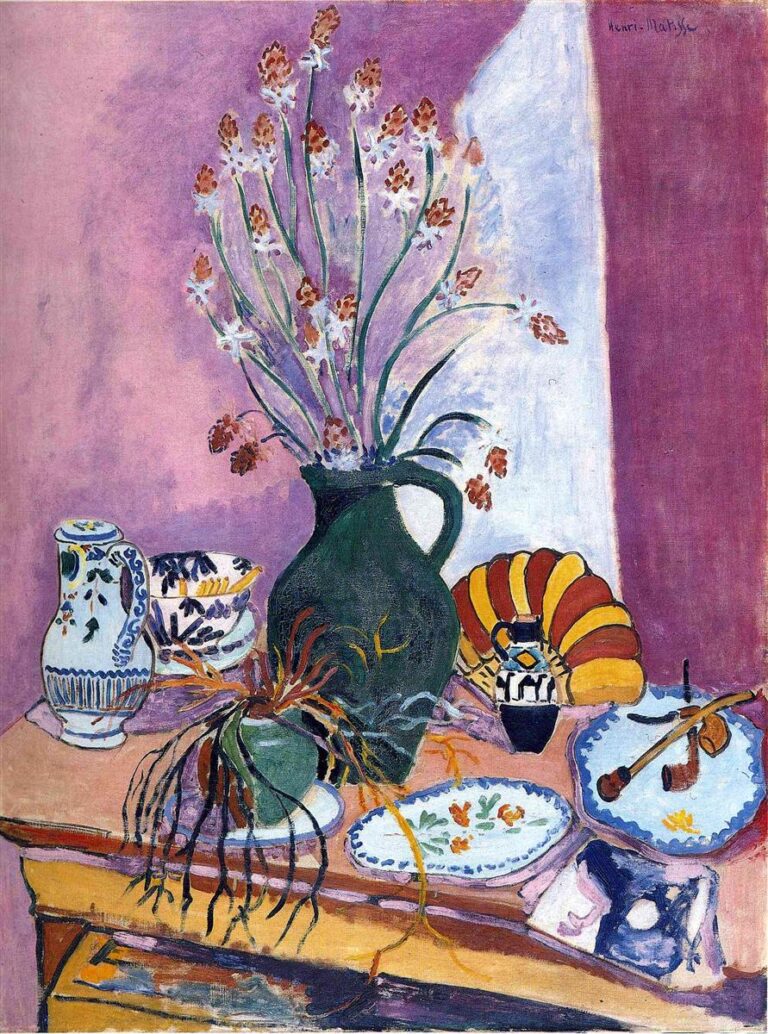
Still life painting of a pale white pitcher holding a bouquet with bright red spikes and soft white flowers; long green stems shoot diagonally across a cool blue-green wall, above a pale yellow-pink tabletop; loose, expressive brushstrokes and dark outlines characteristic of Matisse, 1908.

Explore Henri Matisse’s 1908 Flowers in a Pitcher—a post-Fauvist still life where a white jug anchors an explosive bouquet of crimson and white blooms. Learn how bold contour, a cool blue-green backdrop, and radiant warm–cool contrasts turn a simple arrangement into a modern study of color, rhythm, and brushwork.
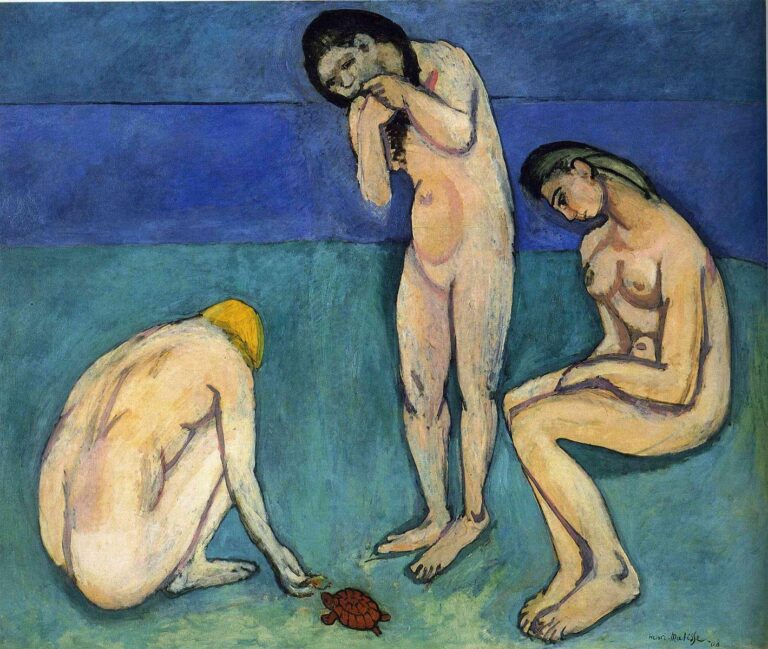
A Complete Analysis of “Bathers with a Turtle” by Henri Matisse

Three nude women in a shallow blue-green setting focus on a small red turtle at their feet: one crouches reaching out, one stands with bowed head and clasped hands, and one sits with knees drawn; broad horizontal color bands suggest sea and sky, and firm dark contours define the simplified forms in Matisse’s 1908 style.

Explore how Matisse’s 1908 Bathers with a Turtle uses cool blue-green planes, sculptural contour, and a tiny red turtle to orchestrate a timeless scene of concentrated calm. This in-depth analysis covers composition, color architecture, symbolism, and the painting’s pivotal role in Matisse’s move from Fauvism to decorative classicism.

A Complete Analysis of “Antibes” by Henri Matisse

A seated woman in profile rests on a slanted chair, wearing a violet bodice and flowing pale skirt; the background shimmers with lilac, blue, and buff strokes that suggest Mediterranean light, with no strong outlines and lively, divisionist brushwork characteristic of Matisse in 1908.

Dive into Matisse’s 1908 Antibes, a luminous canvas where Mediterranean light dissolves edges and color builds space. This in-depth analysis explores composition, palette, brushwork, atmosphere, and the painting’s pivotal role in Matisse’s transition from Fauvist blaze to poised modern clarity.

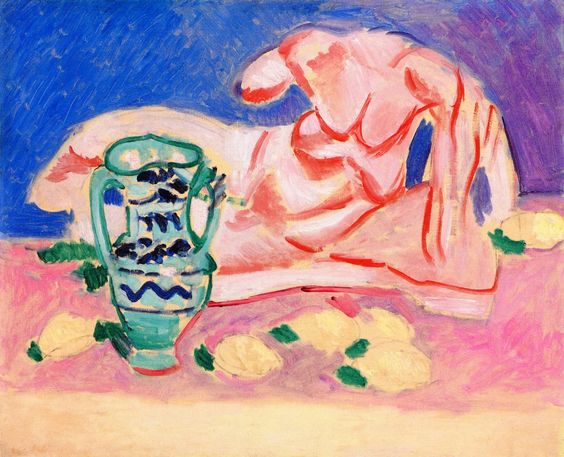
A Complete Analysis of “Ilyssus from the Parthenon” by Henri Matisse

Reclining male nude outlined in bright red on a pink surface with an ultramarine-blue background; simplified peach and rose flesh tones, a tall green amphora with dark decorative bands at left, and yellow lemons with green leaves scattered across the foreground—loose, expressive brushstrokes typical of Matisse, 1908.

Discover how Matisse’s 1908 Ilyssus from the Parthenon reimagines the classical river god through blazing modern color—vermilion contour, a pink ground against ultramarine sky, a mint-green amphora, and scattered lemons. This analysis explores composition, palette, brushwork, and the painting’s pivotal role in Matisse’s post-Fauvist turn toward sculptural clarity.

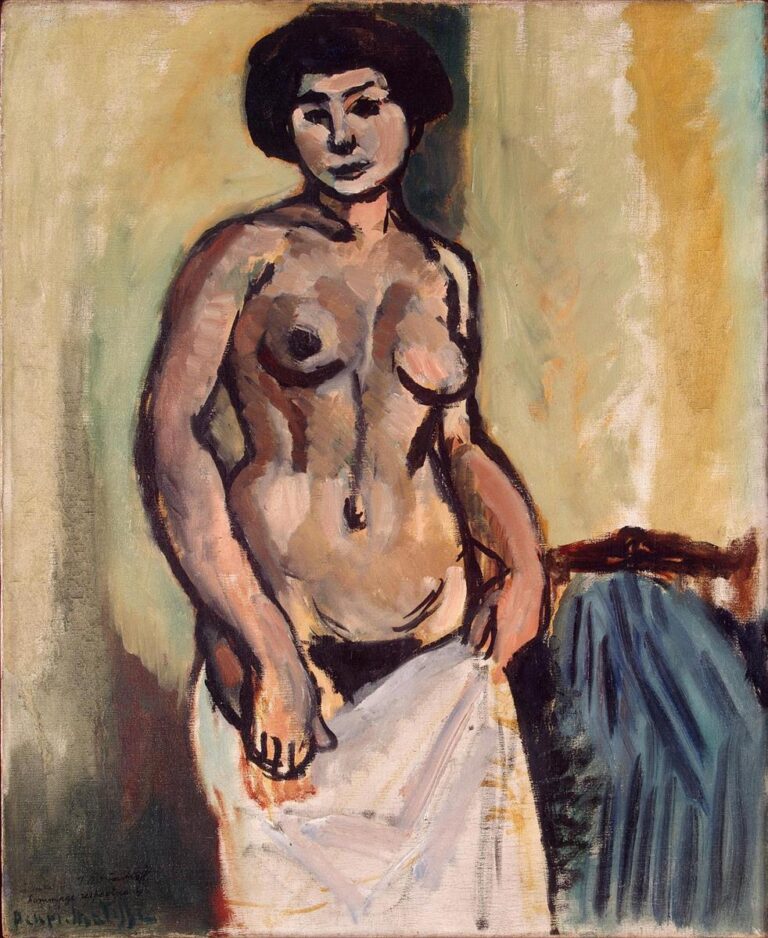
A Complete Analysis of “Nude, Study” by Henri Matisse

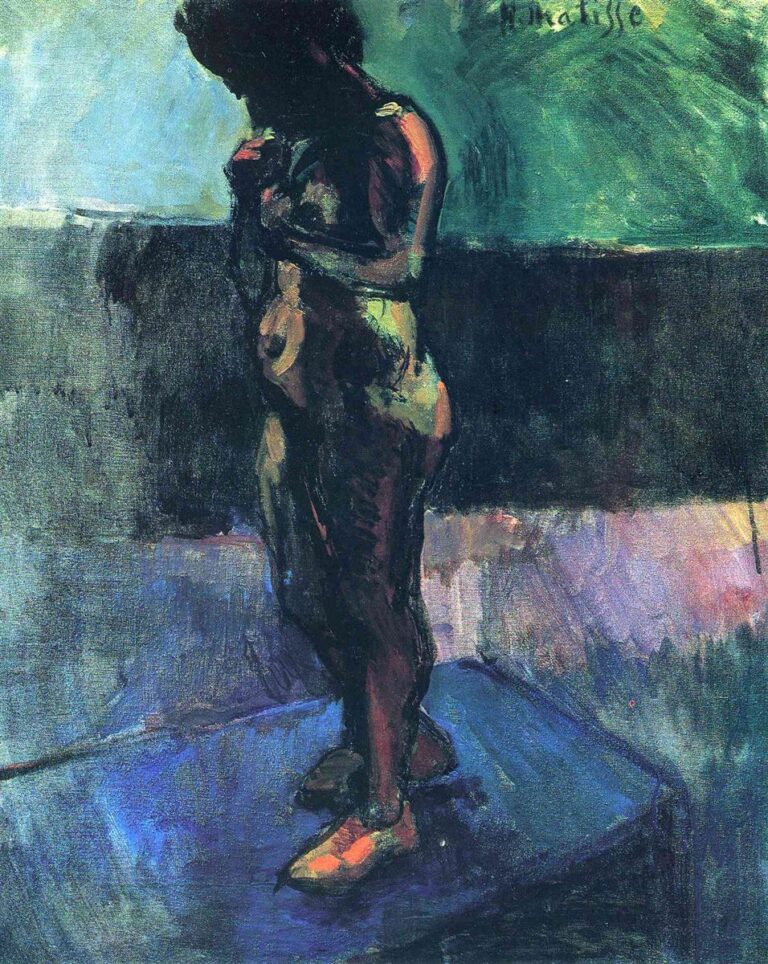
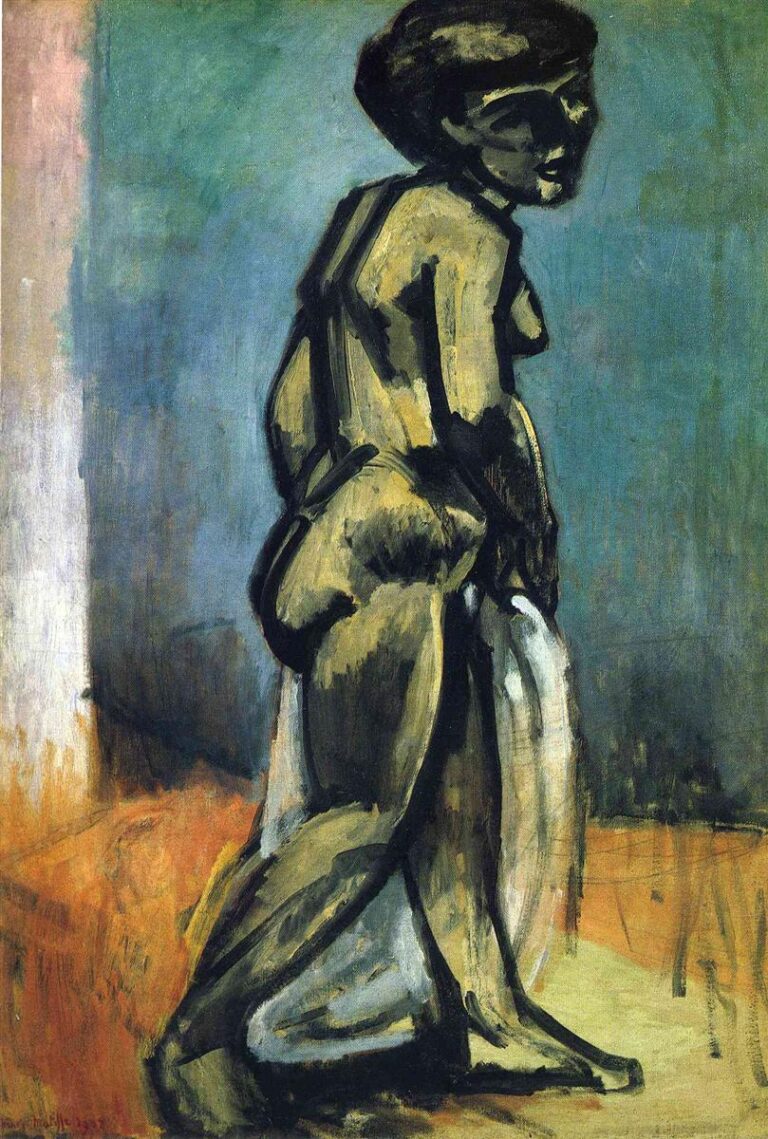
Standing three-quarter female nude outlined in bold black, rendered with warm ochers and rose tones; left hand relaxed, right hand holding a white drapery at the hips. Behind her, a chair draped with teal cloth sits at right, and the wall is divided into soft vertical bands of green, cream, and ocher—loose brushwork and mask-like features typical of Matisse, 1908.

Explore how Matisse’s 1908 Nude, Study turns a simple studio pose into a modern statement through strong black contour, a restrained earthy palette, and shallow space built from vertical color bands. This analysis explains the painting’s composition, brushwork, and sculptural logic during his post-Fauvist pivot.