Category Francisco de Zurbaran

A Complete Analysis of “Hercules Fighting with the Nemean Lion” by Francisco de Zurbaran

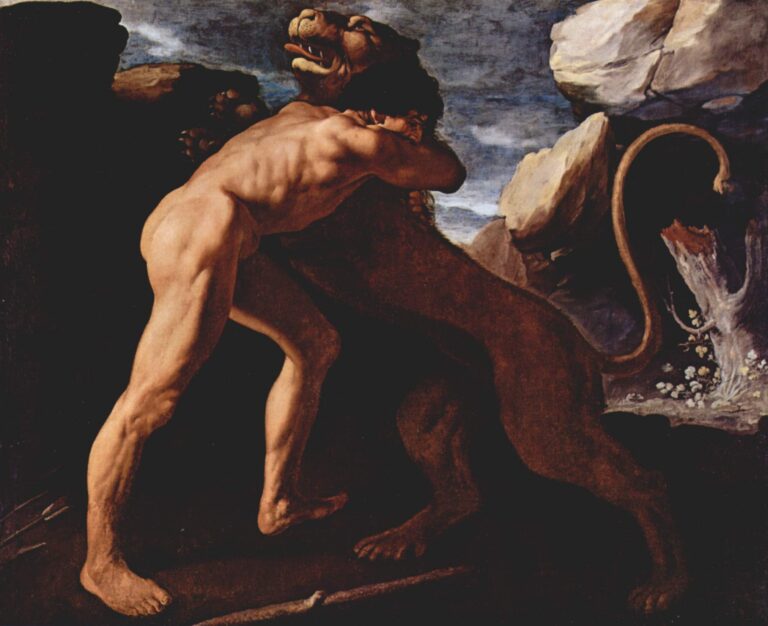
Painting of “Hercules Fighting with the Nemean Lion” by Francisco de Zurbaran showing a muscular nude Hercules seen from the back, legs braced and arms locked around a roaring lion’s neck, as the man and beast grapple in a dark rocky gorge beneath a stormy sky.

Explore Francisco de Zurbaran’s 1634 painting “Hercules Fighting with the Nemean Lion,” a dramatic Spanish Baroque vision of the nude hero wrestling a monstrous lion in a rocky landscape. This detailed analysis examines the mythic background, the dynamic composition, the treatment of the heroic male body, and the symbolic meaning of struggle and strength in this powerful canvas.

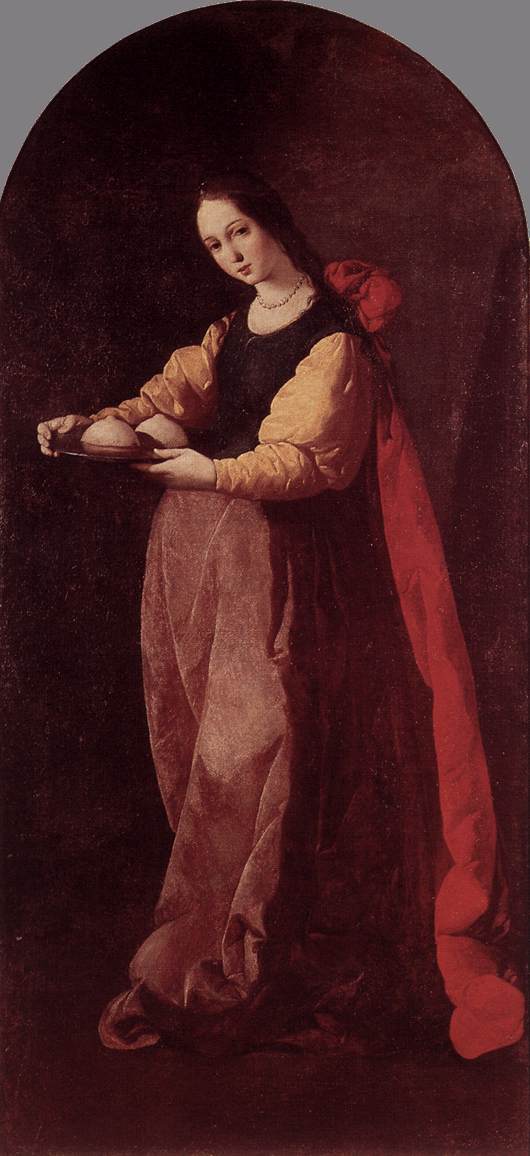
A Complete Analysis of “St. Agatha” by Francisco de Zurbaran

Full length painting of St Agatha by Francisco de Zurbaran showing a young woman in rich seventeenth century dress, with yellow sleeves, a rose skirt, and a long red mantle, standing against a dark background and gently holding a tray with two rounded forms representing her severed breasts.

Discover Francisco de Zurbaran’s 1633 painting “St Agatha,” a haunting Spanish Baroque portrayal of the young Sicilian martyr shown as an elegant lady holding a tray with the symbol of her torture. This in depth analysis explores the saint’s legend, the composition, the dramatic use of light and color, and the emotional tension between refined beauty and brutal suffering.

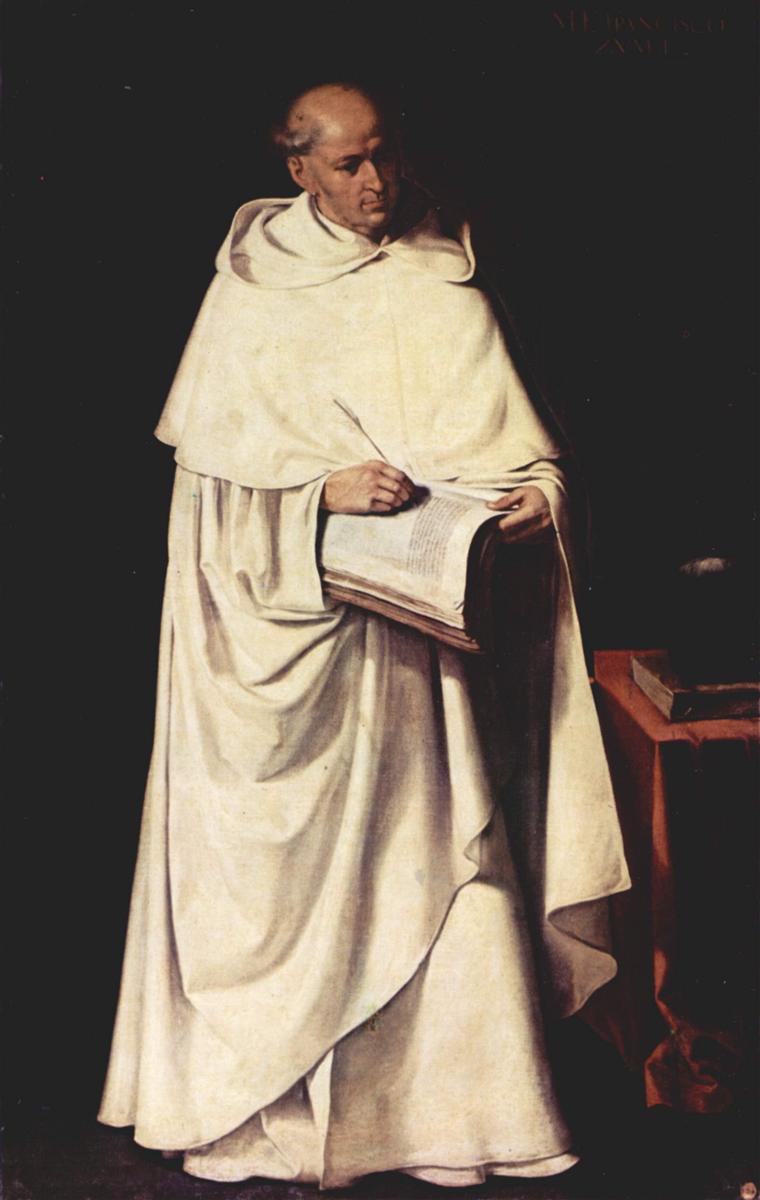
A Complete Analysis of “Portrait of Fra Zumel Francisco” by Francisco de Zurbaran

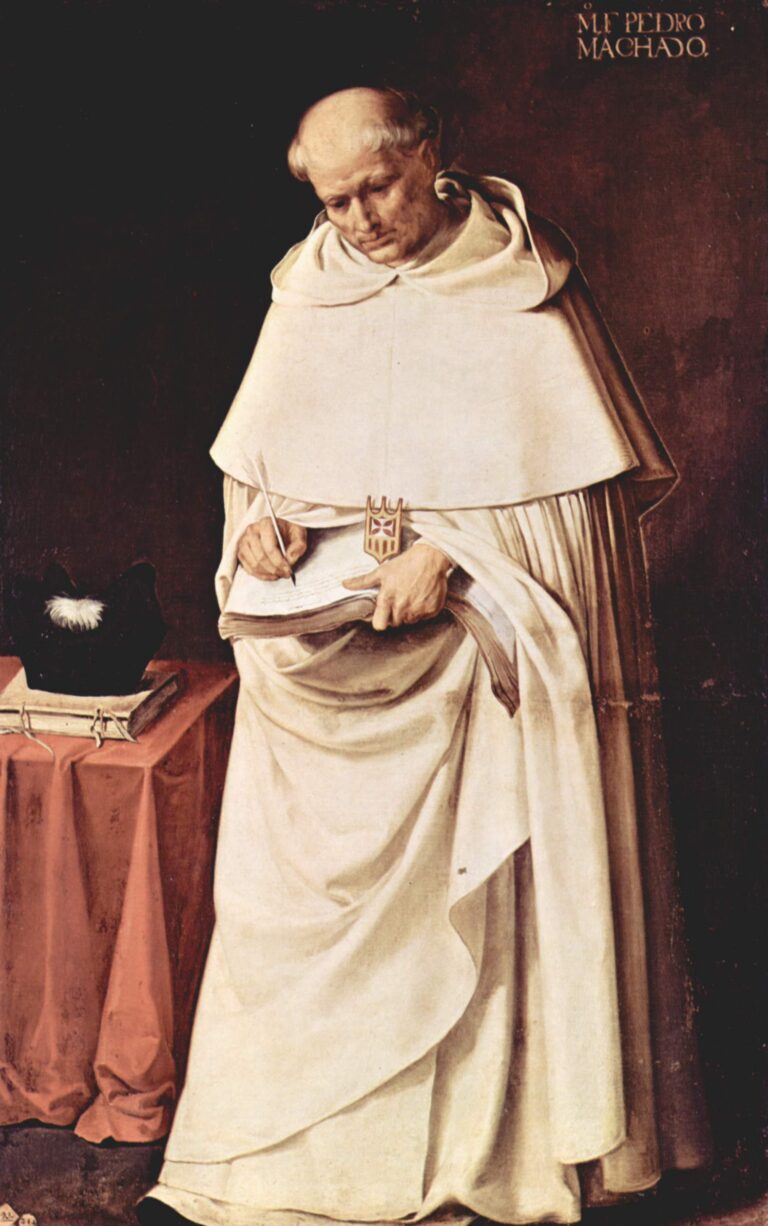
Full length painting of Fra Zumel Francisco by Francisco de Zurbaran showing a bald monk in a voluminous white habit standing against a dark background, holding a large open book and quill, with a small table and closed book beside him.

Explore Francisco de Zurbaran’s 1633 “Portrait of Fra Zumel Francisco,” a luminous Spanish Baroque depiction of a white robed monk pausing over an open book with quill in hand. This detailed analysis examines the composition, the treatment of the monastic habit, the symbolism of books and writing, and the contemplative atmosphere that turns a simple portrait into a timeless image of scholarship and faith.

A Complete Analysis of “The Holy Face” by Francisco de Zurbaran

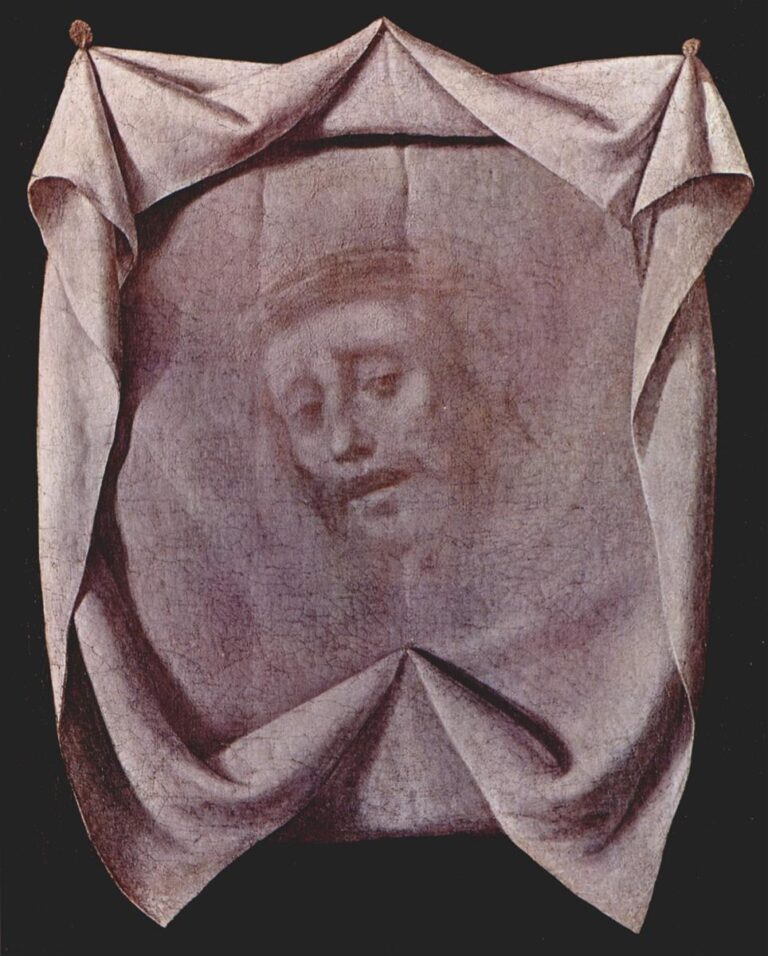
Painting of “The Holy Face” by Francisco de Zurbaran showing a pale linen veil pinned at its four corners against a dark background, its soft folds surrounding the faint, ghostly image of Christ’s sorrowful face emerging from the center of the cloth.

Explore Francisco de Zurbaran’s 1631 painting “The Holy Face,” a haunting Spanish Baroque image of Christ’s features faintly imprinted on a hanging veil. This in depth analysis examines the composition, the illusion of cloth, the theological symbolism of the Veronica’s veil, and the quiet emotional power that makes the work a profound object of contemplation.

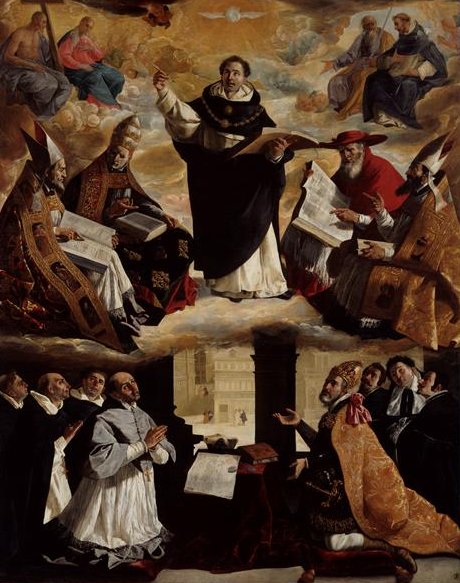
A Complete Analysis of “Apotheosis of St. Thomas Aquinas” by Francisco de Zurbaran

Large Baroque painting by Francisco de Zurbaran showing St Thomas Aquinas standing in glory among bishops and saints in the clouds above, while below a group of clerics and richly dressed nobles gather under dark columns, looking up toward the heavenly vision that dominates the sky.

Discover Francisco de Zurbaran’s 1631 masterpiece “Apotheosis of St Thomas Aquinas,” a grand Spanish Baroque vision that unites a heavenly council of saints with an earthly gathering of clergy and nobles. This in depth analysis explores the two level composition, the central figure of Thomas as teacher, the symbolism of books and documents, and the dramatic use of light that celebrates the harmony between faith and reason.