Category Francisco de Zurbaran

A Complete Analysis of “Monastery of Nuestra Señora de la Defensión at Jerez de la Frontera, Scene: The Circumcision” by Francisco de Zurbaran

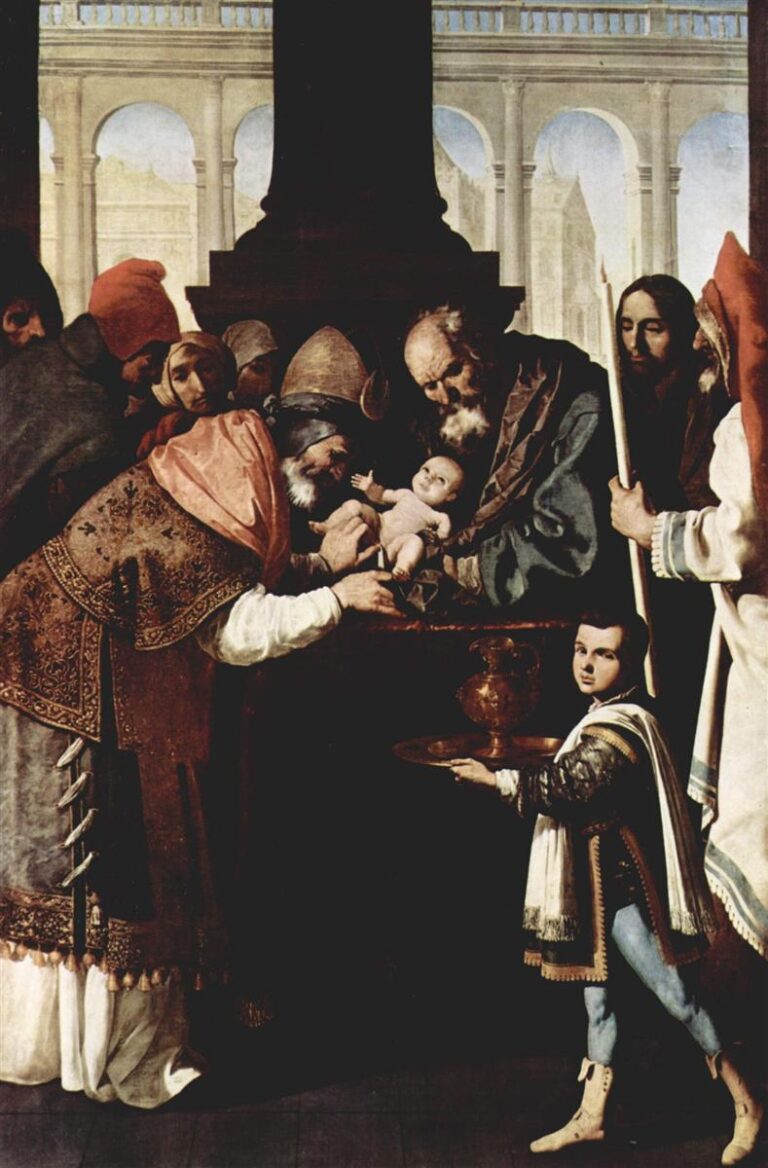
Painting of the Circumcision by Francisco de Zurbaran showing the infant Christ held on a table at the center of a crowded temple interior, a richly vested priest bending over him, an elderly Joseph supporting the child, several onlookers gathered around, and a young acolyte in ornate clothing carrying a basin with a vessel in the foreground against a backdrop of classical arches.

Discover Francisco de Zurbaran’s 1639 painting “Monastery of Nuestra Señora de la Defensión at Jerez de la Frontera, Scene: The Circumcision,” a richly detailed Spanish Baroque vision of the infant Christ surrounded by priests, attendants, and a young acolyte during the covenant ritual. This in depth analysis explores the composition, architectural setting, symbolic figures, and theological meaning of the first shedding of Christ’s blood.

A Complete Analysis of “Flagellation of St. Jerome by the Angels” by Francisco de Zurbaran

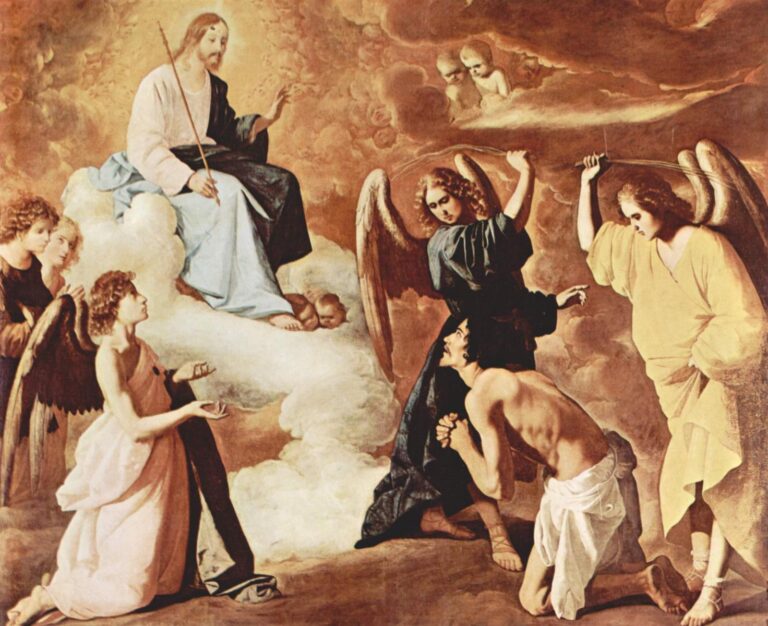
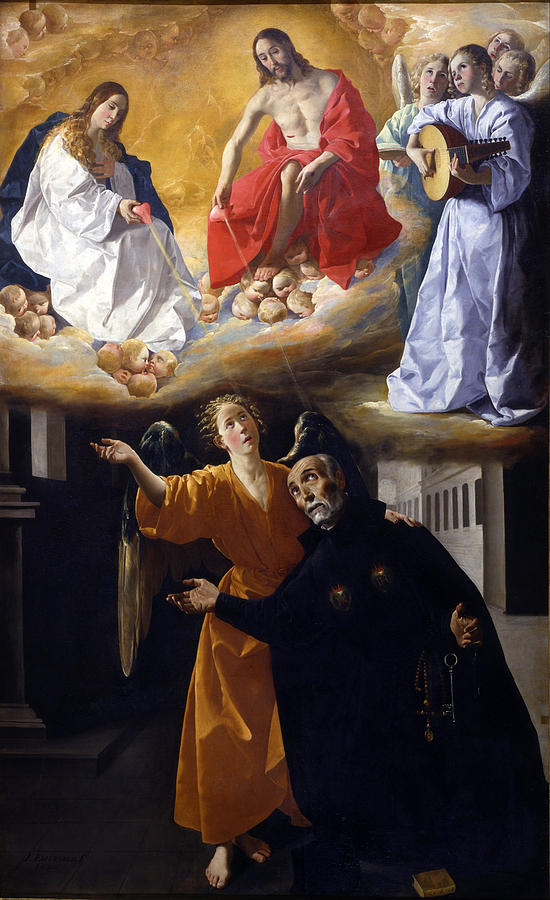
Painting of “Flagellation of St. Jerome by the Angels” by Francisco de Zurbaran showing Christ seated on white clouds at the upper left, surrounded by angels, while a half naked St Jerome kneels at the lower right as two angels stand beside him, one pointing toward Christ and another raising a bundle of rods, all set within a warm golden cloud filled sky.

Explore Francisco de Zurbaran’s 1639 painting “Flagellation of St. Jerome by the Angels,” a dramatic Spanish Baroque vision of Christ enthroned on clouds while angels scourge the kneeling saint. This in depth analysis examines the story behind Jerome’s dream, the composition, the roles of Christ and the angels, and the painting’s powerful message about discipline, learning, and divine mercy.

A Complete Analysis of “The Death of Hercules” by Francisco de Zurbaran

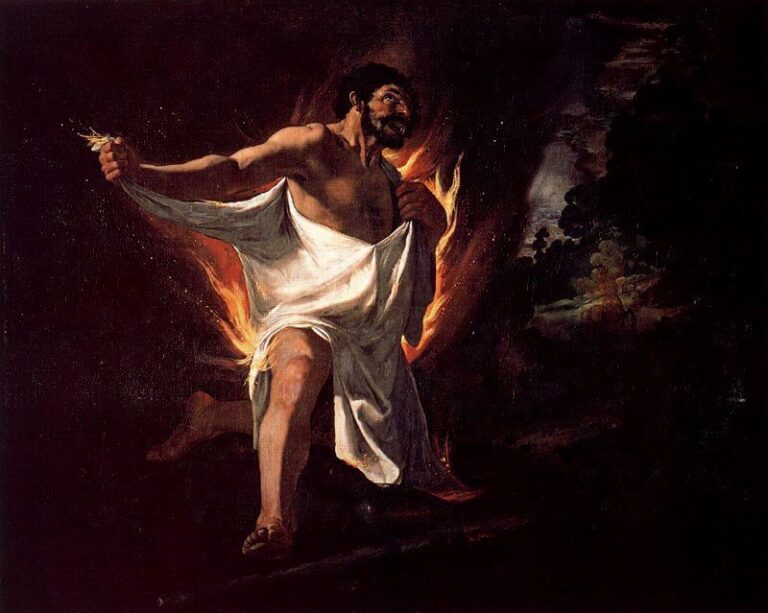
Painting of “The Death of Hercules” by Francisco de Zurbaran showing a muscular half bare Hercules wrapped in a white tunic that bursts into orange flames, striding forward in a dark landscape with one arm tearing at the garment and his face twisted in pain against a black sky and distant trees.

Discover Francisco de Zurbaran’s 1634 painting “The Death of Hercules,” a dramatic Spanish Baroque vision of the poisoned hero striding through darkness while flames burst from his deadly tunic. This detailed analysis explores the mythic background, dynamic composition, symbolism of fire and cloth, and the emotional power that turns Hercules’ final agony into a meditation on strength and fate.