Image source: wikiart.org
Introduction to “The Prodigal Son Feasting with Courtesans”
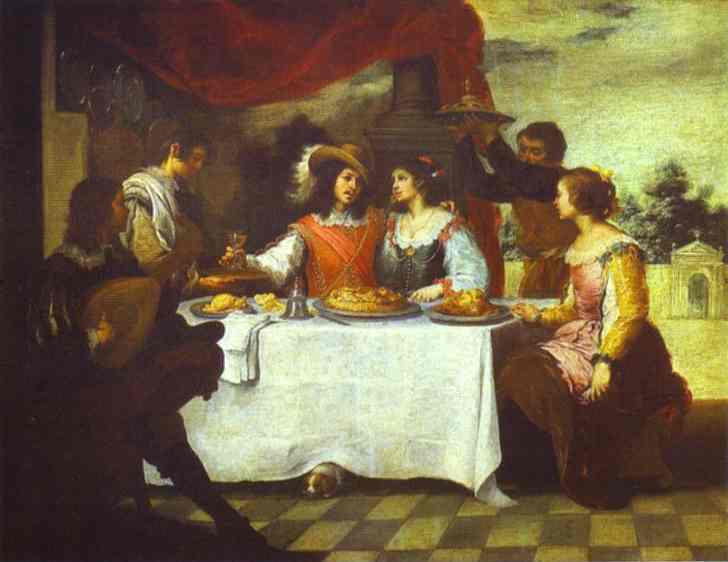
“The Prodigal Son Feasting with Courtesans,” painted around 1660 by Bartolomé Esteban Murillo, captures the moment of dazzling excess that stands at the center of Christ’s parable. Rather than focusing only on misery and repentance, Murillo pauses at the height of the prodigal’s reckless pleasure. The young man, dressed like a fashionable seventeenth century gallant, sits at a richly laden table surrounded by elegant women and attendants. Music, food, and wine transform the scene into a worldly celebration, yet Murillo subtly warns that this glittering feast is fragile and doomed.
The painting is one canvas from a larger series on the Prodigal Son, where Murillo narrates the story step by step. In this particular episode he explores themes of temptation, worldly glamour, and the ease with which wealth can be squandered. At the same time he demonstrates his mastery of genre painting, combining religious narrative with a vivid portrayal of contemporary Spanish social life.
The Parable and Murillo’s Interpretation
The parable of the Prodigal Son in the Gospel of Luke tells of a younger son who demands his inheritance, leaves his father’s house, and wastes his fortune on luxurious living. After famine and ruin, he returns home repentant and is welcomed by his father. Murillo chooses to illustrate not only the spiritual turning point but also the earlier stages of the story.
In “The Prodigal Son Feasting with Courtesans,” the young man is still far from repentance. He revels in abundance, surrounded by beautiful companions and attentive servants. Murillo shows him at the apex of his illusion, when wealth seems endless and pleasure effortless. Yet careful viewers notice hints that this state cannot last. The parable’s message hovers over the feast like an invisible presence.
By situating the biblical hero in a setting that resembles a Sevillian banquet, Murillo bridges the gap between ancient text and contemporary audience. The painting invites viewers of his own time, and of ours, to recognize their own world in the prodigal’s surroundings, and to question how they themselves relate to money, desire, and responsibility.
Composition and Spatial Structure
Murillo constructs the composition around a long white table that stretches horizontally across the canvas. This bright rectangle, draped in immaculate linen, acts as a stage for the action. The prodigal sits near the center, angled slightly toward the right, his red doublet and flamboyant hat immediately catching the eye. Two richly dressed women flank him at the table, while servants and musicians form a secondary ring around the group.
The space is organized in three broad zones. In the foreground we see the tiled floor and shadowy figures who frame the scene, especially the seated man on the left whose dark silhouette contrasts with the bright table. The middle ground is dominated by the feasting group, clearly lit and detailed. In the background, an open landscape with trees and a small pavilion stretches out, while a heavy red drapery descends from above, partly enclosing the interior.
This mixture of indoor and outdoor elements is characteristic of Murillo’s narrative scenes. The open sky and garden architecture suggest freedom and leisure, while the curtains and tiled floor create the intimacy of a private hall. The result is a semi theatrical space in which the parable unfolds as if on a stage, with the viewer placed just beyond the edge of the feast.
Light and Color
Light in this painting has both descriptive and symbolic roles. Murillo bathes the central table group in a warm, golden illumination. The white tablecloth reflects this light, enhancing the brightness of the food, silverware, and glass. The prodigal’s red clothing glows against this luminous ground, reinforcing his status as the protagonist.
Around this central brightness, the outer zones fall into softer shadows. The seated man in the left foreground, the servant in the back, and parts of the architecture remain partially obscured. This contrast between illuminated center and dim periphery suggests that the feast is a momentary spotlight in an otherwise uncertain world.
Color enhances the narrative. The prodigal’s red and white attire hints at passion and youthful energy, but it can also reference danger and impending ruin. The women’s dresses in pinks, golds, and greens echo the warm palette of the food and the drapery, creating a visual harmony that mirrors the superficial harmony of the feast. The background sky is cooler, moving toward gray and greenish tones, hinting at a possible change in weather and fortune.
Murillo avoids garish contrasts, instead weaving subtle transitions that create a pleasurable, visually rich atmosphere. Yet the very beauty of the colors may seduce the viewer in the same way the feast seduces the prodigal, making the moral lesson more complex and psychologically engaging.
Characters Around the Table
The painting derives much of its power from the individuality of the figures. Murillo gives each character distinct features and poses that reveal their personality and role in the story.
The prodigal sits confidently, leaning slightly toward the woman beside him. His hand holds a glass or gesture of offering, and his expression is animated, perhaps boasting, flirting, or toasting his companions. He wears a wide brimmed hat with feathers, a fashionable doublet, and a broad lace collar, all signs of wealth and vanity.
To his immediate right sits a young woman in dark dress with a white blouse and floral ornaments. Her body is turned toward him, and their heads lean together in intimate conversation. She represents the courtesans mentioned in the parable, a symbol of sensual enjoyment and moral risk. Another woman sits at the far right, dressed in pink and gold. She looks toward the central pair yet remains slightly apart, perhaps waiting for her turn to speak or to be noticed. Her posture, with one hand resting on the table and the other on her lap, suggests both eagerness and restraint.
Behind the table on the left stands a servant or attendant leaning slightly forward. His role is to pour or serve, but his face expresses curiosity and perhaps amusement as he observes the revelry. On the right, another servant raises a platter high above the group, presenting yet another dish. His pose adds movement and verticality to the scene.
In the darkest corner on the left foreground sits a musician or companion, holding a lute. He is half in shadow, his profile barely visible. Music was commonly associated with feasting and love, yet his marginal position may imply that not every participant shares fully in the prodigal’s illusion of endless joy.
Together these characters create a lively social tableau that looks as much like a genre scene of Spanish high society as a religious moral tale.
Food, Objects, and Hidden Symbolism
The table is laden with dishes that show Murillo’s relish for still life detail. Large pies or roasts occupy the center, surrounded by smaller plates and pieces of bread or fruit. The abundance of food conveys the idea of squandered wealth and unrestrained consumption.
At the near edge of the tablecloth, Murillo lets the fabric hang down in elegant folds that almost touch the floor. Beneath the cloth, barely visible, lies a small object that may be a dog, a jug, or a decorative element. Such subtle details remind the viewer that not everything on the surface is immediately clear, much like the prodigal’s life, which hides future poverty beneath current luxury.
The wine glasses and silver platters signal both enjoyment and excess. In religious art, wine can symbolize the blood of Christ and spiritual joy, but here it also alludes to drunkenness and misused gifts. The carefully painted reflections on the glassware show Murillo’s technical skill and his interest in the modern still life tradition.
The tiled floor introduces another layer of symbolism. Its strict geometric pattern contrasts with the organic shapes of the people and the drapery. It suggests order and stability beneath the scene, perhaps recalling the moral law that underlies human freedom. The checkerboard design may also hint at the play of choices, where one step leads to another and the path of the prodigal will eventually change color from light to dark.
Setting, Architecture, and Social Context
The architectural background on the right shows garden walls, trees, and a small pavilion or gate. These elements create the impression of a country estate or urban palace. The feast likely takes place in an outdoor terrace or loggia that opens onto a landscaped garden.
Such settings were associated with leisure and aristocratic privilege in seventeenth century Spain. By placing the prodigal in this context, Murillo underscores the extravagance of his lifestyle. The young man has taken his inheritance from a rural household and spent it on courtly pleasures that do not suit his origins or his responsibilities.
The heavy red drapery at the top left functions like a theatrical curtain. It frames the central group and adds a note of artificiality, reminding viewers that this is in some ways a performance. The prodigal is playing the role of gallant host, but the curtain hints that the show will end. When it does, the scene will collapse, and the reality of his impoverishment will appear.
Murillo’s contemporaries would have recognized the costumes and manners of the figures as belonging to their own world. The painting thus serves as a gentle critique of fashionable extravagance. It warns that dressing like a noble and feasting in style does not guarantee happiness or security.
Movement, Gesture, and Narrative Flow
Although the figures remain seated or standing, the painting contains a subtle choreography of gestures. The prodigal extends his arm, the courtesan responds with a tilt of her head, the servant behind raises a platter, and the musician in the foreground holds his instrument in readiness. These coordinated movements guide the viewer’s eye around the composition.
The central exchange of glances between the prodigal and the woman beside him forms the emotional core. Their intimacy suggests that he has found temporary satisfaction in human affection and sensual charm. The other courtesan’s gaze toward them adds a note of rivalry or curiosity. The servants’ looks range from focused work to discreet observation.
Murillo captures an instant when everyone seems engaged yet the atmosphere remains poised, not chaotic. This controlled energy reflects the nature of youthful indulgence. At this moment, nothing seems to threaten the harmony of the feast. However, the viewer knows that famine and humiliation await the prodigal, creating a tension between what the characters feel and what the audience understands.
Moral Reading and Spiritual Meaning
As part of a larger series, “The Prodigal Son Feasting with Courtesans” occupies the turning point between departure and downfall. It symbolizes the seduction of pleasure and the misuse of God given gifts. The riches on the table and the finery of the clothes represent the inheritance that the young man is squandering.
Yet Murillo does not portray the characters as monstrous sinners. They look animated, attractive, and very human. The prodigal appears genuinely pleased with his companions, and the women do not seem vicious. This nuanced portrayal encourages viewers to recognize that moral failure often arises not from cartoonish evil but from ordinary desires that are allowed to dominate and mislead.
The painting therefore functions as a mirror. Spectators are invited to ask where in their own lives they might be feasting while ignoring future consequences. The scene warns against forgetting one’s origin and responsibilities, but it does so through gentle persuasion rather than harsh condemnation.
Because Murillo also painted subsequent scenes of the prodigal’s misery and repentance, the feast is not the final word. It forms the backdrop against which later conversion will shine more brightly. The contrast between this canvas and the later ones reveals the full arc of grace, from misguided use of freedom to humble return and paternal forgiveness.
Murillo’s Style and the Blend of Sacred and Secular
This painting illustrates Murillo’s exceptional ability to blend sacred narrative with secular realism. He borrows elements from contemporary genre painting, such as detailed still life, depictions of musicians and servants, and interest in fashionable clothing. At the same time he never loses sight of the parable’s spiritual message.
His brushwork is relatively soft, particularly in the depiction of faces and fabrics. There is a gentle sfumato around edges, which unites forms and contributes to the overall harmony. Rather than sharp contours or extreme chiaroscuro, Murillo prefers a more atmospheric handling of light that envelops the figures.
The blend of everyday observation and moral storytelling made Murillo particularly popular among Sevillian patrons. Scenes like this allowed viewers to enjoy detailed depictions of social life while also receiving a clear, meditative lesson. In “The Prodigal Son Feasting with Courtesans,” the tension between beauty and warning is especially striking.
Contemporary Relevance and Lasting Appeal
For modern viewers, the painting continues to resonate. The theme of sudden wealth, extravagant lifestyle, and eventual crash feels timeless. Today it may call to mind stories of lottery winners, celebrities, or anyone who burns through resources in pursuit of pleasure.
Murillo’s handling of the subject is surprisingly compassionate. He does not mock or vilify the prodigal, but shows him as a young man caught up in the allure of his moment. This perspective invites empathy for those who make similar mistakes and prepares the ground for understanding the later scenes of repentance and forgiveness.
At the same time, the painting delights through its visual richness. The textures of cloth, the gleam of platters, the glow of faces, and the interplay of gesture all reward close looking. It stands as both a work of moral storytelling and a brilliant example of Baroque genre painting.
Conclusion
“The Prodigal Son Feasting with Courtesans” by Bartolomé Esteban Murillo captures the glittering yet fragile world of youthful extravagance. Through a carefully balanced composition, warm light, and nuanced characterization, Murillo transforms a biblical parable into a living scene of seventeenth century social life.
The painting invites viewers to enjoy its beauty while reflecting on the consequences of misplaced desire and squandered gifts. It forms a crucial chapter in Murillo’s narrative cycle of the Prodigal Son, connecting the carefree illusions of the feast with the eventual grace of repentance and reconciliation.
Seen today, the work remains compelling not only as an artifact of Spanish Baroque art but also as a timeless meditation on human freedom, temptation, and the path that leads from self indulgence back toward home.