Image source: wikiart.org
Introduction to Rest on the Flight to Egypt
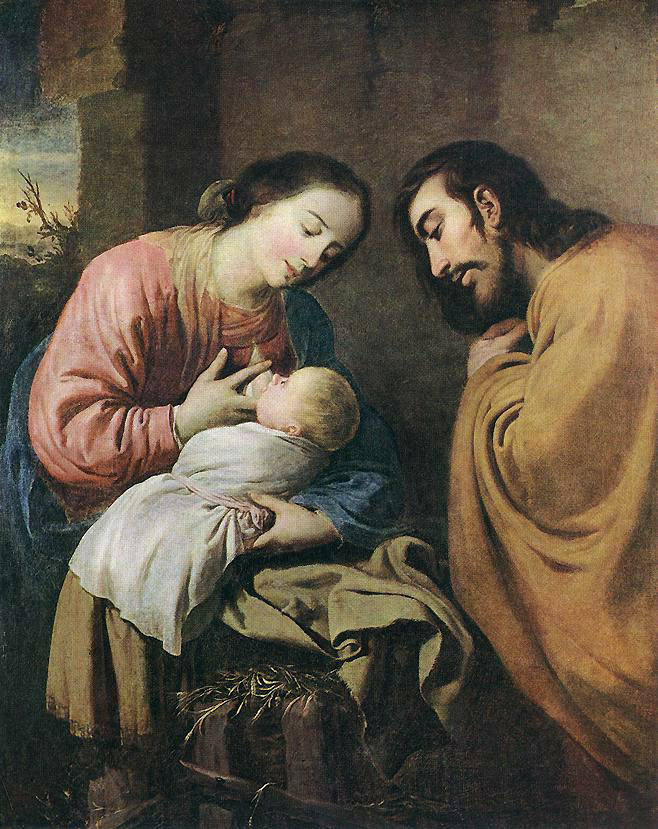
Francisco de Zurbaran’s “Rest on the Flight to Egypt,” painted in 1659, presents one of the most tender visions of the Holy Family in Spanish Baroque art. Rather than focusing on dramatic miracles or grand landscapes, Zurbaran invites viewers into an intimate pause during a dangerous journey. Mary cradles the sleeping Christ Child in her arms, gazing down with a mixture of awe and maternal affection. Joseph kneels nearby, his head bowed, hands clasped in quiet adoration.
This scene is rooted in the Gospel story that tells how Joseph, warned in a dream, fled with Mary and Jesus to Egypt to escape Herod’s massacre of the innocents. Zurbaran does not depict the peril or the travel itself. Instead he chooses the moment of rest, when the exhaustion of the road mingles with the serenity of divine protection. The result is a painting that feels both deeply human and contemplative, ideal for prolonged meditation.
The Biblical Story Behind the Painting
The subject of the Flight into Egypt has inspired artists for centuries. According to the Gospel of Matthew, Joseph is instructed by an angel to take the child and his mother and flee to Egypt, where they will be safe until Herod’s death. The journey suggests hardship, exile, and trust in God’s guidance.
Many painters chose to illustrate the Holy Family in motion, surrounded by landscapes, angels, or symbols of prophecy. Zurbaran’s choice to focus on a moment of rest shifts the emphasis from external narrative to interior experience. The threat of Herod is absent, but its weight lingers in the protective way Mary holds the child and the contemplative seriousness in Joseph’s face.
In this quiet pause, the viewer senses the tension between vulnerability and security. The child is fragile, wrapped in simple cloths, yet he is also the one who brings salvation. The setting is humble, but a gentle light bathes the figures, suggesting the unseen presence of God even in exile.
Intimate Composition and Triangular Harmony
The composition of “Rest on the Flight to Egypt” is carefully arranged to create both unity and intimacy. Mary and Joseph bend toward the child, forming a protective triangle around him. Their heads incline in a soft echo of each other, drawing the viewer’s eye into the center of the group.
Mary stands on the left, turned slightly toward Joseph. Her upper body curves over the child, while her lower body remains stable, suggesting both tenderness and strength. Joseph kneels on the right, leaning toward the child with folded hands. His posture is one of reverence and humble responsibility.
Between them, the infant Jesus becomes the quiet focal point. Wrapped in white swaddling cloth, he rests securely in Mary’s arms, his head gently supported by her hand. The triangular configuration, a classical device, also carries symbolic weight. It evokes the harmony of the Trinity and underscores the unity of the Holy Family in their shared mission.
The Figure of Mary Mother and Contemplative
Zurbaran’s Mary embodies calm, gentle motherhood. She wears a rose colored dress with a warm, earthy skirt, and a blue mantle that falls around her shoulders. These colors follow traditional iconography, with blue symbolizing divine grace and rose or red signifying love and humanity.
Her head leans toward the child, eyes half closed in soft contemplation. There is a hint of weariness in her posture, as if the long journey has taken its toll, yet her face radiates peace. Her left hand supports the child’s head, while her right hand touches his chest with delicate care. This gesture suggests both maternal protection and an awareness of his sacred heart.
Mary’s expression reveals a woman who knows both the vulnerability and the mystery of her child. She appears deeply moved by the sight of the sleeping infant who is also her Lord. The viewer senses in her face the biblical phrase that Mary kept all these things and pondered them in her heart.
Joseph as Protector and Silent Worshiper
Joseph’s role in the painting is equally significant. Often portrayed in earlier art as an older, secondary figure, he appears here as a strong, contemplative man. His brown hair and beard frame a face marked by seriousness and tenderness. He is wrapped in a warm ocher cloak, which envelopes his figure like a protective mantle.
He kneels close to Mary and the child, his head bowed, eyes closed or half closed in prayer. His hands rest near his face in a quiet gesture of devotion. There is no sense that he is excluded from the bond between mother and child. Rather, he shares in it through reverent distance, like a guardian who respects the sacred intimacy he protects.
Joseph’s posture also reveals the weight of responsibility. He is the one who received the dream, who led the family into exile, and who must find food, shelter, and safety in a foreign land. Yet in this moment of rest, he entrusts these burdens to God, content simply to watch and adore. Zurbaran’s depiction highlights how leadership can be expressed through humility and attentive presence rather than dominance.
The Christ Child Symbol of Vulnerability and Hope
At the center of the painting, the Christ Child is both ordinary and extraordinary. He is swaddled in simple white cloths, his small body curled and secure. His blonde hair catches the soft light, and his face, turned slightly upward, appears relaxed in sleep.
The whiteness of the cloths suggests innocence and holiness, while their tight wrapping hints at both care and foreshadowing. Some viewers see in the swaddling a prefiguration of the burial shroud he will one day wear. Even in this peaceful rest, the painting quietly points toward the future Passion and Resurrection.
The position of the child, resting entirely in Mary’s arms, underscores his dependence. Yet the way both parents focus their attention on him reveals that he is also the center of their lives and of salvation history. The fragile baby is the one who guides their journey and gives meaning to their hardships.
Light and Color A Gentle Spiritual Radiance
Zurbaran, known for his dramatic use of light in earlier works, softens his approach in this late painting. Instead of sharp contrasts, he uses a gentle, diffused illumination that bathes the figures in warm tones. The light seems to come from the left, touching Mary’s face and hands, the child’s head, and Joseph’s features.
This warm light creates an intimate, domestic atmosphere rather than theatrical drama. It also has symbolic significance. By highlighting the faces and hands of the Holy Family, Zurbaran suggests that the divine presence is revealed in human relationships and gestures of care.
The colors reinforce this mood. The rose of Mary’s dress, the blue of her mantle, the soft browns and golds of Joseph’s cloak and the surrounding architecture all harmonize. Nothing is overly bright or saturated. The palette is earthy and tender, inviting the viewer into a contemplation that is both calm and emotionally rich.
The Setting Hint of Journey and Exile
The background of the painting is understated but meaningful. On the left, a small glimpse of landscape is visible through a rough stone opening. We see a darkening sky and a hint of distant trees or hills. This tiny view reminds us that the Holy Family is on the road, traveling through unfamiliar territory.
Inside the shelter where they rest, the surroundings are simple. The straw filled manger at the bottom of the composition connects this scene to Bethlehem and the Nativity. Rough fabrics drape over a support, emphasizing the makeshift nature of their lodging. There is no sign of luxury or security.
By keeping the setting minimal, Zurbaran focuses attention on the human figures while still evoking the themes of exile and poverty. The Holy Family does not rest in comfort but in a place where straw and stone predominate. Yet the warmth of their interaction transforms this humble space into a sanctuary.
Emotional Tone Quiet Love and Trust
Perhaps the most striking quality of “Rest on the Flight to Egypt” is its emotional tone. Nothing in the painting is loud or overly dramatic. The gestures are small, the expressions gentle, the colors muted. Yet the feeling of love is palpable.
Mary’s careful support of the child, Joseph’s reverent kneeling, and the child’s peaceful sleep create a circle of trust. The viewer senses that despite the dangers that compelled their flight, the family carries within itself a deep security. That security does not come from external circumstances but from the presence of God in the child and in their shared faith.
Zurbaran avoids any hint of sentimentality. The tenderness in the painting is grounded in realism. The folds of fabric, the textures of straw and stone, and the subtle indications of fatigue in the parents’ poses remind us that this is a real journey with real hardships. The love we perceive has weight and cost, which makes it more convincing.
Zurbaran’s Late Style and Spiritual Maturity
Painted near the end of Zurbaran’s life, “Rest on the Flight to Egypt” reflects a mature style formed by decades of working for religious patrons. Earlier in his career, he was famous for starkly lit monastic scenes and powerful single figure saints. Over time his palette softened, his compositions became more intimate, and his interest in domestic spirituality deepened.
In this painting, we see the fruit of that evolution. The drama lies not in external contrast but in quiet relationships. The figures are larger than life yet deeply human. Zurbaran’s brushwork is controlled and smooth, giving the surfaces a calm solidity that suits the contemplative subject.
The painting also reveals his ability to blend doctrinal meaning with everyday experience. The viewer can read it on multiple levels: as a charming family portrait, as a meditation on exile and trust, and as a theological image of the Incarnation carried into foreign lands.
Relevance for Contemporary Viewers
For modern viewers, “Rest on the Flight to Egypt” speaks with surprising freshness. Many people today know the experience of displacement, whether through migration, war, or personal upheaval. The Holy Family on the road to Egypt becomes a powerful symbol of families who must leave home seeking safety and hope.
The painting also offers a vision of family life centered not on comfort or success but on presence and mutual care. In a world of rushed schedules and constant distractions, the concentrated attention Mary and Joseph give to the child invites us to reconsider what truly matters. The tenderness of their gaze challenges viewers to cultivate similar attentiveness in their own relationships.
Finally, the painting provides a model of contemplative calm in the midst of difficulty. The Holy Family does not escape hardship, but they carry a deep interior peace that flows from trust in God. For those facing uncertainty or change, Zurbaran’s image can become a visual prayer, reminding them that rest and consolation are possible even during the journey.
Conclusion A Quiet Sanctuary on the Road
“Rest on the Flight to Egypt” by Francisco de Zurbaran is a luminous meditation on love, exile, and divine protection. Through a simple triangular composition, soft color, and gentle light, the artist captures an intimate moment when the Holy Family pauses in their journey. Mary cradles the sleeping child with protective tenderness, Joseph kneels in silent adoration, and the humble setting becomes a sanctuary.
The painting distills complex theological themes into the everyday language of family affection. It invites viewers to see holiness in the quiet acts of holding, watching, and resting together. At the same time, it acknowledges the reality of hardship, reminding us that grace often reveals itself most clearly in times of vulnerability.
More than three centuries after its creation, Zurbaran’s work continues to move viewers with its combination of realism and spiritual depth. “Rest on the Flight to Egypt” stands as a timeless image of a family sustained by love and faith as they make their way through uncertainty, offering to all who contemplate it a gentle promise of peace in the midst of life’s journeys.