Image source: wikiart.org
A First Look at the Sitter’s Commanding Ease
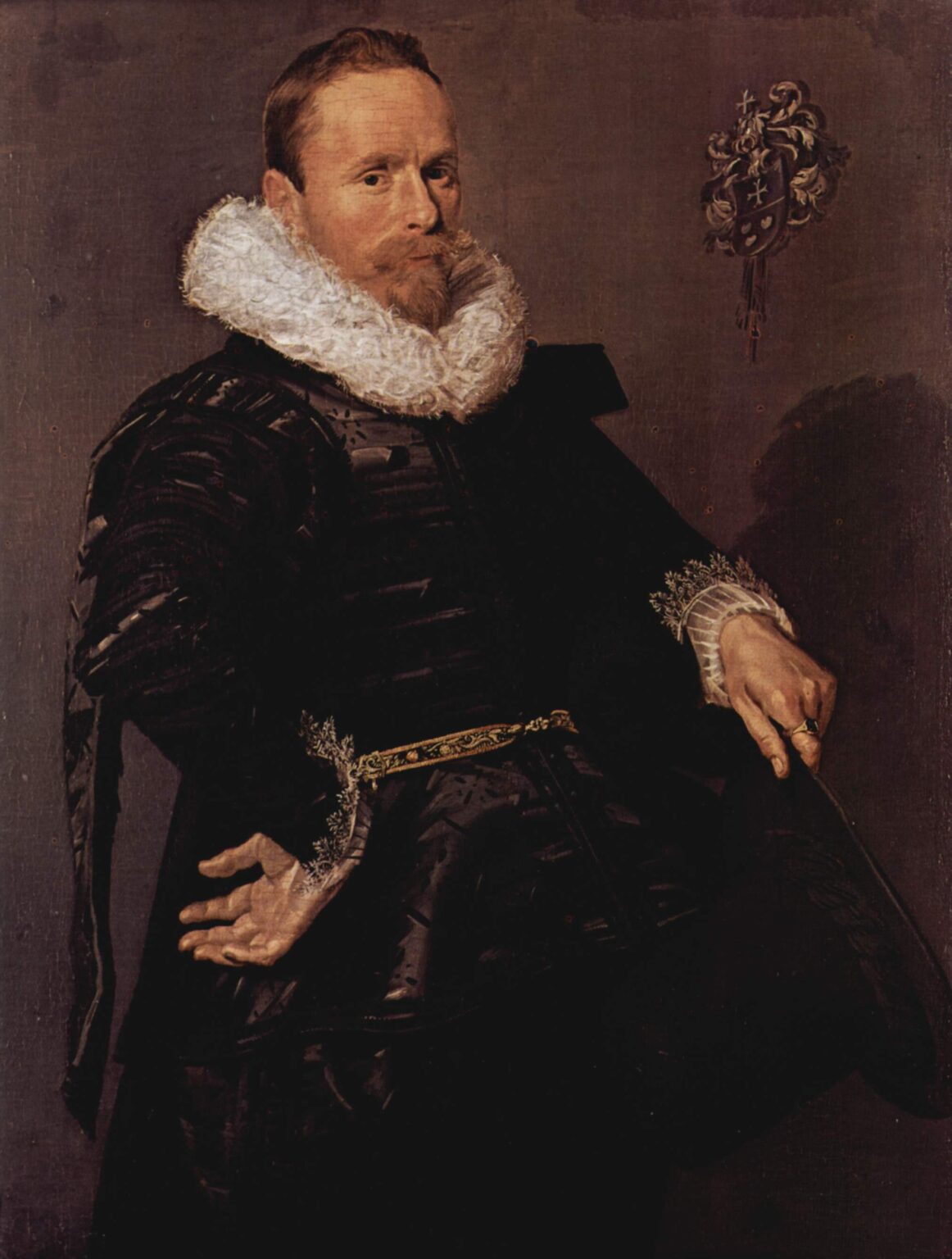
Frans Hals’s “Portrait of an Unknown Man” (1618) makes its strongest impression through posture. The sitter occupies the space with an effortless authority, leaning back as though he has every right to relax while still being taken seriously. It is a pose that feels both casual and calculated. Nothing about him appears hurried, yet nothing reads as careless. Hals captures a man who understands how to be seen, and who knows that confidence can be expressed without spectacle.
The sitter’s gaze meets the viewer with a measured steadiness. He does not look startled by attention, and he does not chase approval. Instead, he seems to weigh the viewer, as if acknowledging that portraiture is a transaction: the sitter offers an image, and the viewer offers recognition. Hals intensifies that exchange by making the man’s body language open and expansive. The figure is not compressed into a narrow, dutiful stance. He spreads into the canvas, creating a sense that the portrait is not merely a likeness but an encounter.
Composition and the Drama of Diagonal Relaxation
The composition hinges on a strong diagonal. The sitter’s body tilts across the picture plane, creating a dynamic line from the ruff and face down toward the extended legs and the hand that appears to rest on or near a cane. This diagonal breaks the stiffness that often haunts early seventeenth century portraiture. Instead of a static pillar of a figure, Hals gives us a man who appears to have shifted into position a moment ago and then settled, still alive to the presence of the artist and viewer.
That diagonal is balanced by anchoring elements. The dark mass of the clothing creates stability, while the ruff and cuffs form bright interruptions that keep the eye from sliding away. The open hand on the left side functions like a visual counterweight, a pale shape that pulls attention outward and helps define the breadth of the sitter’s pose. The background remains quiet, but not empty. It provides just enough atmosphere to set the figure forward, and it includes a small heraldic motif that sharpens the portrait’s social meaning.
The Power of the Ruff and the Architecture of the Head
The ruff is a central structural element. It frames the sitter’s head like a crafted collar of light, separating flesh from darkness and giving the face a kind of stage. Hals paints the ruff with lively texture, making the folds feel crisp and abundant rather than decorative in a flat sense. It reads as linen with weight and spring, something that had to be maintained, shaped, and kept immaculate. This matters because such care is itself a sign of status. A ruff like this implies resources, household order, and an investment in appearance that signals rank.
The ruff also shapes the portrait’s psychology. By emphasizing the head with this luminous ring, Hals ensures that the sitter’s gaze dominates the experience. The eyes are not lost in shadow or overwhelmed by costume. They remain the portrait’s controlling force. Even with the relaxed posture, the sitter’s face retains a calm alertness. The ruff becomes the boundary between the man’s inner self, suggested by expression, and the outer public self, declared by clothing.
Light, Shadow, and the Quiet Theater of Authority
Hals uses light to create an atmosphere of controlled intimacy. The face is illuminated with soft clarity, revealing the planes of the forehead, nose, and cheeks. The beard catches light in a way that makes it feel textured and real, rather than stylized. The lighting is not harsh or dramatic. It does not turn the man into a hero lit by a spotlight. Instead, it feels like the steady light of a room, enough to define character without forcing a mood.
The clothing, by contrast, sinks into deep shadow. This is not a loss of detail, but a strategy. The darkness makes the bright features more articulate: the ruff, cuffs, hands, and the small gleam of jewelry. Hals’s shadows are dense but not dead. They contain subtle shifts that suggest folds, layered fabric, and the way black cloth can reflect a muted sheen. This interplay between illumination and shadow mirrors the portrait’s theme: public visibility contained by private reserve. The sitter offers himself to view, but he remains partly withheld in darkness, like a person whose full life cannot be captured.
Black Clothing as Material, Status, and Taste
Black clothing in Dutch portraiture often signals seriousness, wealth, and restraint. Dyeing fabrics a deep, stable black could be expensive, and the look carried a cultural association with propriety and discipline. Hals paints the sitter’s black outfit not as a blank silhouette, but as a field of nuanced texture. You can sense the structure of the sleeves and the subtle patterning or sheen in the fabric. The clothing has volume, and it sits on the body with authority, suggesting tailoring and investment.
This matters because the sitter’s relaxed posture might otherwise risk reading as informal. The black clothing prevents that. It keeps the portrait within the register of dignity. The man can lounge slightly because his clothes insist on his standing. Hals is showing a confidence that does not need flamboyance. The sitter’s taste is revealed through restraint, and that restraint becomes its own form of display.
Lace Cuffs and the Art of Controlled Luxury
The cuffs introduce a different kind of refinement. Their pale lace edges are delicate, but they do not dominate. They are placed at the precise points where gesture becomes visible. Hals understands that wrists and hands carry social meaning. By giving the cuffs careful attention, he frames the sitter’s gestures, turning each movement into a sign of cultivated presence.
The lace also serves a compositional function. It provides bright, intricate texture against the dark clothing, adding visual interest without clutter. It is controlled luxury, a small flourish that tells us the sitter can afford fineness but chooses to keep it measured. The portrait’s elegance is built through these restrained contrasts, dark against light, soft against crisp, broad shadow against small highlights.
The Hands and the Language of Gesture
The portrait’s emotional realism is concentrated in the hands. The left hand is open, palm visible, fingers slightly spread. This is an unusual choice in formal portraiture, where hands are often posed to appear polite and contained. An open palm suggests candidness, persuasion, or a conversational manner. It can read as a gesture of explanation, as if the sitter is in mid statement. Hals gives it enough naturalism that it does not feel like a theatrical sign. It feels like a human habit, a way of speaking through the body.
The right hand, adorned with a ring, is positioned with a sense of control, near what appears to be a cane or staff. That cane adds to the impression of authority, but it is not brandished. It is held with ease. The combination of the open left hand and the controlled right hand creates a balanced psychological portrait. The sitter is both approachable and commanding, expressive and self regulated. Hals suggests personality through posture rather than through overt storytelling.
Jewelry, Belt, and the Signals of Prosperity
The portrait includes subtle but meaningful indications of wealth. The ring catches light, drawing attention to the sitter’s right hand and implying status. The belt or ornamental fastening at the waist introduces a warm metallic accent that breaks the dominance of black. It is not excessive. It is placed where it will be noticed but not obsessed over. Hals seems to understand that true status often expresses itself through quiet assurance, not through overwhelming display.
These details work with the sitter’s pose. Because he is leaning back and occupying space, even small indications of luxury become potent. The portrait does not need a crowded inventory of possessions. The man’s ease is itself a form of wealth. Hals lets material signs support that impression rather than replace it.
The Heraldic Motif and the Question of Identity
On the wall behind the sitter appears a heraldic emblem, a small crest like a signature of lineage or affiliation. Even if the sitter remains unidentified to us, the painting insists that he belonged to a recognizable social structure. Heraldry functions as a claim. It ties the man to family history, civic standing, or institutional connection. It also shifts the portrait from private likeness to public statement. This is not merely how he looked. This is who he was allowed to be in society.
Hals places the emblem carefully. It is visible but secondary. It does not compete with the face. Instead, it works like a quiet caption, reinforcing the sitter’s legitimacy. The crest also creates a visual echo of the ruff and hands, adding another point of pale detail within the darker field. In compositional terms, it helps balance the portrait’s upper right area, preventing the background from feeling too empty.
Space, Background, and the Art of Not Overexplaining
The background is subdued, almost austere, and that restraint is a deliberate artistic choice. Hals avoids distracting scenery because the sitter’s presence is the subject. The neutral space makes the man feel closer, and it gives the painting a timeless quality. The setting does not lock the sitter into a specific interior filled with objects that might date the image or compete with the face. Instead, the viewer is invited to focus on the essentials: expression, posture, costume, and gesture.
This simplicity also matches the cultural ideals often associated with Dutch civic life at the time, where display could be valued but frequently expressed through controlled means. Hals achieves a remarkable balance: the portrait feels luxurious in its materials and confident in its social message, yet it does not indulge in decorative excess.
Frans Hals in 1618 and the Liveliness Under Formality
By 1618, Hals was already establishing his reputation for portraits that feel immediate and alive. Even when he works within formal conventions, he finds ways to suggest spontaneity. This portrait is a prime example. The sitter is posed, yes, but the pose is chosen to feel natural rather than rigid. The slight asymmetries in the face, the lively treatment of hair and beard, and the believable tension in the hands all contribute to the sense that Hals is painting a living person, not an emblem.
The brushwork, especially in transitions between light and dark, avoids over polishing. The face is carefully modeled, but it does not become porcelain. The ruff is textured, but not fussy. The clothing holds depth without becoming a flat black wall. Hals’s skill lies in making the paint feel responsive, as if it can register the sitter’s energy even in stillness. The result is portraiture that feels candid without sacrificing dignity.
Mood and Masculine Self-Fashioning
The sitter’s masculinity is expressed through composure, breadth, and social confidence rather than through physical aggression or overt symbolism. His relaxed lean suggests that he is comfortable in his position. The open hand suggests verbal ease, a capacity to argue, negotiate, or charm. The cane implies authority, perhaps age or civic rank, but it is held with casual control. The ruff and cuffs signal refinement and discipline. Together, these elements form a portrait of a man who has learned how to perform respectability while remaining personally distinctive.
This is self fashioning in paint. The sitter presents himself as someone worthy of trust and attention. Hals supports that self presentation by emphasizing presence over pageantry. The portrait becomes a study in how power can appear effortless, and how effortlessness is often the most persuasive kind of power.
Why This Portrait Still Holds the Viewer
Even without knowing the sitter’s name, the portrait remains compelling because it feels psychologically complete. Hals gives us a man who seems to have a life beyond the frame. The open hand suggests speech, the gaze suggests judgment, the relaxed posture suggests experience. The heraldic emblem hints at identity and social structure, but the face insists on individuality. This tension between the public and the personal is one of the reasons Hals remains so engaging.
The portrait also endures because it is honest about the nature of representation. It does not pretend to show the sitter’s entire inner world. Instead, it shows what portraiture can show with power: the surface where personality, status, and intention meet. Hals turns that surface into something vivid. The sitter may be unknown by name, but he is not unknown as a presence.