Image source: wikiart.org
Introduction to “Diana and Her Nymphs Departing for the Hunt”
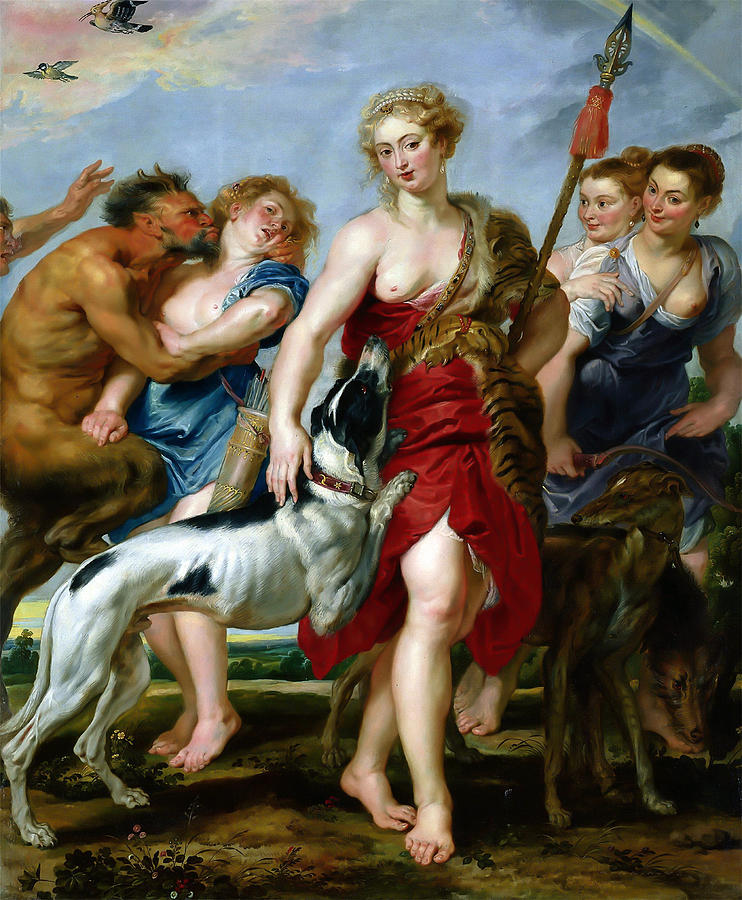
“Diana and Her Nymphs Departing for the Hunt” by Peter Paul Rubens is a dazzling Baroque vision of movement, sensuality, and mythological drama. The painting presents the goddess Diana in the center, surrounded by her attendants and hunting dogs at the moment they set out into the landscape. The scene is alive with energy. A satyr clutches one of the nymphs, dogs leap at their mistress, fabrics swirl, and faces shine with excitement and mischief.
Rubens turns a classical subject into a vivid theater of flesh and color. The work celebrates the physical beauty of the female form, the power of the hunt, and the complex interplay between divinity, nature, and desire. At the same time, it reflects the artist’s fascination with mythology as a vehicle for exploring human emotions and bodily presence. The painting is not a calm, idealized scene. It is full of tension and sensual charge, symbolizing the thin boundary between disciplined virtue and untamed instinct.
Mythological Background of Diana and Her Companions
In Greco Roman mythology, Diana, or Artemis, is the virgin goddess of the hunt, protector of wildlife and young women. She dwells in the forest with a band of nymphs, bound by vows of chastity and independence from men. Many stories revolve around the violation of these vows, whether through the intrusion of mortals like Actaeon or the temptations posed by satyrs and gods.
Rubens draws on this mythological tradition but reinterprets it for a Baroque audience. Instead of depicting a specific narrative episode such as the punishment of Actaeon, he shows a more general moment: Diana and her nymphs on their way to the hunt. However, the presence of a lascivious satyr grasping a reluctant nymph introduces an undercurrent of danger and desire. The painting hints at the constant threat that male lust poses to the chaste community of Diana.
The goddess stands as a powerful but ambiguous figure. She is both protector and object of admiration. Her hunting spear, quiver, and dogs connect her to the world of action and prowess, while her bare breast and flowing drapery reveal her as an ideal of female beauty. Rubens uses this duality to explore the tension between spiritual purity and bodily attraction.
The Central Figure of Diana
Diana dominates the composition. She stands in contrapposto, her weight resting on one leg while the other steps forward. This stance gives her body a graceful S curve, emphasizing the softness of her flesh and the strength of her posture. She holds a spear in her right hand, while her left hand rests near the head of a leaping dog. A tiger or leopard skin draped over her shoulder reinforces her identity as a huntress and alludes to her dominion over wild beasts.
Her face is calm and self possessed. She gazes outward, slightly away from the satyr’s disturbance, as if confidently ignoring the chaos at her side. Her hair is gathered and crowned with a delicate diadem, signaling her divine rank. The exposed breast is typical of Rubens’s mythological heroines, suggesting both sensual appeal and classical heroism. She is not modest in the sense of hiding her body. Rather, her dignity lies in her unflinching presence and control.
The red drapery that wraps around Diana’s lower body is a vital compositional element. It twists and folds in complex patterns, catching light and shadow. The color red associates her with passion and power, yet the controlled manner in which the cloth clings and opens around her legs emphasizes her discipline. Rubens allows viewers to appreciate the fullness of her form while making clear that she remains the commanding center of the scene.
The Nymphs and the Satyr
To the left of Diana, a muscular satyr clutches a blonde nymph in a moment that balances between seduction and struggle. The nymph twists away, her body turned from the satyr while her head tilts back toward him. Her expression is ambiguous, mixing reluctance with a hint of pleasure or surprise. The satyr’s beard, pointed ears, and animalistic features contrast sharply with her soft round face. This pairing embodies the clash between rational chastity and untamed lust.
Behind Diana on the right, two more nymphs look on. They are dressed in flowing garments, their faces animated with curiosity and amusement. One of them holds a horn or hunting instrument, suggesting readiness for the chase. Their posture shows they are part of Diana’s retinue, yet they are also individuals with their own reactions to the scene. Rubens allows each figure a distinct emotional tone, from the distressed nymph in the satyr’s arms to the smiling attendant behind the goddess.
Through these varied reactions, the painting explores a spectrum of responses to desire and danger. Some figures resist, some accept, and some enjoy the spectacle. Diana remains steady at the center, setting the standard of composure. The nymphs around her make visible the emotional turbulence that she must manage as leader of this community of maidens.
The Expressive Presence of the Dogs
The hunting dogs in the foreground are not mere accessories. They are active participants in the drama and key to the painting’s rhythm. One dog stands almost upright, front paws reaching up toward Diana as if craving attention or eager to be unleashed. Its body forms a dynamic diagonal that echoes the tilt of Diana’s spear. The black and white pattern of its fur adds visual variety and directs attention toward the goddess’s torso.
Another dog appears on the right, partially hidden but alert, its head turned outward. The presence of multiple dogs reinforces the idea that the group is about to depart on a vigorous hunt. At the same time, the dogs symbolize loyalty and controlled aggression. They are powerful animals who respond to Diana’s commands, representing the disciplined channeling of instinct.
Rubens paints the dogs with keen observation, capturing the tension of muscles, the gleam of fur, and the intensity of their gaze. Their earthly, animal vitality connects the divine figures to the natural world and underscores the theme of mastery over both external and internal wildness.
Movement, Rhythm, and Baroque Dynamism
The painting is a textbook example of Baroque dynamism. Rubens arranges bodies, draperies, and gazes in swirling patterns that keep the viewer’s eye in constant motion. Diana’s spear rises diagonally to the upper right, while the satyr’s arm curves in the opposite direction. The dog’s body stretches forward, creating another line of force. The nymphs’ torsos twist and lean, their garments swirling around them.
These intersecting diagonals generate a sense of swirling movement, as if the group has been captured mid stride. Even the background landscape, though less detailed, contributes to the flow with its low horizon and soft transitions of color. Yet despite this restless motion, the composition remains balanced because Diana stands almost vertically at the center. She is the axis around which everything spins.
Rubens uses this dynamic structure to convey emotional excitement. The viewer feels the anticipation of the hunt, the thrill of physical closeness, the clash between discipline and temptation. The painting is alive with potential action. It suggests that in the next moment, the party will surge forward and disappear into the forest, leaving only echoes of movement behind.
Color, Light, and Sensual Surface
Color plays a crucial role in the painting’s impact. Diana’s red garment forms the dominant accent, contrasting with the cooler blues and whites worn by the nymphs. This contrast not only draws attention to the goddess but also emphasizes her warmth and vitality. The satyr’s tanned skin and brown fur merge with the earth tones of the background, signaling his connection to primal nature rather than refined culture.
Rubens bathes the figures in a soft, consistent light that enhances the curve of flesh and the shimmer of fabric. Highlights on shoulders, thighs, and cheeks create a tactile sense of skin. The painter’s famous use of creamy, luminous flesh tones is fully visible here. He modulates color from warm pinks and peaches in the lit areas to cooler, shadowed browns, giving bodies a convincing three dimensional presence.
Jewelry and small details catch the light as well. Diana’s diadem, the metal fittings on the spear, and the dogs’ collars all gleam. These touches not only add visual richness but also symbolize status and refinement. The luminous quality of the scene contributes to an atmosphere that is at once sensual and idealized, as if the figures exist in a golden, eternal morning.
Gender, Power, and the Game of Looking
“Diana and Her Nymphs Departing for the Hunt” raises interesting questions about gender and power. On one hand, Diana is a strong female leader, armed and surrounded by a loyal retinue. She commands animals, guides the hunt, and resists the disruptive influence of the satyr. Her forward stride and upright spear assert authority. The painting can thus be seen as a celebration of female strength and autonomy within a mythological framework.
On the other hand, Rubens presents his female figures in a distinctly sensual way, their bodies exposed or wrapped in clinging fabrics, inviting the viewer’s admiring gaze. The satyr’s grasp on the nymph and the playful smiles of the other attendants reflect a male dominated fantasy of woodland frolics. The women are simultaneously powerful and objectified, embodying both independence and availability.
The painting therefore stages a complex game of looking. The viewer watches the goddess and her nymphs. Some figures return the gaze, while others are absorbed in their own interactions. Rubens makes the act of viewing part of the painting’s meaning. The spectator is drawn into the same dynamic of attraction and restraint that animates the characters. Diana’s composed gaze, in particular, seems to acknowledge that she is being watched and accepts it as part of her mythic role.
Rubens’s Style and Workshop Practice
This work showcases many hallmarks of Rubens’s mature style. The figures are robust and full bodied, with rounded limbs and expressive faces. The artist’s training in Italy and his admiration for Titian and other Venetian masters can be seen in the rich color and sensuous handling of paint. At the same time, the muscular energy of the bodies and the theatrical composition reflect the influence of the Roman Baroque.
Rubens often worked with assistants in his large workshop. In complex mythological canvases like this one, he might design the composition and paint key passages such as faces, hands, and areas of special importance, while skilled collaborators helped with draperies, animals, and background. Even so, the painting bears the clear imprint of his imagination. The overall unity of movement, color, and theme suggests close supervision and a strong personal vision.
The subject would have appealed to aristocratic patrons who enjoyed mythological scenes that allowed for both display of erudition and appreciation of the nude. Such paintings often decorated palaces and private galleries, where they could be admired by select audiences familiar with the classical stories behind them. This context helps explain the blend of intellectual content and sensual enjoyment that characterizes the work.
Symbolism and Allegorical Readings
Beyond its immediate narrative, the painting can be read symbolically. Diana represents chastity, self control, and the disciplined use of power. Her nymphs could stand for different aspects of female experience – innocence, curiosity, vulnerability, complicity. The satyr embodies unrestrained sexual desire, the force that threatens to disrupt order and virtue. The dogs symbolize loyalty and faithful instinct channeled toward constructive purpose.
Taken together, these elements suggest an allegory of human nature. The virtuous mind, like Diana, must govern both the loyal instincts represented by the dogs and the unruly appetites embodied by the satyr. The hunt itself can be understood as a metaphor for the pursuit of moral or spiritual goals. Departing for the hunt then becomes a symbol of setting out on the path of disciplined action in the world, despite the distractions and temptations that surround us.
At the same time, the painting does not preach stern moralism. Rubens delights in the vitality of all the characters, even the satyr. The message seems to be that human life is an energetic mix of reason and passion, one that must be managed rather than suppressed. The joyful energy of the scene implies that harmony can be achieved when strength, beauty, and desire are balanced.
Legacy and Modern Reception
Today, “Diana and Her Nymphs Departing for the Hunt” continues to fascinate viewers for its lush color, dynamic composition, and complex portrayal of mythological femininity. It stands as a prime example of how Baroque art transforms classical subjects into emotionally charged, visually luxurious experiences.
Modern audiences may respond differently to the eroticism and gender politics of the painting than viewers in Rubens’s time. The satyr’s grip on the nymph may evoke discussions about consent and power. The simultaneous empowerment and objectification of the women encourages reflection on how myths have shaped perceptions of female bodies and roles. These contemporary readings add layers to our appreciation, showing that the painting remains relevant as a stimulus for dialogue.
From a purely artistic standpoint, the work influences how later painters thought about the nude, motion, and narrative. Rubens’s blend of muscular bodies and flowing draperies inspired artists across Europe. His handling of mythological scenes paved the way for Rococo treatments of similar themes, as well as for nineteenth century history painting.
Conclusion
“Diana and Her Nymphs Departing for the Hunt” is a rich synthesis of mythology, sensuality, and Baroque dynamism. Through carefully orchestrated movement, vivid color, and expressive figures, Rubens crafts a scene that feels both timeless and intensely present. The painting invites viewers into a world where divine leadership, human desire, and animal energy intermingle on the verge of action.
At its center stands Diana, the powerful huntress whose composure anchors a swirling constellation of bodies and emotions. Around her, nymphs and satyr play out a drama of attraction and resistance, while dogs strain toward the forthcoming chase. The result is a celebration of bodily vigor and an exploration of how discipline and passion coexist.
By choosing this subject and treating it with such lavish attention, Rubens demonstrates his ability to turn classical myth into a resonant visual poem. “Diana and Her Nymphs Departing for the Hunt” remains a compelling work that speaks to enduring questions about power, desire, and the beauty of the human form in motion.