Image source: wikiart.org
Introduction to Angel with Incense
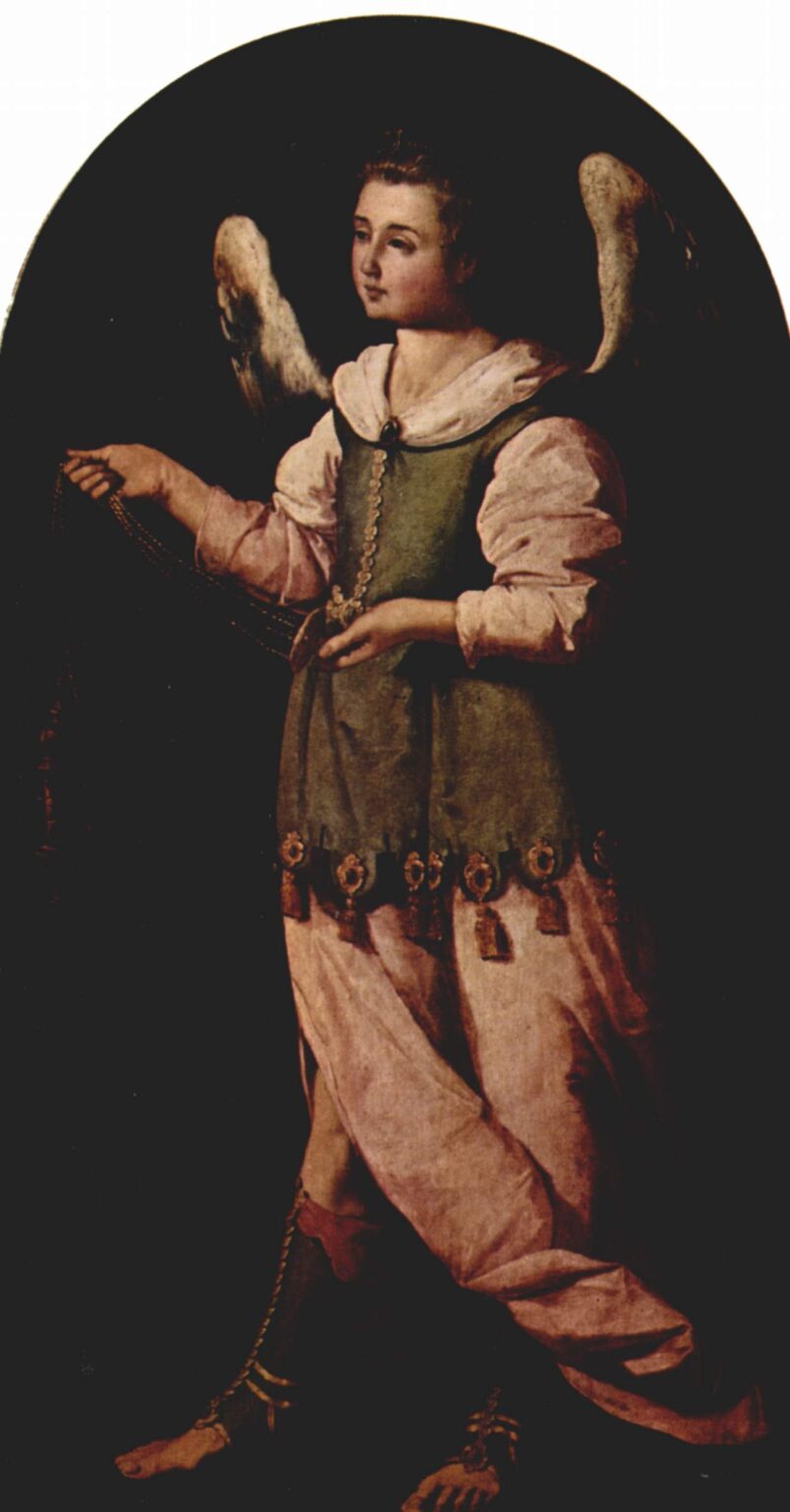
Francisco de Zurbaran’s painting “Angel with Incense,” created in 1638, offers a quietly radiant vision of the sacred. A single youthful angel stands against a dark background, dressed in a green tunic over a soft pink robe, holding chains of a censer in graceful hands. Delicate wings rise behind the figure, and bare feet touch the ground with humble gentleness. There is no elaborate architecture, no congregation, no altar in sight. The entire composition focuses on this solitary messenger who carries the fragrant smoke of prayer.
Seen within the artist’s wider body of work, “Angel with Incense” shows Zurbaran’s talent for combining monumental presence with spiritual stillness. The angel is at once human and otherworldly, solidly present yet bathed in an air of mystery. By stripping away narrative details, Zurbaran invites viewers to contemplate the symbolic meaning of the angelic figure and the incense it bears, transforming the canvas into a meditative space.
Historical and Liturgical Context
In the seventeenth century, Spanish Catholicism placed strong emphasis on the beauty and solemnity of liturgical ceremonies. Incense played an important role in these rites. Burning incense accompanied the exposition of the Blessed Sacrament, processions, and the singing of solemn psalms. The rising smoke symbolized prayers ascending to God and the sanctification of the space and the people gathered.
Angels were often imagined as assisting in heavenly liturgies. In biblical visions they stand around the throne of God, singing and offering incense in golden censers. For a Spanish audience steeped in this tradition, an “Angel with Incense” would immediately suggest a participation in divine worship. Such a figure could have flanked an altar painting or formed part of a larger ensemble of angels, saints, and liturgical symbols.
Zurbaran painted the work in 1638, during a period when he received commissions from religious orders and confraternities in Seville and other cities. These patrons sought images that would strengthen devotion and illustrate the close connection between earthly worship and the heavenly court. The painting’s vertical format and dark background suggest it may have been designed for a side chapel or choir, where the angel would appear to minister silently beside real priests and servers.
Composition and Vertical Format
The composition of “Angel with Incense” is striking in its simplicity. The canvas is tall and narrow, echoing the vertical stance of the figure. The angel occupies almost the entire height of the painting, which enhances its sense of dignity and spiritual elevation. The top corners curve gently, framing the figure like the arch of a niche or a window.
The dark background isolates the angel completely, making the viewer’s eye focus on the slender body, the luminous garments, and the pale face. There is no sense of deep space, no architectural setting, only a shallow ground where bare feet stand. This simplification allows the figure to function almost like a devotional statue, yet with the subtle movement and softness that only painting can provide.
The angel’s posture introduces a gentle diagonal rhythm. One leg steps forward, the other remains slightly behind. The torso tilts subtly, and the head is turned to the side in quiet contemplation. The left arm extends outward to hold the hanging chains, while the right hand draws them in. These lines lead the eye in a graceful loop that binds the entire figure together.
The Figure of the Angel
Zurbaran’s angel appears youthful and serene. The facial features are soft, with full lips and large eyes that gaze slightly away from the viewer. There is no intense ecstasy or stern expression, only a calm attentiveness, as if the angel is fully absorbed in the solemn task of censing yet aware of a presence beyond the picture plane.
The hairstyle is simple, with short curls framing the forehead. This simplicity, combined with the androgynous beauty of the face, fits the traditional depiction of angels as beings who transcend ordinary gender distinctions. The artist avoids strong emotional drama, presenting instead an interiorized spirituality that invites contemplation rather than shock.
The wings are rendered with delicate strokes of white and soft brown, suggesting feathers without excessive detail. They emerge from behind the shoulders in a modest arc rather than a dramatic spread. Their presence reminds the viewer that this figure is not an earthly acolyte but a heavenly minister who belongs to another realm even while standing on ordinary ground.
Costume, Color, and Texture
One of the most captivating aspects of “Angel with Incense” is the costume. The angel wears a long pink robe that falls in heavy folds to the bare ankles. Over this robe lies a shorter green tunic, cinched slightly at the waist and trimmed at the hem with decorative medallions and tassels. A soft white collar rests around the neck, echoing the purity associated with angelic beings.
Zurbaran was known for his ability to paint fabric with sculptural weight. Here, the folds of the pink robe bunch around the ankles and billow gently at the knees, indicating thick, substantial cloth. The green tunic hangs more stiffly, suggesting a heavier, perhaps embroidered material. Areas of light and shadow bring out the volume of these garments, making them appear almost tangible.
The color scheme is both harmonious and symbolic. The pink suggests warmth, compassion, and humanity. The green of the tunic can evoke hope and new life, virtues associated with divine grace. Touches of gold in the hem and chain add a sense of sacred richness without tipping the painting into ostentation. Against the black background, these colors glow with restrained intensity, highlighting the angel as a bearer of light in a dark world.
Light, Shadow, and Spiritual Atmosphere
Light in this painting seems to fall from the left, illuminating the angel’s face, torso, and the chains of the censer. The right side of the figure recedes into deeper shadow, creating a gentle chiaroscuro effect that emphasizes volume and creates a sense of mystery. The contrast is not harsh but carefully modulated, in keeping with the contemplative mood.
The dark background functions as more than mere emptiness. It can be read as the spiritual night of the world, or as the unseeable realm of God in which the angel moves. The figure stands out from this darkness like a ray of divine grace entering human perception. The absence of any other object or setting reinforces the feeling that the angel belongs to a realm beyond ordinary space, visiting the viewer for a moment through the window of the painting.
Zurbaran’s handling of light also highlights key symbolic elements. The translucent chains of the censer catch small glints of brightness, drawing attention to the instrument of worship. The angel’s face and hands are the most illuminated areas, underlining the combination of intellect and action that define angelic service.
The Incense and Its Symbolism
Although the bowl of the censer itself is not prominently visible, the chains and the title “Angel with Incense” make it clear that this messenger carries a thurible. In Christian tradition, incense symbolizes prayer, purification, and the presence of God. The smoke that rises from burning incense has no fixed shape yet fills the air with fragrance, suggesting the way prayer permeates the soul and the community.
By giving the angel a thurible, Zurbaran casts the entire figure as a visual embodiment of prayer. The angel’s task is not martial or dramatic but liturgical. This aligns with the book of Revelation, which describes an angel standing at the altar with a golden censer, offering incense mixed with the prayers of the saints. The painting thus becomes a reminder that human prayer is joined to heavenly worship.
The way the angel holds the chains reinforces this symbolism. The left hand stretches them outward, as if in the act of swinging the censer rhythmically. The right hand gathers the slack, maintaining control and balance. The motion is gentle, conveying reverence. The viewer might imagine the faint sound of jingling links and the soft waft of fragrant smoke, even though neither is directly depicted.
Movement, Gesture, and Rhythm
Although the figure is essentially static, Zurbaran suggests movement through pose and gesture. The left leg is advanced, toes pointed outward, while the right leg trails with the heel slightly raised. This stance gives the impression that the angel is in mid step, perhaps walking along an invisible path near an altar or inside a chapel.
The arms follow a complementary rhythm. The extended left arm and bent right arm create a diagonal that echoes the motion of swinging incense. The angle of the head, slightly turned and raised, adds to this sense of gentle progression. Nothing in the pose is abrupt or forceful. Instead, the movement appears contained and measured, as befits a solemn ritual.
This subtle dynamism keeps the painting from feeling frozen. It allows the viewer to imagine the action continuing beyond the moment captured. The angel seems to glide, not march, hinting at the lightness and grace traditionally associated with spiritual beings.
Relationship to Zurbaran’s Other Angelic Figures
Zurbaran painted several angels during his career, often as part of larger cycles of saints or altarpieces. Many share characteristics with the “Angel with Incense,” such as youthful faces, richly colored garments, and calm demeanor. He sometimes portrayed archangels with attributes of Christian virtues or specific missions. In comparison, this angel is more generic in identity yet highly specific in function.
What sets this painting apart is its focus on a single liturgical role. Instead of depicting an angel of annunciation, victory, or judgment, Zurbaran concentrates on the humble but central task of offering incense. This choice reflects his sensitivity to the everyday rhythms of worship in monasteries and churches that commissioned his work. The painting could easily stand beside images of saints or the Virgin Mary, acting as a visual reminder that the sanctuary is always accompanied by invisible servants.
The work also exemplifies Zurbaran’s ability to take influences from Italian and Flemish art yet fashion a distinctively Spanish style. While the idea of angel musicians or acolytes can be found elsewhere, his restrained palette, sculptural drapery, and emphasis on meditative stillness give the “Angel with Incense” a unique voice within Baroque religious painting.
Devotional Meaning and Contemporary Reception
For seventeenth century viewers, the “Angel with Incense” would have carried strong devotional resonance. Monks, nuns, and lay worshippers who saw the painting might have recognized in the angel a companion in their own prayers. The image suggests that when incense rises in a church, it is not only the work of human hands but part of a larger cosmic liturgy.
The angel’s youth and beauty also convey hope and consolation. Unlike fierce images of judgment or martyrdom, this painting shows a gentle, protective presence. It reassures the faithful that God’s messengers surround them, interceding and joining their worship. The bare feet of the angel emphasize humility, indicating that even heavenly beings share something of the lowliness that Christ embraced in his incarnation.
Today, viewers may appreciate the painting for its quiet grace and simplicity. In a time filled with visual overload, the single figure against a dark ground offers a moment of calm focus. The symbolism of incense as prayer remains meaningful across cultures and religious traditions, speaking to a universal desire to connect with something beyond oneself.
Art historians value the work as a fine example of Zurbaran’s mature style and as evidence of how Spanish Baroque painting integrated liturgical and spiritual life. Its careful balance of realism and idealization, motion and stillness, makes it a compelling image for study and contemplation.
Conclusion
“Angel with Incense,” painted by Francisco de Zurbaran in 1638, stands as a luminous testament to the power of simplicity in religious art. A solitary angel, dressed in green and pink, steps lightly across a dark field while holding the chains of a censer. Every element of the painting, from the sculpted folds of the robe to the gentle tilt of the head, communicates reverence and inner composure.
By isolating the figure against a dark background, Zurbaran transforms the angel into an emblem of prayer and heavenly service. The incense that the figure carries symbolizes the rising of human supplication to God, while the youth and calm beauty of the angel suggest the grace that accompanies such prayer. The work reveals the artist’s deep understanding of liturgical symbolism and his remarkable ability to infuse a quiet scene with profound spiritual presence.
Centuries after its creation, “Angel with Incense” continues to invite viewers into a contemplative encounter. It reminds us that even the smallest gestures of worship participate in a larger mystery, and that in the silence of our own hearts an unseen angel may be standing beside us, swinging a censer whose fragrant smoke carries our hopes toward the divine.