Image source: wikiart.org
Introduction
Claude Monet’s Portrait of Madame Gaudibert from 1868 is one of the most revealing works from the early part of his career. It belongs to a moment before his name became permanently linked with Impressionism, before the broken light of haystacks, cathedrals, and water lilies came to define him in the public imagination. In this painting, Monet is working within the grand tradition of portraiture, yet he is already showing signs of the artistic mind that would later transform modern painting. The result is a work that feels both elegant and searching, formal and experimental, polished and alive.
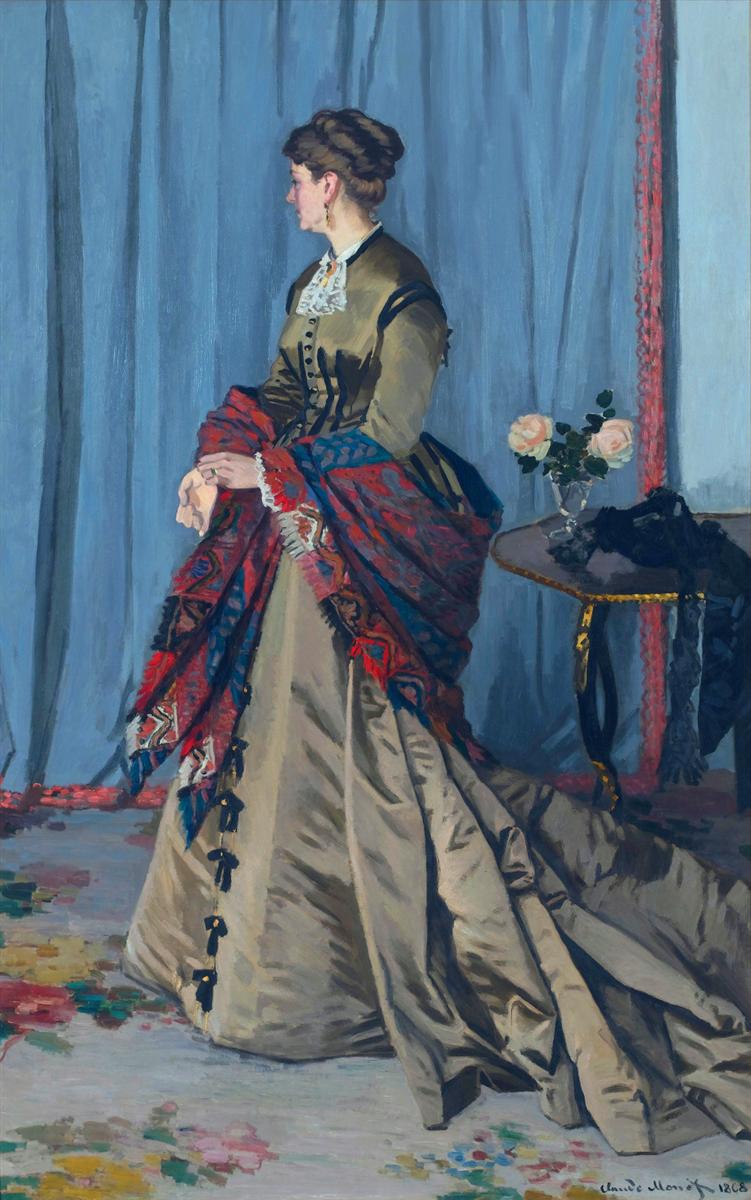
At first glance, the painting appears to be a refined society portrait. A woman stands in a luxurious interior, dressed in a pale gown with a long train, wrapped in a richly colored shawl, and positioned before a curtain of cool blue drapery. There is a small table at her side, holding flowers and dark accessories, and the whole arrangement suggests the dignity and cultivated taste expected in upper middle class portraiture of the nineteenth century. Yet the more one looks, the more the painting reveals a deeper complexity. Monet is not simply recording status or fashion. He is orchestrating color, texture, and pose in a way that makes the image vibrate with emotional restraint and visual intelligence.
This is what makes Portrait of Madame Gaudibert so compelling. It is a portrait, but it is also a study in atmosphere. It is a social image, but it also feels psychologically reserved, almost distant. It presents a woman of elegance, yet it keeps her partly withheld from the viewer. The painting stands at a crossroads in Monet’s development, combining traditional portrait structure with the beginnings of a modern sensitivity to color, surface, and fleeting sensation.
Monet in 1868
To understand the significance of this work, it helps to place it within Monet’s life in 1868. He was still a young painter trying to establish himself in a competitive Parisian art world. He had talent and ambition, but he also faced financial instability and uncertain professional prospects. Portrait commissions could provide both income and visibility, and paintings like this show Monet engaging with the conventions that could help him appeal to patrons and institutions.
This period is especially important because it demonstrates that Monet was not born fully formed as the painter of shimmering outdoor light. He passed through portraiture, figure painting, and the demands of Salon culture. He learned how to compose a figure, how to handle fabric, how to organize color within an interior, and how to give a sitter dignity without making the image feel static. These were not secondary skills. They were part of the discipline that made his later innovations possible.
In Portrait of Madame Gaudibert, Monet is working within a format that would have been legible and respectable to a contemporary audience. The sitter is carefully posed, elegantly dressed, and presented as a cultivated woman. But Monet’s treatment of paint reveals that he is already more interested in visual relationships than in mere social description. The curtain is not just a background. It is a field of cool tone against which the flesh, fabric, and shawl can come alive. The dress is not just a garment. It is a complex surface of light and shadow. Even the stillness of the figure becomes a way of intensifying the painting’s formal structure.
The Composition and the Power of Profile
One of the most striking features of the painting is the pose of Madame Gaudibert. Rather than facing the viewer directly, she turns to the side, offering a profile or near profile view. This decision is crucial to the painting’s character. A frontal portrait invites immediate engagement. A profile portrait creates distance, elegance, and control. It withholds as much as it reveals.
By turning the sitter away, Monet avoids easy sentiment. We are not drawn into an exchange of gaze. Instead, we observe her as a presence within a carefully constructed space. This creates an unusual tension. She is clearly the subject, yet she remains slightly inaccessible. Her face is visible enough to suggest individuality, but not in a way that yields full psychological intimacy. The portrait becomes less about personal confession and more about bearing, composure, and visual effect.
The figure is also arranged with remarkable balance. Her body rises vertically against the curtain, while the enormous sweep of the dress and train spreads outward across the lower part of the canvas. This contrast between upright posture and flowing fabric gives the composition both stability and movement. The upper body is controlled and contained. The lower half expands with graceful weight. The train leads the eye outward and downward, filling the picture space with sculptural presence.
The small table on the right acts as a counterpoint to the figure. Without it, the composition might feel too isolated or overly monumental. The table introduces a secondary cluster of forms that echoes the sitter’s refinement without competing with her. The flowers, dark gloves or shawl, and delicate furniture legs create a rhythm of accents that helps balance the composition. Monet is thinking not only about likeness but also about how every shape contributes to the harmony of the whole.
Color as Structure and Emotion
Color is one of the greatest strengths of this painting. Even in a relatively restrained portrait setting, Monet shows a remarkably sophisticated understanding of how color can organize space and produce mood. The dominant cool blue of the curtain provides the atmospheric basis of the work. It is not flat or mechanical. It shifts in tone and depth, allowing the background to feel both decorative and spacious.
Against this cool field, the warmer and more varied tones of the sitter stand out with unusual force. Her gown is a muted pale beige or silvered cream, a color that allows Monet to explore countless nuances of shadow, reflection, and soft light. The fabric never feels monotonous because it absorbs surrounding hues. Cool notes drift into its folds, while warmer passages animate its highlights. The dress becomes a surface where atmosphere and materiality meet.
The red and blue shawl is the painting’s most dramatic color accent. Draped across the sitter’s arms and body, it cuts through the cool harmony with rich warmth and pattern. This shawl does several things at once. It introduces visual excitement, emphasizes the luxurious identity of the sitter, and prevents the portrait from becoming too austere. More importantly, it shows Monet’s instinct for using bold chromatic contrast to energize a composition. The red against blue does not feel random. It feels orchestrated, almost musical.
The flesh tones are handled with delicacy. Madame Gaudibert’s face and hands are not heavily modeled in an academic manner. Instead, Monet keeps them integrated within the broader color structure. Her skin emerges gently from the surrounding tones, maintaining softness rather than theatrical emphasis. This restraint contributes to the painting’s elegant reserve.
Even the flowers on the table matter chromatically. Their pale blooms offer a quiet echo of the dress and flesh tones, while the dark accessory nearby deepens the tonal contrast on the right side of the image. Monet is building the painting through relationships, not isolated details. Every color has a place, and every accent participates in the total effect.
The Dress, the Shawl, and the Language of Material
Nineteenth century portraiture often used clothing to communicate rank, taste, and refinement, and Portrait of Madame Gaudibert fully embraces that tradition. Yet Monet’s treatment of costume goes beyond social display. He is fascinated by how fabric behaves in light, how it folds, hangs, shines, and gathers. The dress and shawl are not merely descriptive additions. They are central to the painting’s meaning and visual power.
The gown has a stately presence. Its long train transforms the figure into something almost architectural. Rather than making Madame Gaudibert seem fragile or decorative, the dress gives her weight and grandeur. The fabric pools and stretches across the floor with a sense of physical mass. This is one reason the painting feels so substantial. The sitter is not floating in an idealized space. She occupies the room through the sheer material force of her clothing.
At the same time, Monet avoids stiffness. The paint suggests the texture of satin or silk, but it does so through lively brushwork rather than painstaking finish. Highlights flicker across folds, and shadows sink into the creases with enough freedom to keep the eye moving. This tension between precision and painterly vitality is one of the most exciting aspects of the work. Monet honors the descriptive needs of portraiture while allowing paint to remain visibly active.
The shawl provides a different kind of material richness. Where the gown is broad, luminous, and sweeping, the shawl is dense, patterned, and tactile. Its tassels, folds, and deep colors create a visual concentration around the sitter’s arms and torso. This has the effect of anchoring the composition near the center while also drawing attention to the way she holds herself. The shawl is not simply draped for ornament. It becomes part of the pose, helping define her poise and self possession.
Material in this painting is never separate from character. The garments tell us that Madame Gaudibert is a woman of means, but they also shape how we perceive her temperament. The dress suggests dignity and calm. The shawl suggests cultivated taste and perhaps a hint of individuality within the formality of the portrait. Monet turns costume into a language through which social identity and painterly exploration merge.
Space, Interior, and Controlled Atmosphere
Although this painting is not expansive in narrative terms, its interior is carefully staged. The setting is sparse but deliberate. The curtain dominates the background, creating a vertical wall of cool color that separates the figure from any distracting domestic details. This gives the painting a theatrical quality, as though Madame Gaudibert is appearing before us on a private stage.
This staging matters because it allows Monet to simplify the environment without making it empty. The curtain is at once decorative and atmospheric. It encloses the sitter within a controlled field of color, turning the portrait into an exercise in harmony and silhouette. Rather than constructing a room in full perspectival detail, Monet suggests space through the interaction of figure, drapery, floor, and the small table. The setting is enough to feel credible, but not enough to compete with the central visual drama.
The floor is especially interesting. It is not treated with rigid finish. Instead, it includes scattered touches of color that echo the floral and textile tones elsewhere in the composition. These touches prevent the lower area from becoming dead space. They also anticipate the kind of broken, suggestive handling that would later become central to Monet’s mature style. Even here, in a formal portrait, he is sensitive to the life of the painted surface.
The table and flowers serve as quiet markers of cultivated femininity, but they also help define the interior as intimate rather than public. This is not a state portrait or a grand official image. It is refined, but it is domestic in scale and tone. The room feels hushed. The blue curtain softens everything, as if sound itself has been absorbed. Monet creates an atmosphere of restraint, elegance, and suspended time.
The Psychology of Restraint
A portrait does not need overt facial drama to convey psychological depth. In fact, Portrait of Madame Gaudibert gains much of its force from emotional restraint. Because the sitter does not face the viewer directly, her inner life remains partially hidden. This creates a subtle but powerful form of intrigue. We are left to read posture, gesture, and atmosphere rather than expression alone.
Madame Gaudibert stands with composure. Her hands are gently placed, her head turned, her body settled into a poised and controlled stance. There is no obvious narrative. She is not caught in action, nor is she performing exaggerated sentiment. The dignity of the portrait arises from self command. She appears thoughtful, reserved, and socially assured.
This reserve can be read in several ways. It may reflect the conventions of respectable portraiture, where overt emotional display was often avoided in favor of calm refinement. It may also suggest something more individual: a personality that is private, composed, perhaps slightly detached. Monet leaves room for interpretation. That openness is part of the portrait’s sophistication.
The lack of direct eye contact also changes the viewer’s role. Instead of meeting the sitter on equal terms, we become observers of a figure absorbed in her own space. This can create a sense of admiration, but also distance. The portrait does not flatter through intimacy. It elevates through composure. In this sense, Monet achieves something difficult. He gives the painting emotional presence without relying on melodrama or anecdote.
Between Tradition and Modern Painting
One of the most rewarding ways to look at Portrait of Madame Gaudibert is to see it as a bridge between older portrait traditions and the emerging modern language of painting. The subject, format, and elegance of the work clearly connect it to established forms of bourgeois portraiture. Yet the handling of paint, the simplification of space, and the emphasis on color relationships point toward a newer vision.
Traditional portraiture often placed enormous importance on finish, precise likeness, and the symbolic clarity of costume and setting. Monet respects these concerns, but he does not submit entirely to them. He seems just as interested in the sensation of blue against beige, red against cool gray, matte surface against sheen, as he is in documenting every specific detail of the sitter’s world. This shift in emphasis is subtle but crucial. The painting is not only about who Madame Gaudibert is. It is also about how vision itself can be organized through paint.
This is where the painting becomes especially significant within Monet’s career. It shows that even before his most famous Impressionist works, he was already thinking in terms of atmosphere, tonal unity, and the living surface of the canvas. The brushwork is not loose in the later Impressionist sense, but it is alive. It does not disappear beneath a perfectly smooth finish. Instead, it reminds us that this is a painted construction, not a photographic imitation.
The portrait also suggests that modernity in art did not arrive through sudden rejection of the past. It emerged through gradual transformation from within established genres. Monet learned from portraiture even as he nudged it toward something freer and more sensuous. Portrait of Madame Gaudibert belongs to that fertile in between space where tradition still provides the frame, but a new artistic intelligence is already reshaping what the frame can contain.
Why the Painting Still Feels Fresh
Despite its nineteenth century dress and decorum, Portrait of Madame Gaudibert continues to feel fresh to modern viewers. Part of this freshness comes from Monet’s refusal to over explain. The painting is composed, elegant, and specific, yet it remains open ended. It does not trap the sitter inside a fixed story. It allows her to remain a presence rather than a solved character.
Another reason is the vitality of the paint itself. Even in reproduction, one can sense that Monet is not simply filling in forms. He is testing how surfaces can breathe, how colors can resonate, how textures can coexist without collapsing into heaviness. The curtain is broad and cool, the shawl rich and intricate, the dress luminous and weighty. These contrasts give the painting life. They make it feel seen rather than formulaic.
The portrait also resonates because it captures a universal tension between public appearance and private reserve. Madame Gaudibert is presented beautifully, with all the signs of social standing and cultivated taste, yet she is not entirely available to us. That balance between visibility and mystery keeps the painting engaging. It respects the sitter’s individuality without pretending to reveal everything.
For viewers familiar with Monet’s later landscapes, the painting is especially fascinating because it broadens our understanding of him. It reminds us that he was never only a painter of gardens and rivers. He was also a master of structure, costume, interior mood, and human presence. This portrait enriches the story of his development by showing how much of his later sensitivity was already present in different form.
Conclusion
Portrait of Madame Gaudibert is a remarkable early work that deserves close attention. It presents a woman of elegance and dignity, but it does far more than record her appearance. Through composition, color, material handling, and psychological restraint, Monet creates a portrait that feels deeply considered and visually alive. The painting shows a young artist mastering the expectations of formal portraiture while already pushing toward a more modern idea of what painting could do.
Its beauty lies not only in the refinement of the sitter’s dress or the harmony of the setting, but in the intelligence with which every element has been arranged. The cool curtain, the pale gown, the dramatic shawl, the flowers, the side turned face, and the trailing train all work together to produce an image of unusual poise and subtle power. Nothing is excessive, yet nothing feels empty. The painting is rich without being crowded, elegant without becoming cold, and formal without losing life.
Seen today, the work stands as an important chapter in Monet’s artistic journey and as a compelling portrait in its own right. It reveals how deeply he understood the expressive possibilities of color and surface even before his most famous achievements. More than that, it offers a lasting image of quiet grandeur, a portrait in which atmosphere, social identity, and painterly invention come together with extraordinary grace.