Image source: wikiart.org
A Baroque Celebration: Introducing “The Marriage Feast at Cana”
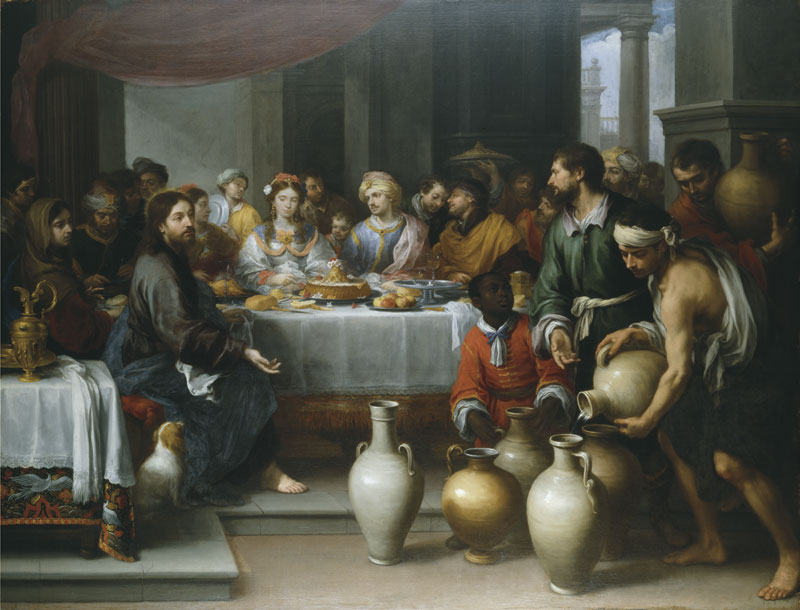
“The Marriage Feast at Cana,” painted by Bartolomé Esteban Murillo around 1675, brings one of the most joyful Gospel events to life with warmth, drama, and everyday detail. The scene depicts the wedding at Cana in Galilee where, according to the Gospel of John, Christ performs his first public miracle by turning water into wine. Murillo, working in Seville at the height of the Spanish Baroque, transforms this biblical episode into a bustling, believable banquet that feels both sacred and surprisingly familiar.
Rather than separating the divine from the human, Murillo interweaves them. Christ sits among the guests as a calm but commanding presence. Newlyweds and relatives crowd around the laden table. Servants struggle with heavy water jars in the foreground. Rich fabrics, gleaming vessels, and architectural columns complete a setting that is at once festive and reverent. This painting shows Murillo’s gift for combining devotional meaning with keen observation of real life, inviting viewers to imagine themselves as participants in the feast.
Composition and First Impressions
At first glance, the canvas feels like a grand stage crowded with figures, yet the composition is carefully orchestrated. The large banquet table runs horizontally through the center, covered with a white cloth that catches the light and draws the eye. Around it sits a dense ring of guests, their faces turned in various directions as conversation flows. The bride and groom occupy the middle of the table, framed by a canopy of draperies and architecture.
Christ sits to the left of the table slightly apart from the central cluster. Barefoot and wrapped in a dark robe, he looks outward toward the viewer while gesturing calmly toward the servants and jars in the foreground. This placement gives him an almost anchoring role. He is in the scene but not swallowed up by the crowd. The viewer’s gaze repeatedly returns to him even as it wanders through the lively details.
In the lower right, a group of servants fill and move large earthenware jars. Their bodies twist in strenuous poses. A young boy in red stands among them, watching attentively. These figures form a secondary focus that balances Christ on the left. Between them stands a man in a green coat who appears to listen to Christ’s instruction. Together, Christ, the man, and the servants create a narrative line that pulls the story forward.
The result is a dynamic yet balanced composition. The feast fills the space from edge to edge, but clear visual pathways guide the viewer through the story of the miracle.
Christ at Cana: Calm Authority in the Midst of Festivity
Murillo’s portrayal of Christ emphasizes both humanity and divine authority. He is not elevated on a platform or surrounded by a halo of light. Instead he sits at the end of the table like an honored guest. Bare feet touch the step, hinting at humility. His robe is simple, composed of deep browns and dark blues that contrast gently with the brighter clothing of the wedding party.
Yet Christ’s presence is unmistakable. His face, softly lit, conveys a mixture of compassion and quiet command. One hand is extended, palm open, as if giving an instruction or blessing. His gaze seems directed slightly toward the servants with the jars, signaling the moment when he tells them to fill the vessels with water. This subtle gesture captures the transition from ordinary feast to miraculous event.
By placing Christ slightly apart from the center of festivity, Murillo allows viewers to approach him visually. We see him clearly, unblocked by other figures. At the same time, his proximity to the table underscores that he fully participates in human joy. He does not simply observe the celebration; he transforms it from within.
The Bride, the Groom, and the Wedding Guests
At the heart of the composition sit the bride and groom, surrounded by relatives and friends. The bride, adorned with flowers and jewelry, wears a richly decorated dress. Her hands rest on the table, and her face has a thoughtful, almost modest expression. She is the focus of many glances, yet she appears calm and reserved, embodying the virtues expected of a seventeenth century bride.
The groom sits near her, dressed in fine garments, engaged in conversation or contemplation. Around them, guests lean forward, whisper, and share food. Murillo delights in the variety of faces: some young and radiant, others older and more weathered. Turbans and headdresses evoke an eastern setting while also echoing Spanish fashions of Murillo’s own era. Through these details the artist bridges biblical time and contemporary Seville, making the story feel immediate for his viewers.
The crowded table evokes abundance and community. Platters of bread, fruits, and pastries are carefully painted. Goblets and plates catch reflections of light. The banquet is clearly joyous and generous, yet the atmosphere is not one of wild revelry. Instead, there is a sense of ordered celebration. In this environment, the miracle of new wine will add depth to existing joy rather than rescuing a scene of chaos.
Servants and Jars: The Miracle in Motion
One of the most striking aspects of Murillo’s painting is the attention given to the servants. In the lower right corner, three men labor with heavy clay jars. Their bare legs and muscular arms convey effort as they tilt and carry the vessels. Their clothing is simpler and rougher than that of the guests. Wrapped headcloths and rolled up sleeves mark them as workers in the midst of their tasks.
A young boy in a red tunic, perhaps a servant or page, stands between the guests and the workers. His dark skin and distinctive clothing suggest the presence of Africans in seventeenth century Spain, reflecting the diverse fabric of society. He gazes upward, seemingly at Christ, with an expression of curiosity and comprehension. Through him Murillo gives a voice to those who serve, making them not anonymous laborers but active witnesses to the miracle.
The jars themselves are central symbols. According to the Gospel, six stone water jars were used for ritual purification, then filled with water that Christ turned into wine. Murillo renders them as large earthenware vessels, gleaming in the foreground. Their rounded shapes catch the light, forming a rhythmic line that leads the eye from the servants toward Christ. These objects anchor the miracle in tangible reality. Viewers can almost feel their weight and rough texture.
By emphasizing the servants and jars, Murillo highlights the collaboration between divine power and human obedience. The miracle depends on Christ’s word, but it unfolds through the servants’ willingness to act. This collaboration becomes visible to us in the very structure of the painting.
Light, Color, and the Baroque Atmosphere
Murillo’s handling of light infuses the scene with spiritual warmth. A soft, diffuse illumination falls across the table and the central guests, leaving the far background in deeper shadow. The brightest areas are the white tablecloth, the faces of Christ and the bride, and the pale surfaces of the jars. These luminous patches guide the viewer’s attention through the narrative.
The color palette is rich yet harmonious. Warm earth tones dominate: ochres, browns, and reds appear in garments, walls, and pottery. These are balanced by cooler blues and grays in the architecture and some clothing. The bride’s attire introduces touches of gold and bright color, signaling her special role. Christ’s deep blue cloak echoes traditional iconography, while the green garment of the man near the jars adds a note of freshness.
Unlike some Baroque painters who used very sharp contrasts of light and darkness, Murillo prefers a gentler chiaroscuro. Shadows are deep but not harsh; they cradle rather than swallow the figures. This approach suits his characteristic concern for human warmth and accessibility. The feast appears inviting, not threatening. Even the darker corners feel populated by living faces and whispered conversations.
Architecture and Setting: A Sacred Banquet Hall
The setting for the feast is a grand interior with columns, arches, and a view of the sky through an opening at the right. Draperies hang from the ceiling, framing the central area like stage curtains. This arrangement has both practical and symbolic functions. It situates the scene in a stately environment suitable for a wedding, and it also suggests the theatrical nature of Baroque narrative painting.
Through the opening on the right, one can glimpse a portion of city architecture in the distance. This extension of space adds depth and situates the event within a broader world. It hints that the miracle at Cana is not confined to a private hall but has significance for all people and all places.
The architecture also contributes to the painting’s sense of order. Columns and arches create vertical and horizontal lines that stabilize the busy human activity. The white tablecloth echoes the pale stone surfaces, visually tying the feast to the building itself. It is as if the entire space has been prepared for this moment of revelation.
Still Life Elements and Everyday Detail
Murillo incorporates still life elements with great care. The table is laden with bread, fruit, cakes, and meat, all painted with an eye for texture and color. These foods are not symbolic in an obvious way, yet they reinforce the themes of abundance and generosity. They may also remind Christian viewers of another banquet: the Eucharist, where bread and wine become signs of Christ’s presence.
On a smaller side table to the left, a golden vessel and pitcher stand out against a white cloth and richly patterned textile. The gleam of metal and the folds of fabric showcase Murillo’s technical skill. These objects could be part of the wedding ceremony or simply luxurious tableware, but they also suggest the transformation of ordinary material into something precious when touched by grace.
Even the servants’ tools and clothing are handled with attention. Ropes tied around waists, the seams of shirts, the variations in pottery glazes all enrich the scene with realism. This abundance of detail invites viewers to linger, discovering new aspects each time they look. It underlines Murillo’s belief that the divine can be encountered in the textures of everyday life.
Theological Meaning: Transformation, Abundance, and Marriage
Beyond its visual appeal, “The Marriage Feast at Cana” carries rich theological meaning. The miracle of water turned into wine is traditionally seen as a sign of Christ’s power to transform, to bring joy out of scarcity, and to inaugurate a new covenant. Murillo’s painting communicates these ideas through visual storytelling.
The jars in the foreground, originally filled with water for purification, now stand ready to hold new wine. Their placement near the viewer suggests that transformation begins close to us, in the vessels of daily routine. The servants who handle them signify obedient cooperation with divine grace. They do not understand fully what is happening, but they act on Christ’s word.
The joyful banquet evokes the biblical image of the messianic feast, where God welcomes his people into eternal celebration. By depicting a marriage, Murillo underscores the idea of covenant and union. The bride and groom’s union becomes a symbol of the bond between Christ and humanity, and the miracle at their wedding foreshadows the spiritual abundance offered to all.
Christ’s quiet but central role reminds viewers that true joy in human relationships, including marriage, finds its deepest source in divine presence. His gesture toward the servants suggests generosity, not moral condemnation. He does not scold the hosts for running out of wine; he simply provides more, and of better quality. Murillo’s warm atmosphere echoes this theology of gracious abundance.
Murillo’s Style and the Spanish Baroque Context
Murillo was one of the leading painters in seventeenth century Seville, a city marked by intense religious devotion and vital trade connections. His style, often described as soft and luminous, differed from the harsher realism of some Spanish contemporaries. In “The Marriage Feast at Cana,” we see his mature approach: gentle modeling of faces, warm palettes, and a concern for human emotion.
The painting also reflects broader Baroque concerns. The crowded composition, theatrical draperies, and sense of movement align with the period’s love of drama. Yet Murillo tempers this drama with an overarching calm. While many figures are engaged in conversation or labor, there is no sense of chaos. Everything is shaped by Christ’s presence, even when he is not the brightest or most centrally placed figure.
Murillo’s focus on the poor and marginalized in other works, such as his scenes of street children, may have influenced his emphasis on servants here. He gives them as much individuality and importance as the elegantly dressed guests. This inclusive vision expands the meaning of the biblical story and mirrors the social concerns of Catholic reform movements that emphasized charity and compassion.
Emotional Impact and Lasting Legacy
For modern viewers, “The Marriage Feast at Cana” continues to captivate because it feels alive. The expressions of guests, the concentration of servants, and the unspoken communication between figures create a tapestry of human experience. One can imagine the murmurs of conversation, the clinking of dishes, and the whispered surprise as the new wine is tasted.
The painting also offers a comforting vision of divine generosity. In a world often marked by scarcity and anxiety, the overflowing vessels and abundant food suggest a different reality where grace is plentiful. Christ’s calm demeanor and attentive gaze convey reassurance that human celebrations and concerns matter to him.
Art historically, the work stands as one of Murillo’s major narrative achievements. It showcases his ability to manage large multi figure compositions without losing clarity. It also demonstrates his gift for uniting theological depth with everyday observation. Scholars and visitors continue to study and admire the painting for its richness of detail and warmth of spirit.
